Crane John K, Broome Jackie E, Reddinger Ryan M, Werth Benjamin B
Department of Medicine, Division of Infectious Diseases, University at Buffalo, Room 317 Biomedical Research Bldg, 3435 Main St, Buffalo, NY 14214, USA.
BMC Microbiol. 2014 Jun 5;14:145. doi: 10.1186/1471-2180-14-145.
Zinc supplements can treat or prevent enteric infections and diarrheal disease. Many articles on zinc in bacteria, however, highlight the essential nature of this metal for bacterial growth and virulence, suggesting that zinc should make infections worse, not better. To address this paradox, we tested whether zinc might have protective effects on intestinal epithelium as well as on the pathogen.
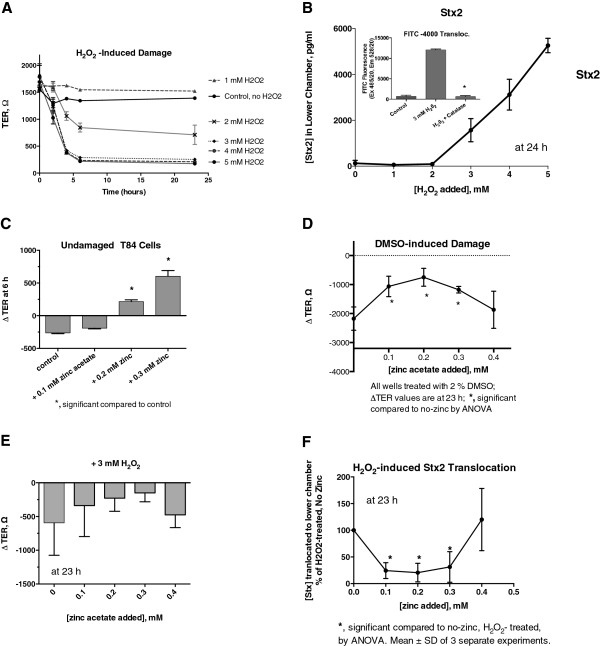
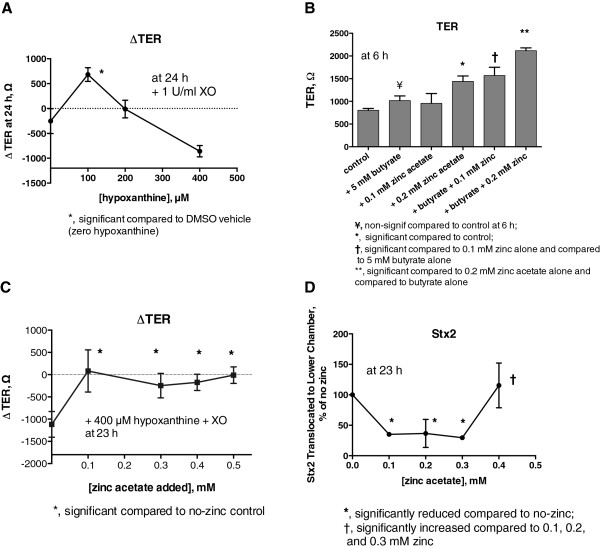
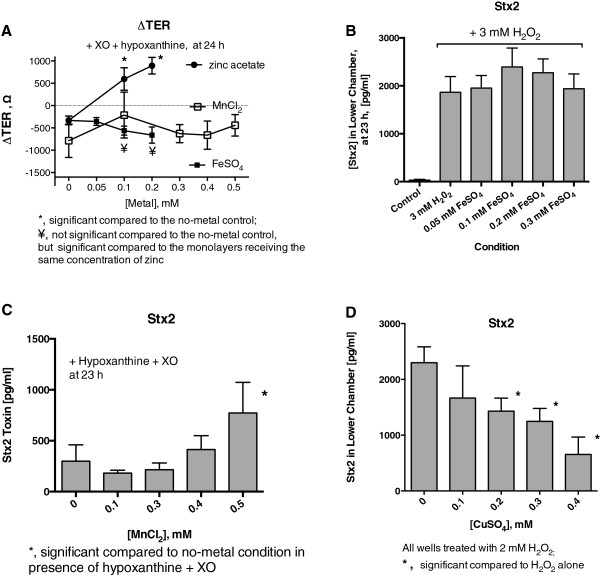
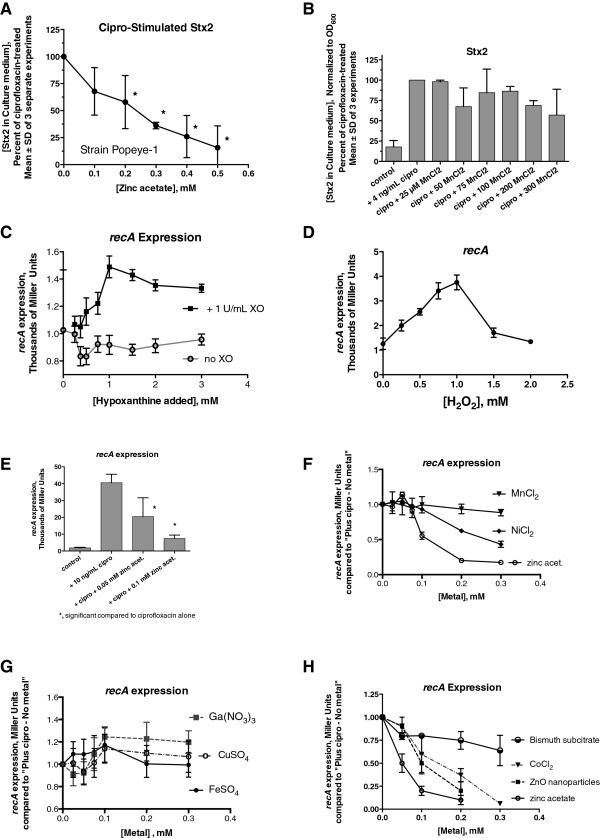
Using polarized monolayers of T84 cells we found that zinc protected against damage induced by hydrogen peroxide, as measured by trans-epithelial electrical resistance. Zinc also reduced peroxide-induced translocation of Shiga toxin (Stx) across T84 monolayers from the apical to basolateral side. Zinc was superior to other divalent metals to (iron, manganese, and nickel) in protecting against peroxide-induced epithelial damage, while copper also showed a protective effect.The SOS bacterial stress response pathway is a powerful regulator of Stx production in STEC. We examined whether zinc's known inhibitory effects on Stx might be mediated by blocking the SOS response. Zinc reduced expression of recA, a reliable marker of the SOS. Zinc was more potent and more efficacious than other metals tested in inhibiting recA expression induced by hydrogen peroxide, xanthine oxidase, or the antibiotic ciprofloxacin. The close correlation between zinc's effects on recA/SOS and on Stx suggested that inhibition of the SOS response is one mechanism by which zinc protects against STEC infection.
Zinc's ability to protect against enteric bacterial pathogens may be the result of its combined effects on host tissues as well as inhibition of virulence in some pathogens. Research focused solely on the effects of zinc on pathogenic microbes may give an incomplete picture by failing to account for protective effects of zinc on host epithelia.
锌补充剂可治疗或预防肠道感染和腹泻疾病。然而,许多关于锌在细菌中的文章强调了这种金属对细菌生长和毒力的重要性,这表明锌应该会使感染恶化,而非改善。为了解决这一矛盾,我们测试了锌是否可能对肠道上皮以及病原体具有保护作用。
使用T84细胞的极化单层,我们发现通过跨上皮电阻测量,锌可保护细胞免受过氧化氢诱导的损伤。锌还减少了过氧化氢诱导的志贺毒素(Stx)从顶端向基底外侧穿过T84单层的转运。在保护细胞免受过氧化氢诱导的上皮损伤方面,锌优于其他二价金属(铁、锰和镍),而铜也显示出保护作用。SOS细菌应激反应途径是肠出血性大肠杆菌中Stx产生的强大调节因子。我们研究了锌对Stx的已知抑制作用是否可能通过阻断SOS反应来介导。锌降低了recA的表达,recA是SOS的可靠标志物。在抑制由过氧化氢、黄嘌呤氧化酶或抗生素环丙沙星诱导的recA表达方面,锌比其他测试金属更有效力且更有效。锌对recA/SOS和Stx的影响之间的密切相关性表明,抑制SOS反应是锌预防肠出血性大肠杆菌感染的一种机制。
锌预防肠道细菌病原体的能力可能是其对宿主组织的综合作用以及对某些病原体毒力抑制的结果。仅关注锌对致病微生物影响的研究可能会因未考虑锌对宿主上皮的保护作用而给出不完整的情况。