Duke Global Health Institute, Duke University, 310 Trent Drive, Durham, NC 27710, USA ; University of Iowa Carver College of Medicine, 375 Newton Road, Iowa City, IA 52242, USA.
Duke Global Health Institute, Duke University, 310 Trent Drive, Durham, NC 27710, USA ; Uganda Cancer Institute, Upper Mulago Hill Rd, Kampala, Uganda ; College of Health Sciences, Makerere University, Kampala, Uganda ; University of Washington, Seattle, WA, USA ; Fred Hutchinson Cancer Research Center, Seattle, WA, USA.
Infect Agent Cancer. 2014 May 20;9:17. doi: 10.1186/1750-9378-9-17. eCollection 2014.
In low- and middle-income countries, the association between delay to treatment and prognosis for Kaposi's sarcoma (KS) patients is yet to be studied.
This is a prospective study of HIV-infected adults with histologically-confirmed KS treated at the Uganda Cancer Institute (UCI). Standardized interviews were conducted in English or Luganda. Medical records were abstracted for KS stage at admission to UCI. Multivariable logistic regression assessed relationships between diagnostic delay and stage at diagnosis.
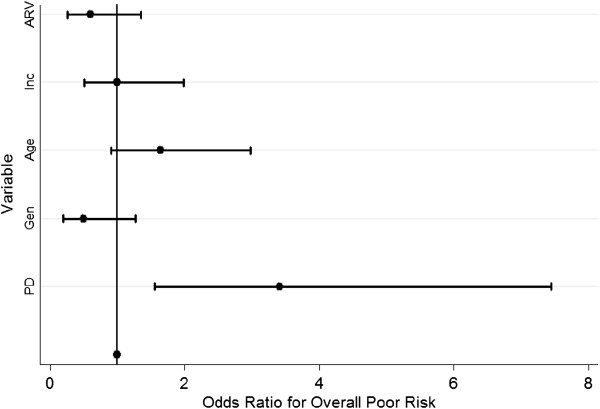
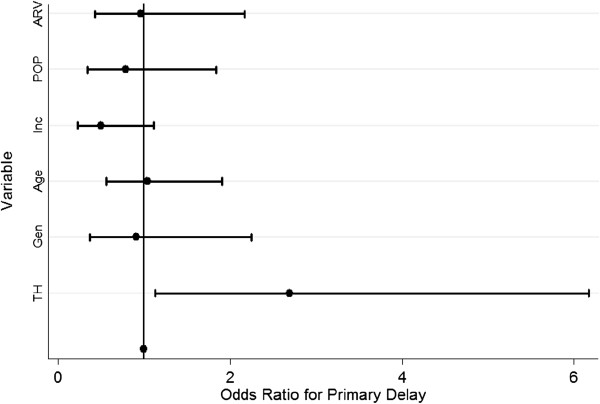
Of 161 patients (90% response rate), 69% were men, and the mean age was 34.0 years (SD 7.7). 26% had been seen in an HIV clinic within 3 months, 72% were on antiretroviral therapy, and 26% had visited a traditional healer prior to diagnosis. 45% delayed seeking care at UCI for ≥3 months from symptom onset. Among those who delayed, 36% waited 6 months, and 25% waited 12 months. Common reasons for delay were lack of pain (48%), no money (32%), and distance to UCI (8%). In adjusted analysis patients who experienced diagnostic delay were more likely than those who did not delay to have poor-risk KS stage (OR 3.41, p = 0.002, 95% CI: 1.46-7.45). In adjusted analyses visiting a traditional healer was the only variable associated with greater likelihood of delay (OR 2.69, p = 0.020, 95% CI: 1.17-6.17).
Diagnostic delay was associated with poor-risk stage at diagnosis, and visiting a traditional healer was associated with higher odds of delay. The relationship between traditional and Western medicine presents a critical intervention point to improve KS-related outcomes in Uganda.
在中低收入国家,卡波西肉瘤(KS)患者的治疗延迟与预后之间的关系尚未得到研究。
这是一项在乌干达癌症研究所(UCI)接受组织学确诊 KS 的 HIV 感染成人的前瞻性研究。以英语或卢干达语进行标准化访谈。从 UCI 入院时记录 KS 分期的医疗记录。多变量逻辑回归评估诊断延迟与诊断时分期之间的关系。
在 161 名患者中(90%的应答率),69%为男性,平均年龄为 34.0 岁(SD 7.7)。26%在 3 个月内看过 HIV 诊所,72%在接受抗逆转录病毒治疗,26%在诊断前看过传统治疗师。45%的患者从症状出现到 UCI 就诊的时间延迟了≥3 个月。在那些延迟的人中,36%等待了 6 个月,25%等待了 12 个月。延迟的常见原因是没有疼痛(48%)、没有钱(32%)和 UCI 距离(8%)。在调整分析中,与未延迟的患者相比,经历诊断延迟的患者更有可能处于不良风险的 KS 分期(OR 3.41,p=0.002,95%CI:1.46-7.45)。在调整分析中,就诊于传统治疗师是与更大延迟可能性相关的唯一变量(OR 2.69,p=0.020,95%CI:1.17-6.17)。
诊断延迟与诊断时的不良风险分期相关,就诊于传统治疗师与更高的延迟可能性相关。传统医学与西方医学之间的关系为改善乌干达的 KS 相关结局提供了一个关键的干预点。