González-López Oscar, Polanco Carlos, György Zsuzsanna, Pedryc Andrzej, Casquero Pedro A
Department of Agrarian Engineering and Sciences, Natural Resources Institute, University of León, Av. Portugal 41, 24071 León, Spain.
Genetics Lab, Department of Molecular Biology, University of León, Campus de Vegazana, 24071 León, Spain.
Int J Mol Sci. 2014 Jun 5;15(6):10052-66. doi: 10.3390/ijms150610052.
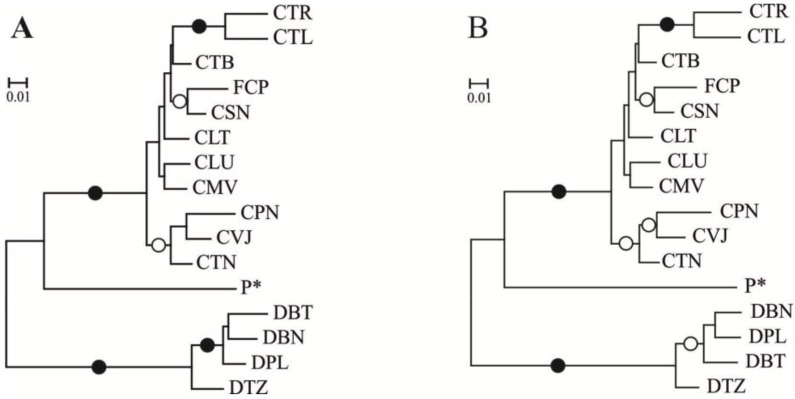
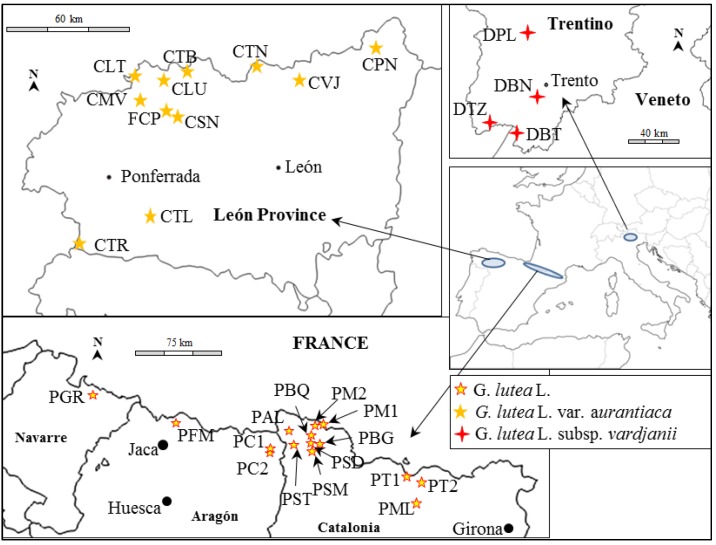
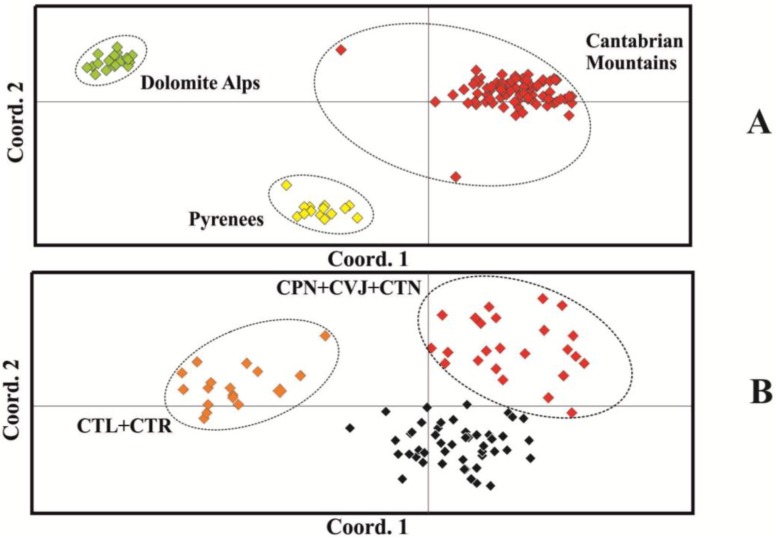
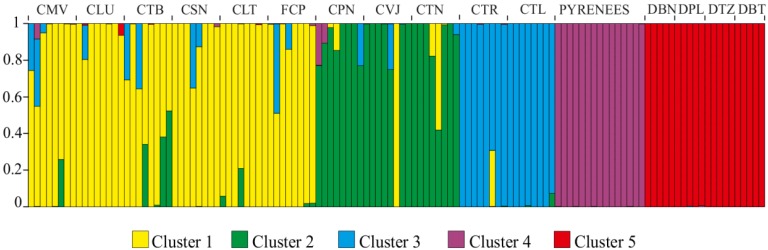
Gentiana lutea L. (G. lutea L.) is an endangered plant, patchily distributed along the mountains of Central and Southern Europe. In this study, inter-simple sequence repeat (ISSR) markers were used to investigate the genetic variation in this species within and among populations of G. lutea L. var. aurantiaca of the Cantabrian Mountains (Northwest Iberian Peninsula). Samples of G. lutea L. collected at different locations of the Pyrenees and samples of G. lutea L. subsp. vardjanii of the Dolomites Alps were also analyzed for comparison. Using nine ISSR primers, 106 bands were generated, and 89.6% of those were polymorphic. The populations from the Northwest Iberian Peninsula were clustered in three different groups, with a significant correlation between genetic and geographic distances. Gentiana lutea L. var. aurantiaca showed 19.8% private loci and demonstrated a remarkable level of genetic variation, both among populations and within populations; those populations with the highest level of isolation show the lowest genetic variation within populations. The low number of individuals, as well as the observed genetic structure of the analyzed populations makes it necessary to protect them to ensure their survival before they are too small to persist naturally.
黄龙胆(Gentiana lutea L.)是一种濒危植物,零散分布于欧洲中部和南部山区。在本研究中,利用简单序列重复区间(ISSR)标记来调查坎塔布连山脉(伊比利亚半岛西北部)黄龙胆变种aurantiana种群内和种群间的遗传变异。同时,对在比利牛斯山脉不同地点采集的黄龙胆样本以及多洛米蒂阿尔卑斯山脉的vardjanii亚种样本进行分析以作比较。使用9个ISSR引物共产生了106条带,其中89.6%为多态性条带。来自伊比利亚半岛西北部的种群聚为三个不同的组,遗传距离与地理距离之间存在显著相关性。黄龙胆变种aurantiana显示出19.8%的特有位点,并且在种群间和种群内均表现出显著水平的遗传变异;隔离程度最高的那些种群在种群内的遗传变异最低。个体数量较少以及所观察到的分析种群的遗传结构表明,有必要对它们加以保护,以确保在其数量过少而无法自然存续之前能够存活下来。