Wang Dongmei, Bowman Dwight D, Brown Heidi E, Harrington Laura C, Kaufman Phillip E, McKay Tanja, Nelson Charles Thomas, Sharp Julia L, Lund Robert
Department of Mathematical Sciences, Clemson University, Clemson, SC 29634-0975, USA.
Parasit Vectors. 2014 Jun 6;7:264. doi: 10.1186/1756-3305-7-264.
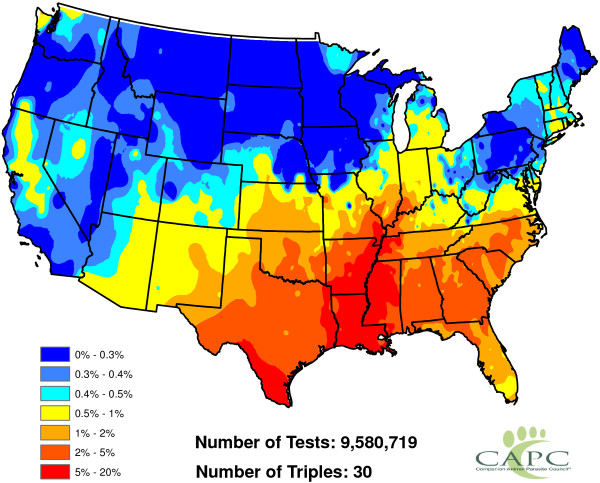
This paper examines the individual factors that influence prevalence rates of canine heartworm in the contiguous United States. A data set provided by the Companion Animal Parasite Council, which contains county-by-county results of over nine million heartworm tests conducted during 2011 and 2012, is analyzed for predictive structure. The goal is to identify the factors that are important in predicting high canine heartworm prevalence rates.
The factors considered in this study are those envisioned to impact whether a dog is likely to have heartworm. The factors include climate conditions (annual temperature, precipitation, and relative humidity), socio-economic conditions (population density, household income), local topography (surface water and forestation coverage, elevation), and vector presence (several mosquito species). A baseline heartworm prevalence map is constructed using estimated proportions of positive tests in each county of the United States. A smoothing algorithm is employed to remove localized small-scale variation and highlight large-scale structures of the prevalence rates. Logistic regression is used to identify significant factors for predicting heartworm prevalence.
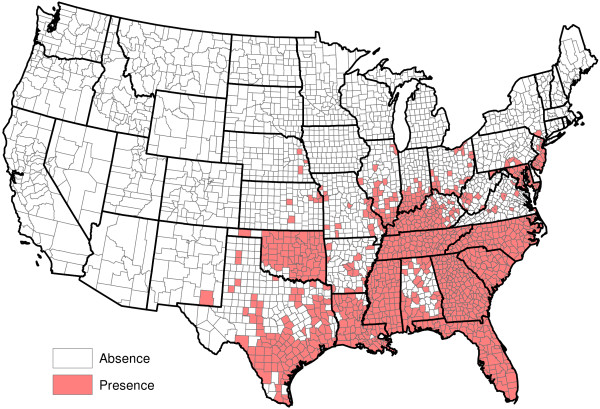
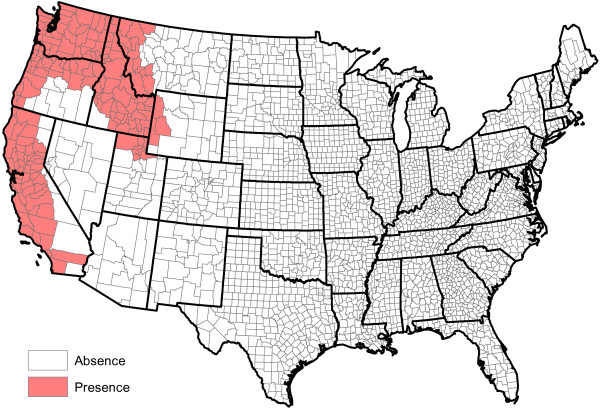
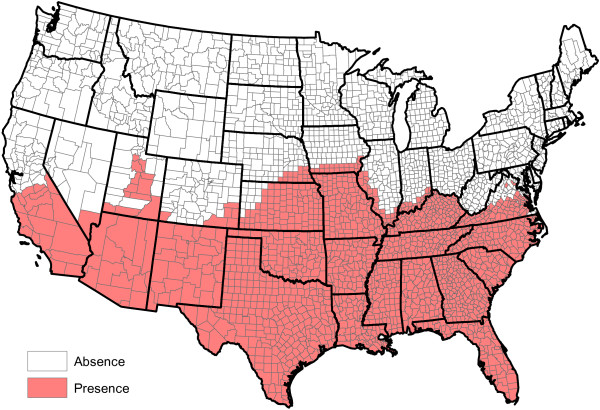
All of the examined factors have power in predicting heartworm prevalence, including median household income, annual temperature, county elevation, and presence of the mosquitoes Aedes trivittatus, Aedes sierrensis and Culex quinquefasciatus. Interactions among factors also exist.
The factors identified are significant in predicting heartworm prevalence. The factor list is likely incomplete due to data deficiencies. For example, coyotes and feral dogs are known reservoirs of heartworm infection. Unfortunately, no complete data of their populations were available. The regression model considered is currently being explored to forecast future values of heartworm prevalence.
本文研究了影响美国本土犬心丝虫患病率的个体因素。分析了伴侣动物寄生虫理事会提供的一个数据集,该数据集包含2011年和2012年期间进行的900多万次心丝虫检测的逐县结果,以寻找预测结构。目标是确定在预测犬心丝虫高患病率方面重要的因素。
本研究考虑的因素是那些预计会影响狗是否可能感染心丝虫的因素。这些因素包括气候条件(年温度、降水量和相对湿度)、社会经济条件(人口密度、家庭收入)、当地地形(地表水和森林覆盖、海拔)以及病媒存在情况(几种蚊子种类)。使用美国各县阳性检测的估计比例构建了一个心丝虫患病率基线地图。采用一种平滑算法来消除局部小规模变化,并突出患病率的大规模结构。使用逻辑回归来确定预测心丝虫患病率的重要因素。
所有检查的因素在预测心丝虫患病率方面都有作用,包括家庭收入中位数、年温度、县海拔以及三带喙库蚊、 sierrensis伊蚊和致倦库蚊的存在。因素之间也存在相互作用。
所确定的因素在预测心丝虫患病率方面具有重要意义。由于数据不足,因素列表可能不完整。例如,郊狼和野狗是已知的心丝虫感染宿主。不幸的是,没有它们种群的完整数据。目前正在探索所考虑的回归模型,以预测心丝虫患病率的未来值。