Abela E, Seiler A, Missimer J H, Federspiel A, Hess C W, Sturzenegger M, Weder B J, Wiest R
Support Center for Advanced Neuroimaging (SCAN), Institute for Diagnostic and Interventional Neuroradiology, University Hospital Inselspital and University of Bern, Bern, Switzerland.
Brain Struct Funct. 2015 Sep;220(5):2533-50. doi: 10.1007/s00429-014-0804-y. Epub 2014 Jun 7.
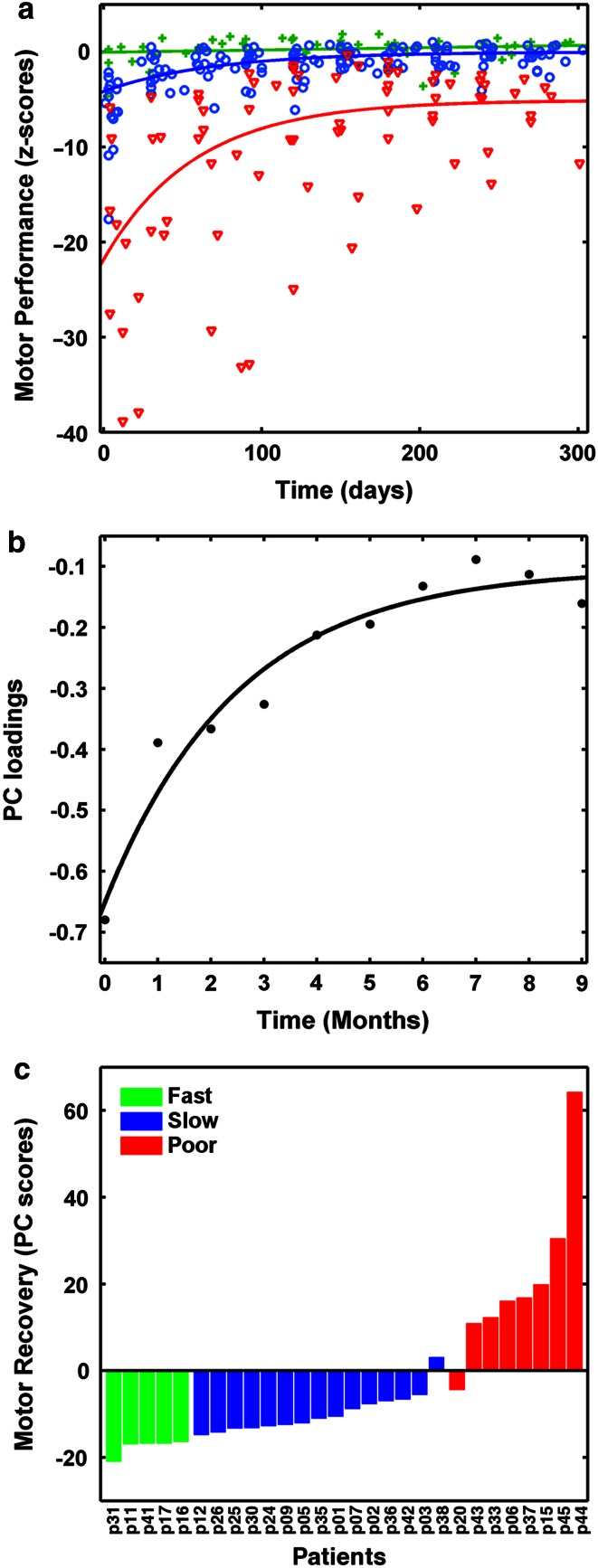
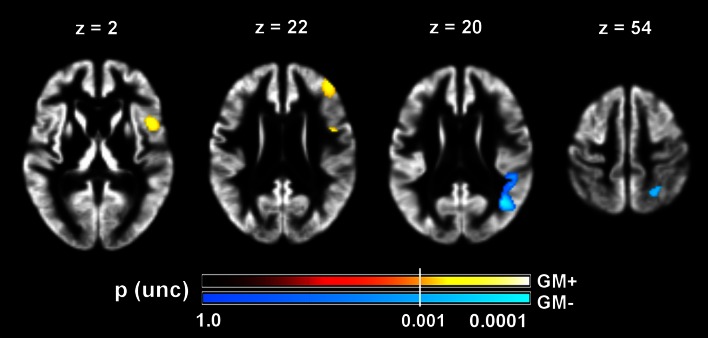
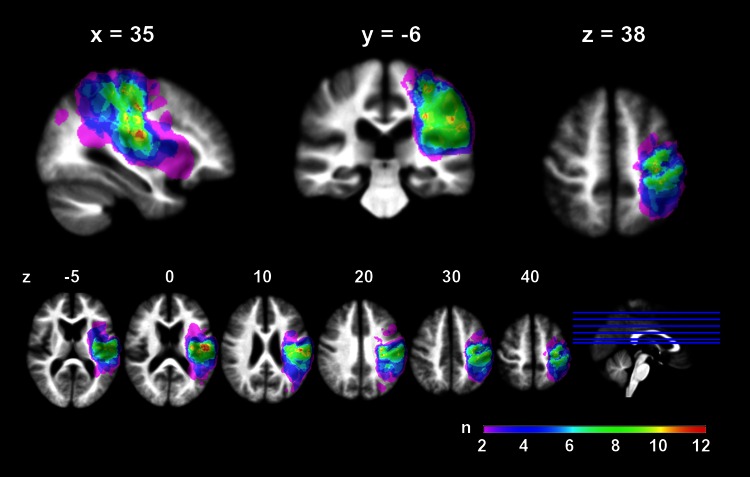
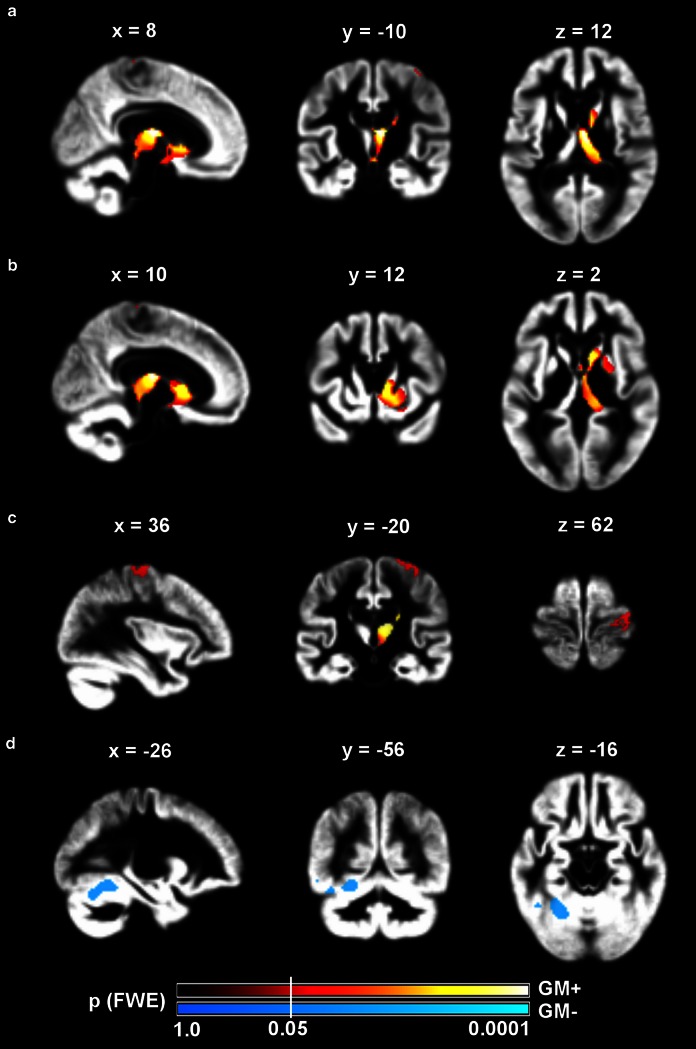
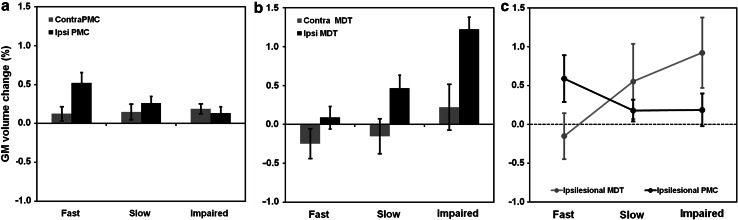
Preclinical studies using animal models have shown that grey matter plasticity in both perilesional and distant neural networks contributes to behavioural recovery of sensorimotor functions after ischaemic cortical stroke. Whether such morphological changes can be detected after human cortical stroke is not yet known, but this would be essential to better understand post-stroke brain architecture and its impact on recovery. Using serial behavioural and high-resolution magnetic resonance imaging (MRI) measurements, we tracked recovery of dexterous hand function in 28 patients with ischaemic stroke involving the primary sensorimotor cortices. We were able to classify three recovery subgroups (fast, slow, and poor) using response feature analysis of individual recovery curves. To detect areas with significant longitudinal grey matter volume (GMV) change, we performed tensor-based morphometry of MRI data acquired in the subacute phase, i.e. after the stage compromised by acute oedema and inflammation. We found significant GMV expansion in the perilesional premotor cortex, ipsilesional mediodorsal thalamus, and caudate nucleus, and GMV contraction in the contralesional cerebellum. According to an interaction model, patients with fast recovery had more perilesional than subcortical expansion, whereas the contrary was true for patients with impaired recovery. Also, there were significant voxel-wise correlations between motor performance and ipsilesional GMV contraction in the posterior parietal lobes and expansion in dorsolateral prefrontal cortex. In sum, perilesional GMV expansion is associated with successful recovery after cortical stroke, possibly reflecting the restructuring of local cortical networks. Distant changes within the prefrontal-striato-thalamic network are related to impaired recovery, probably indicating higher demands on cognitive control of motor behaviour.
使用动物模型的临床前研究表明,缺血性皮质卒中后,病灶周围和远处神经网络中的灰质可塑性有助于感觉运动功能的行为恢复。人类皮质卒中后是否能检测到这种形态学变化尚不清楚,但这对于更好地理解卒中后脑结构及其对恢复的影响至关重要。通过连续的行为和高分辨率磁共振成像(MRI)测量,我们追踪了28例涉及初级感觉运动皮层的缺血性卒中患者的灵巧手功能恢复情况。我们能够使用个体恢复曲线的响应特征分析对三个恢复亚组(快速、缓慢和不良)进行分类。为了检测灰质体积(GMV)有显著纵向变化的区域,我们对亚急性期(即急性水肿和炎症影响阶段之后)采集的MRI数据进行了基于张量的形态测量。我们发现病灶周围的运动前区皮层、同侧的内侧背侧丘脑和尾状核有显著的GMV扩张,而对侧小脑有GMV收缩。根据一个相互作用模型,恢复快的患者病灶周围的扩张比皮质下扩张更多,而恢复受损的患者则相反。此外,运动表现与后顶叶同侧GMV收缩以及背外侧前额叶皮层扩张之间存在显著的体素级相关性。总之,病灶周围GMV扩张与皮质卒中后的成功恢复相关,可能反映了局部皮质网络的重组。前额叶 - 纹状体 - 丘脑网络内的远处变化与恢复受损有关,可能表明对运动行为的认知控制有更高要求。