Fenno Lief E, Mattis Joanna, Ramakrishnan Charu, Hyun Minsuk, Lee Soo Yeun, He Miao, Tucciarone Jason, Selimbeyoglu Aslihan, Berndt Andre, Grosenick Logan, Zalocusky Kelly A, Bernstein Hannah, Swanson Haley, Perry Chelsey, Diester Ilka, Boyce Frederick M, Bass Caroline E, Neve Rachael, Huang Z Josh, Deisseroth Karl
1] Department of Neuroscience, Stanford University, Stanford, California, USA. [2] Department of Bioengineering, Stanford University, Stanford, California, USA. [3].
1] Department of Bioengineering, Stanford University, Stanford, California, USA. [2].
Nat Methods. 2014 Jul;11(7):763-72. doi: 10.1038/nmeth.2996. Epub 2014 Jun 8.
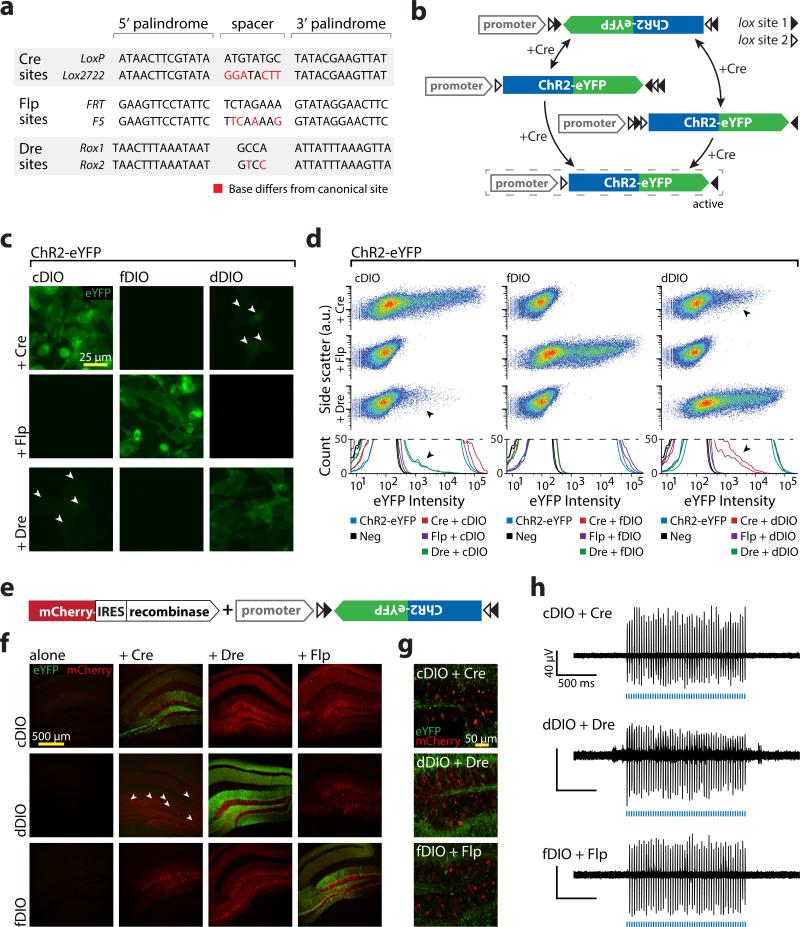
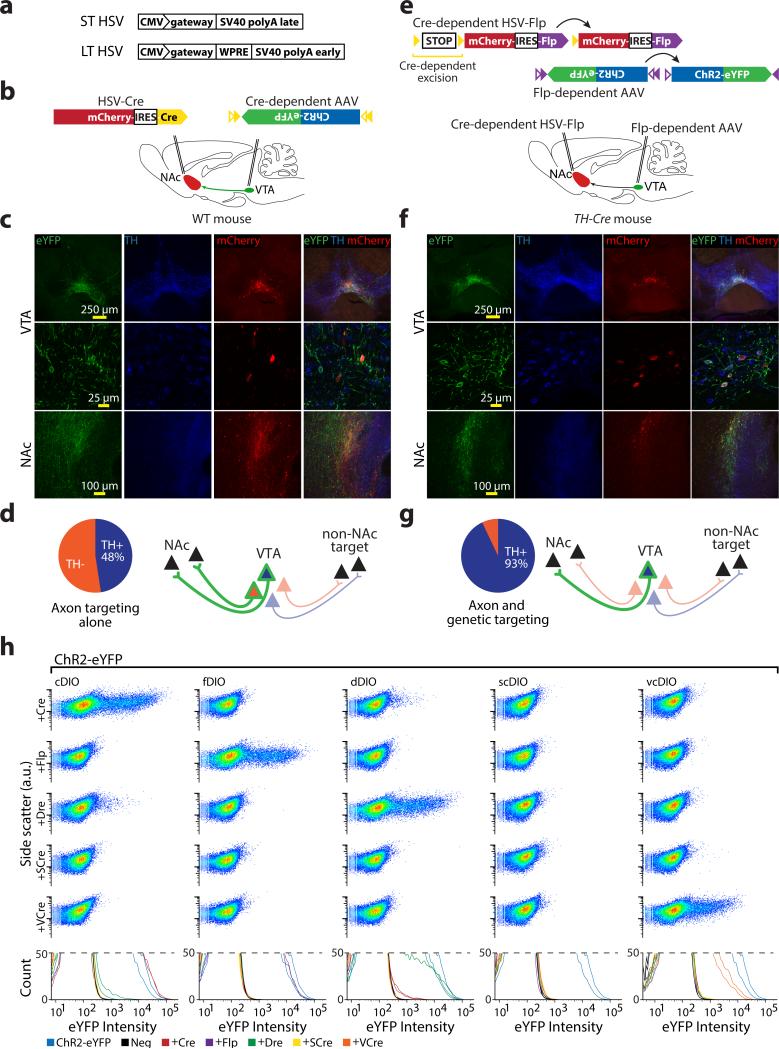
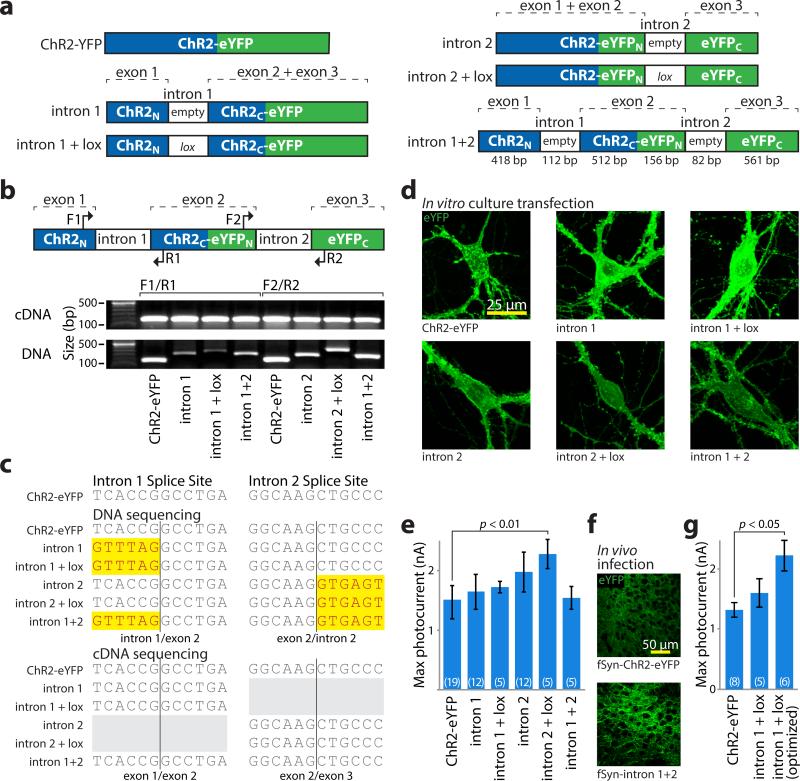
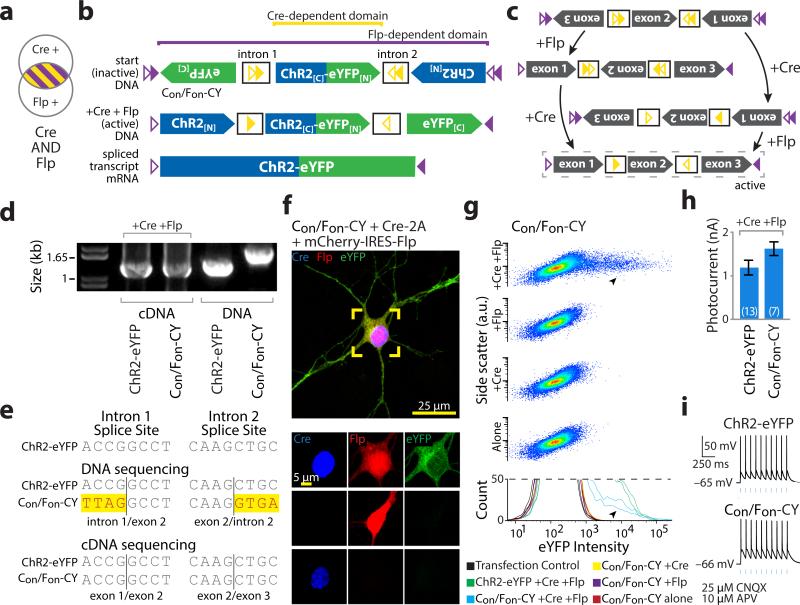
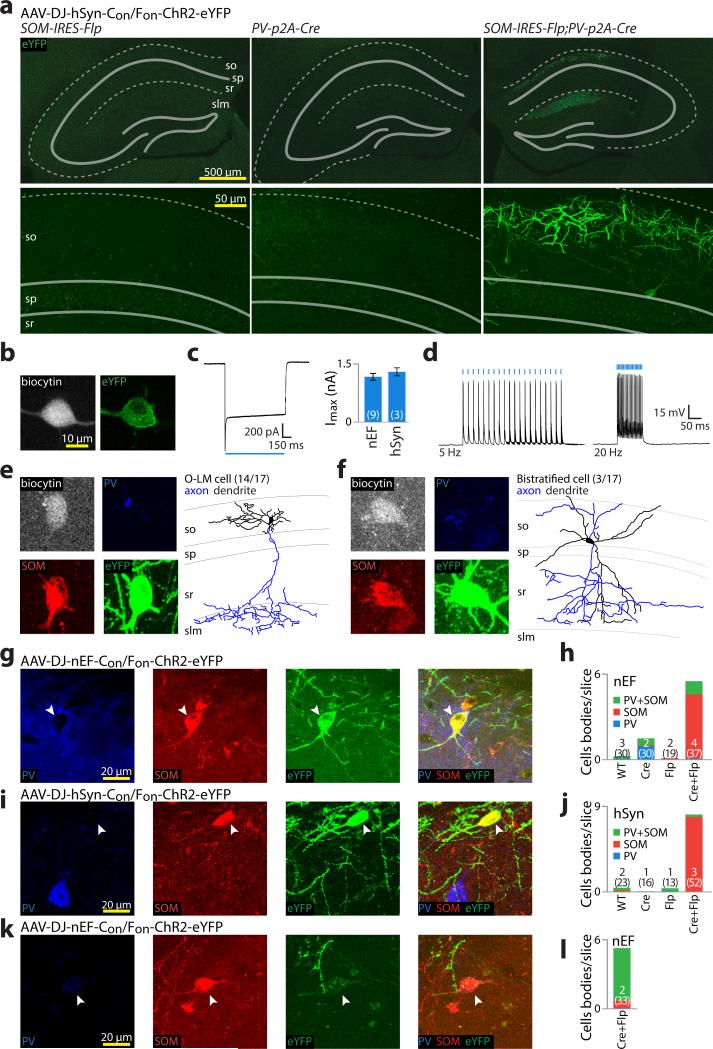
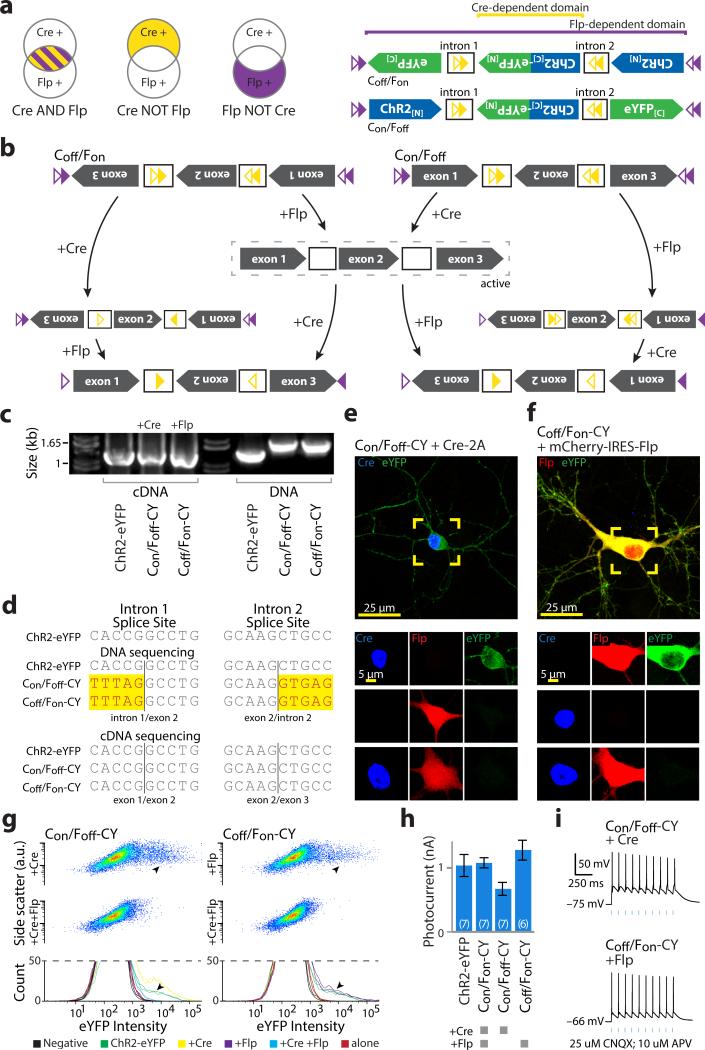
Precisely defining the roles of specific cell types is an intriguing frontier in the study of intact biological systems and has stimulated the rapid development of genetically encoded tools for observation and control. However, targeting these tools with adequate specificity remains challenging: most cell types are best defined by the intersection of two or more features such as active promoter elements, location and connectivity. Here we have combined engineered introns with specific recombinases to achieve expression of genetically encoded tools that is conditional upon multiple cell-type features, using Boolean logical operations all governed by a single versatile vector. We used this approach to target intersectionally specified populations of inhibitory interneurons in mammalian hippocampus and neurons of the ventral tegmental area defined by both genetic and wiring properties. This flexible and modular approach may expand the application of genetically encoded interventional and observational tools for intact-systems biology.
精确界定特定细胞类型的作用是完整生物系统研究中一个引人入胜的前沿领域,并推动了用于观察和控制的基因编码工具的快速发展。然而,以足够的特异性靶向这些工具仍然具有挑战性:大多数细胞类型最好通过两个或更多特征的交集来定义,如活性启动子元件、位置和连接性。在这里,我们将工程化内含子与特定重组酶相结合,以实现基于多种细胞类型特征的基因编码工具的表达,使用均由单个通用载体控制的布尔逻辑运算。我们使用这种方法靶向哺乳动物海马体中由遗传和连接特性共同定义的抑制性中间神经元的交集指定群体以及腹侧被盖区的神经元。这种灵活且模块化的方法可能会扩展基因编码的干预和观察工具在完整系统生物学中的应用。