Koenig M, Beggs A H, Moyer M, Scherpf S, Heindrich K, Bettecken T, Meng G, Müller C R, Lindlöf M, Kaariainen H, de la Chapellet A, Kiuru A, Savontaus M L, Gilgenkrantz H, Récan D, Chelly J, Kaplan J C, Covone A E, Archidiacono N, Romeo G, Liechti-Gailati S, Schneider V, Braga S, Moser H, Darras B T, Murphy P, Francke U, Chen J D, Morgan G, Denton M, Greenberg C R, Wrogemann K, Blonden L A, van Paassen M B, van Ommen G J, Kunkel L M
Division of Genetics, Howard Hughes Medical Institute, Children's Hospital, Boston.
Am J Hum Genet. 1989 Oct;45(4):498-506.
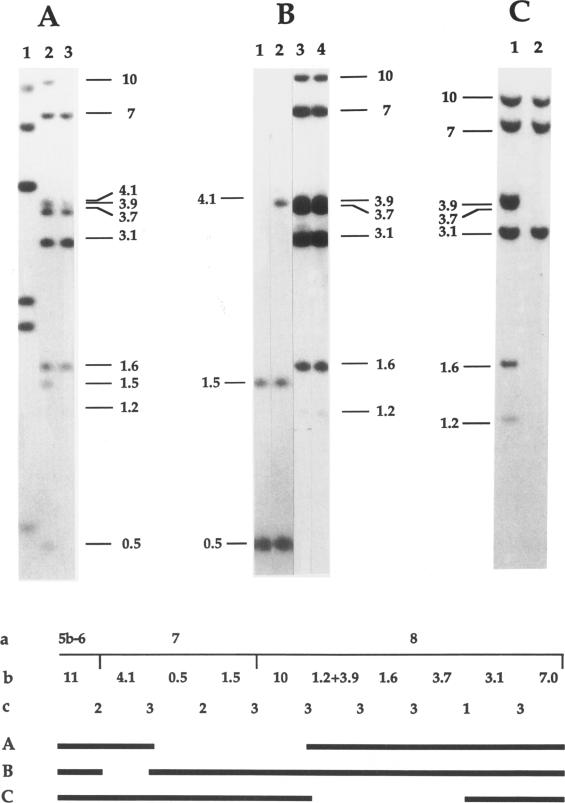
About 60% of both Duchenne muscular dystrophy (DMD) and Becker muscular dystrophy (BMD) is due to deletions of the dystrophin gene. For cases with a deletion mutation, the "reading frame" hypothesis predicts that BMD patients produce a semifunctional, internally deleted dystrophin protein, whereas DMD patients produce a severely truncated protein that would be unstable. To test the validity of this theory, we analyzed 258 independent deletions at the DMD/BMD locus. The correlation between phenotype and type of deletion mutation is in agreement with the "reading frame" theory in 92% of cases and is of diagnostic and prognostic significance. The distribution and frequency of deletions spanning the entire locus suggests that many "in-frame" deletions of the dystrophin gene are not detected because the individuals bearing them are either asymptomatic or exhibit non-DMD/non-BMD clinical features.