Gunhold Tina, Massen Jorg J M, Schiel Nicola, Souto Antonio, Bugnyar Thomas
Department of Cognitive Biology, University of Vienna, Vienna, Austria.
Department of Biology, Federal Rural University of Pernambuco, Recife, Brazil.
Anim Behav. 2014 May;91(100):79-91. doi: 10.1016/j.anbehav.2014.02.023.
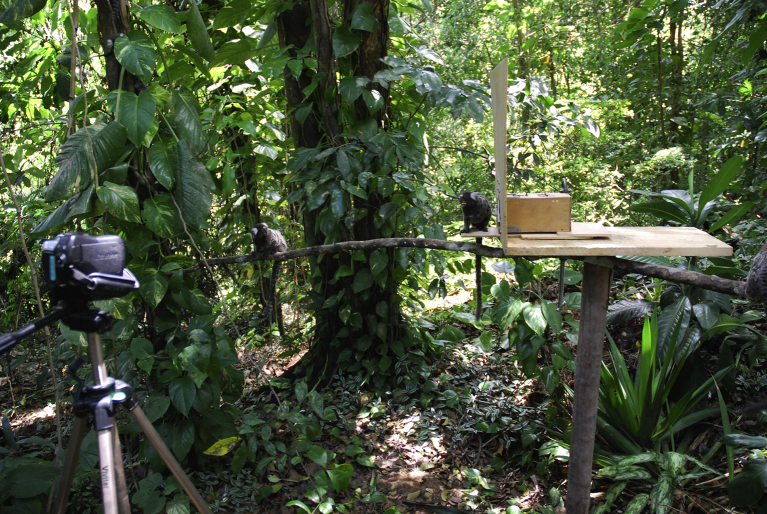
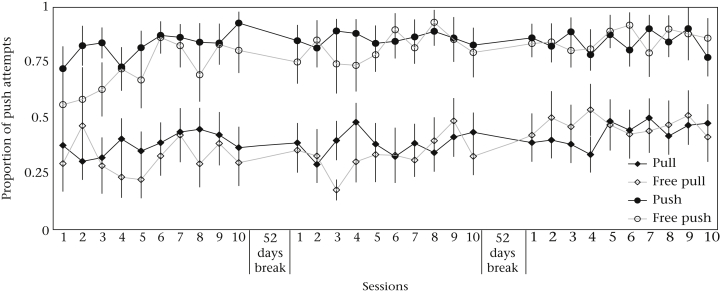
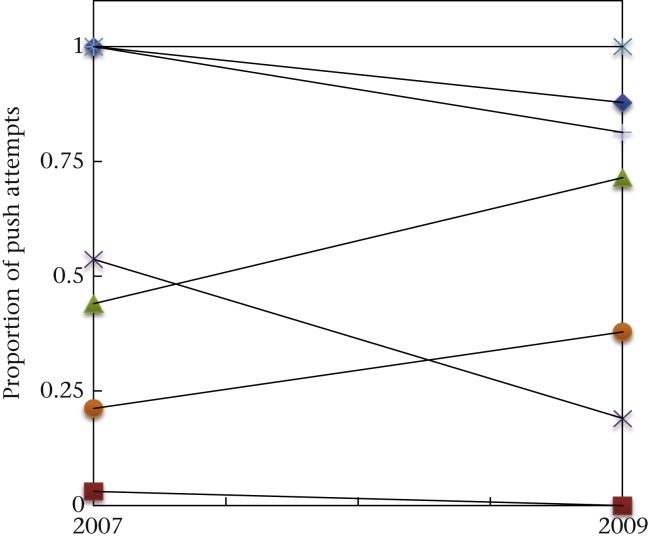
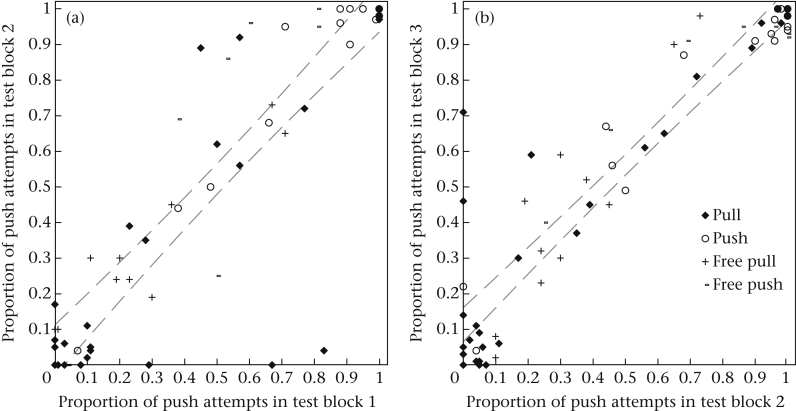
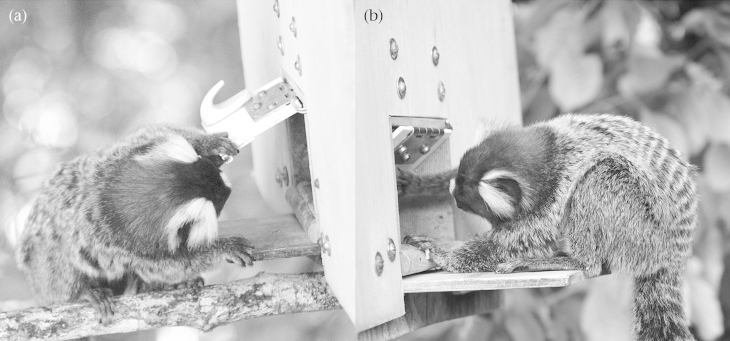
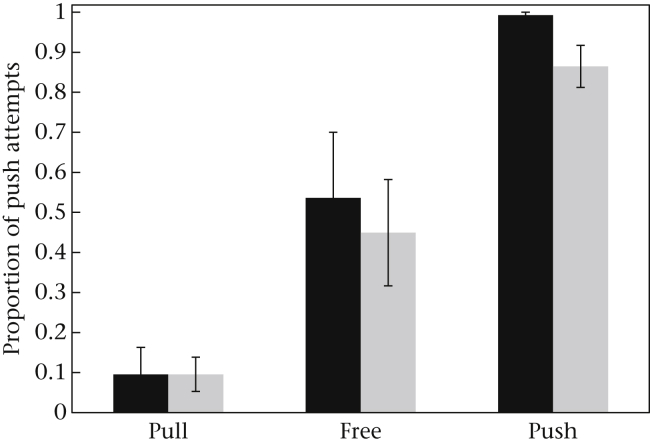
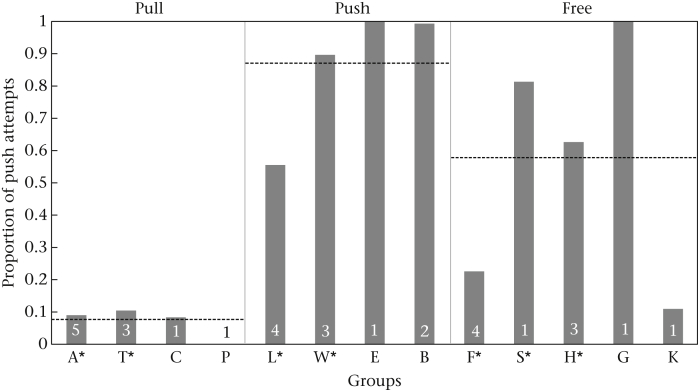
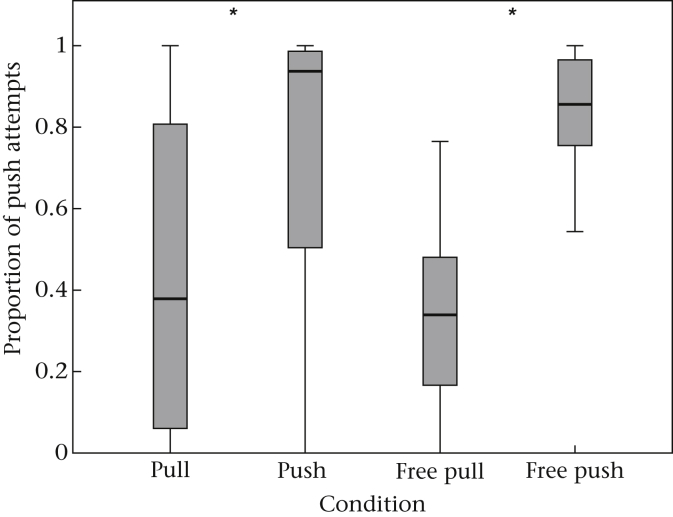
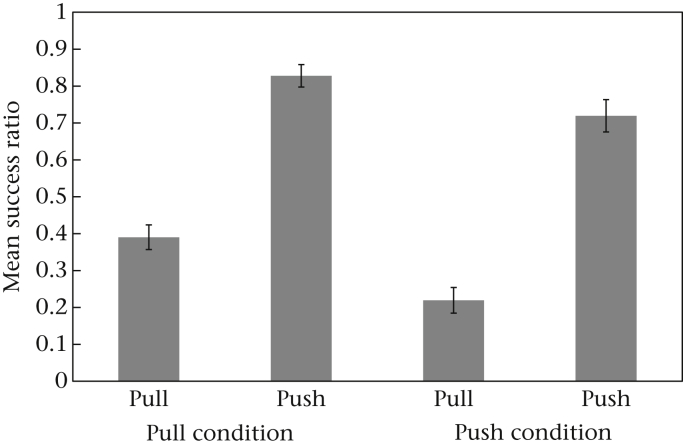
Experimental studies on traditions in animals have focused almost entirely on the initial transmission phase in captive populations. We conducted an open diffusion field experiment with 13 groups of wild common marmosets, . Seven groups contained individuals that were already familiar with the task ('push or pull' box) and thus served as potential models for naïve individuals. Additionally, in four groups one individual was trained for one of the two possible techniques and in two control groups no skilled individuals were present. First, we investigated whether experienced individuals would remember how to solve the task even after 2 years without exposure and whether they would still prefer their learned technique. Second, we tested whether naïve individuals would learn socially from their skilled family members and, more importantly, whether they would use the same technique. Third, we conducted several test blocks to see whether the individual and/or group behaviour would persist over time. Our results show that wild common marmosets were able to memorize, learn socially and maintain preferences of foraging techniques. This field experiment thus reveals a promising approach to studying social learning in the wild and provides the basis for long-term studies on tradition formation.
对动物传统行为的实验研究几乎完全集中在圈养种群的初始传播阶段。我们对13组野生普通狨猴进行了一项开放扩散场实验。其中七组中的个体已经熟悉了任务(“推或拉”盒子),因此可作为天真个体的潜在示范者。此外,在四组中,有一个个体接受了两种可能技术之一的训练,而在两个对照组中没有熟练个体。首先,我们调查了有经验的个体在两年未接触该任务后是否还记得如何解决任务,以及他们是否仍然偏爱所学技术。其次,我们测试了天真个体是否会从熟练的家庭成员那里进行社会学习,更重要的是,他们是否会使用相同的技术。第三,我们进行了几个测试块,以观察个体和/或群体行为是否会随着时间持续存在。我们的结果表明,野生普通狨猴能够记忆、进行社会学习并保持觅食技术偏好。因此,这项野外实验揭示了一种研究野生环境中社会学习的有前景的方法,并为传统形成的长期研究提供了基础。