Soundappan Saravanapriyan, Sundaramurthy Jothi Latha, Raghu Sandhya, Natanasabapathy Velmurugan
Post Graduate Student, Department of Conservative Dentistry and Endodontics, Meenakshi Ammal Dental College and Hospital, Chennai, Tamil Nadu, India.
Senior Lecturer, Department of Conservative Dentistry and Endodontics, Meenakshi Ammal Dental College and Hospital, Chennai, Tamil Nadu, India.
J Dent (Tehran). 2014 Mar;11(2):143-9. Epub 2014 Mar 31.
The aim of this study was to evaluate the marginal adaptation of Biodentine in comparison with Mineral Trioxide Aggregate (MTA) and Intermediate Restorative Material (IRM), as a root end filling material, using Scanning Electron Microscopy (SEM).
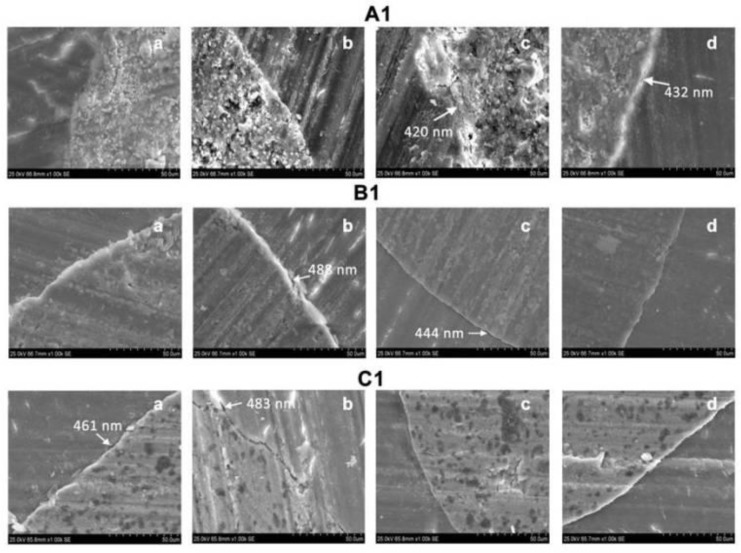
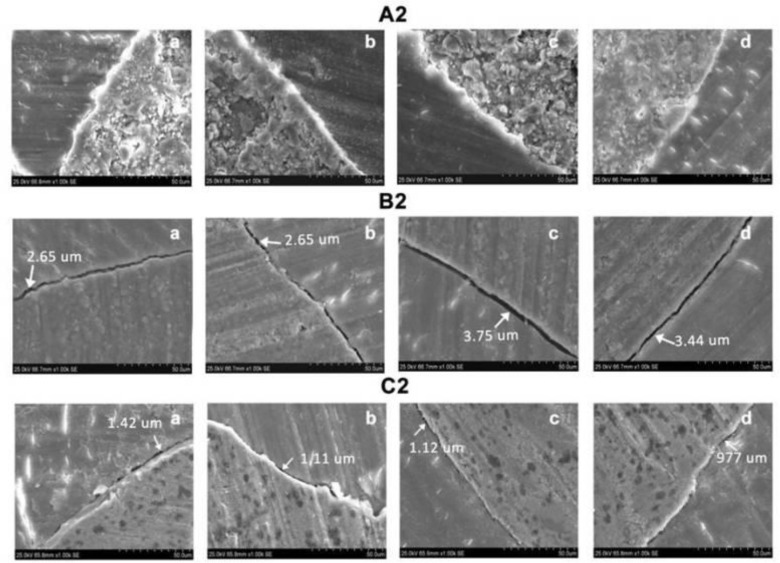
Thirty permanent maxillary central incisors were chemo-mechanically prepared and obturated. Three millimetres of the root end were resected and 3mm retro cavity preparation was done using ultrasonic retrotips. The samples were randomly divided into three groups (n=10) and were restored with root end filling materials: Group I - MTA, Group II - Biodentine, Group III - IRM. The root ends were sectioned transversely at 1mm and 2mm levels and evaluated for marginal adaptation using SEM. The gap between dentin and retro filling material was measured at four quadrants. The mean gap at 1mm level and 2mm level from the resected root tip and combined mean were calculated. The data were statistically analyzed, using one-way ANOVA and Tukey's HSD post hoc test for intergroup analysis and paired t-test for intragroup analysis.
The overall results showed no statistically significant difference between MTA and IRM but both were superior when compared to Biodentine. At 1mm level there was no statistically significant difference among any of the tested materials. At 2mm level MTA was superior to both IRM and Biodentine.
In overall comparison, MTA and IRM were significantly superior when compared to Biodentine in terms of marginal adaptation, when used as retrograde filling material.
本研究旨在通过扫描电子显微镜(SEM)评估生物陶瓷(Biodentine)作为根尖充填材料与三氧化矿物凝聚体(MTA)和中间修复材料(IRM)相比的边缘适应性。
选取30颗上颌恒中切牙,进行化学机械预备并充填。切除根尖3毫米,使用超声倒充尖制备3毫米的倒凹洞形。将样本随机分为三组(n = 10),并用根尖充填材料进行修复:第一组 - MTA,第二组 - 生物陶瓷,第三组 - IRM。在1毫米和2毫米水平横向剖切根尖,使用SEM评估边缘适应性。在四个象限测量牙本质与倒充材料之间的间隙。计算距切除根尖1毫米和2毫米水平的平均间隙以及综合平均值。数据采用单因素方差分析和Tukey's HSD事后检验进行组间分析,采用配对t检验进行组内分析。
总体结果显示,MTA和IRM之间无统计学显著差异,但与生物陶瓷相比两者均更具优势。在1毫米水平,任何一种受试材料之间均无统计学显著差异。在2毫米水平,MTA优于IRM和生物陶瓷。
总体比较时,MTA和IRM作为倒充材料使用时,在边缘适应性方面显著优于生物陶瓷。