Niu Xiaolin, Zhao Lianyou, Li Xue, Xue Yusheng, Wang Bin, Lv Zongqiang, Chen Jianghong, Sun Dongdong, Zheng Qiangsun
Department of Cardiology, Tangdu Hospital, the Fourth Military Medical University, Xi'an, Shaanxi, China.
Cadet Brigade of Fourth Military Medical University, Xi'an, Shaanxi, China.
PLoS One. 2014 Jun 9;9(6):e98713. doi: 10.1371/journal.pone.0098713. eCollection 2014.
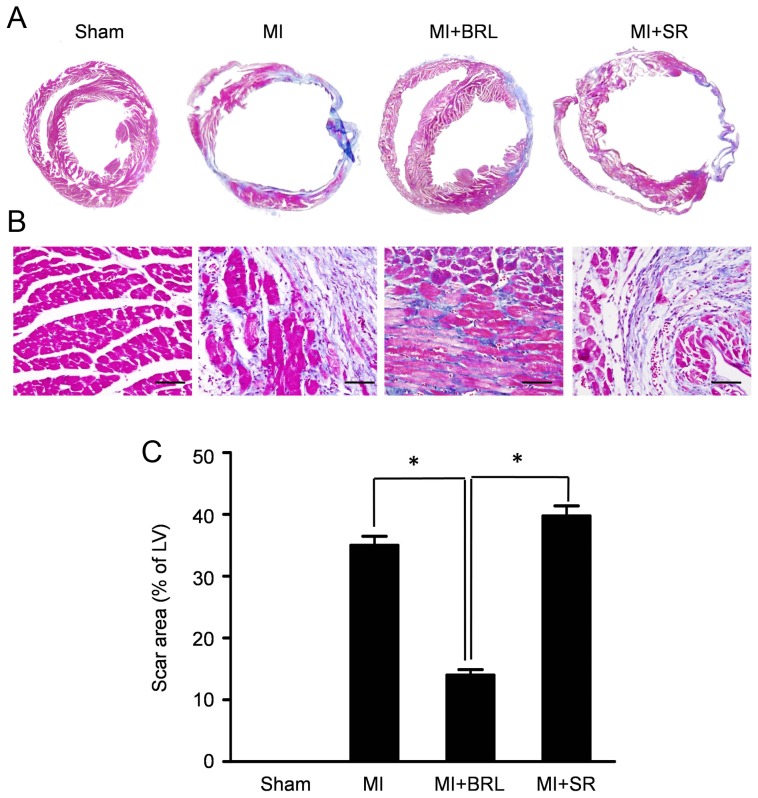
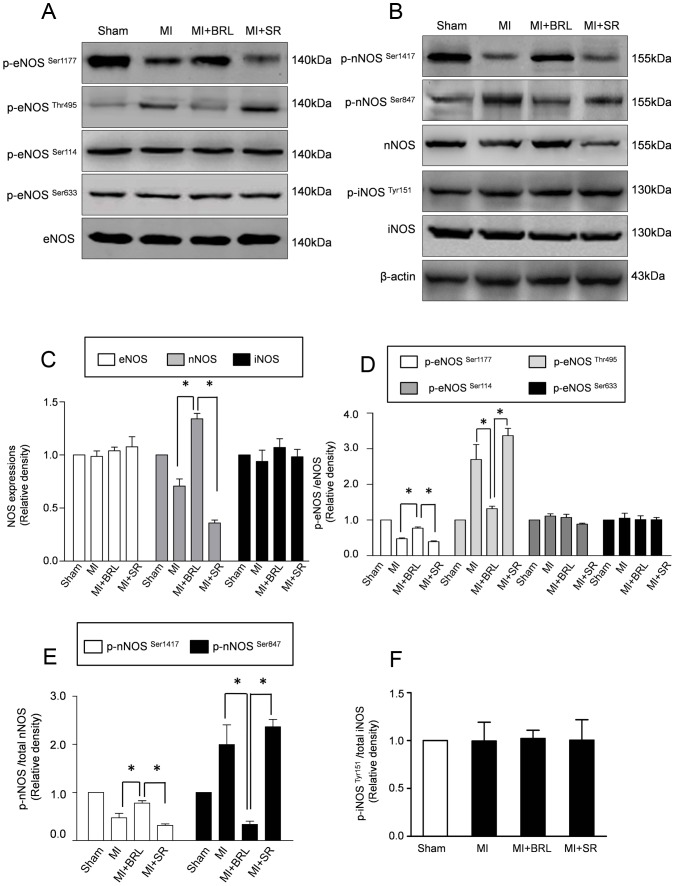
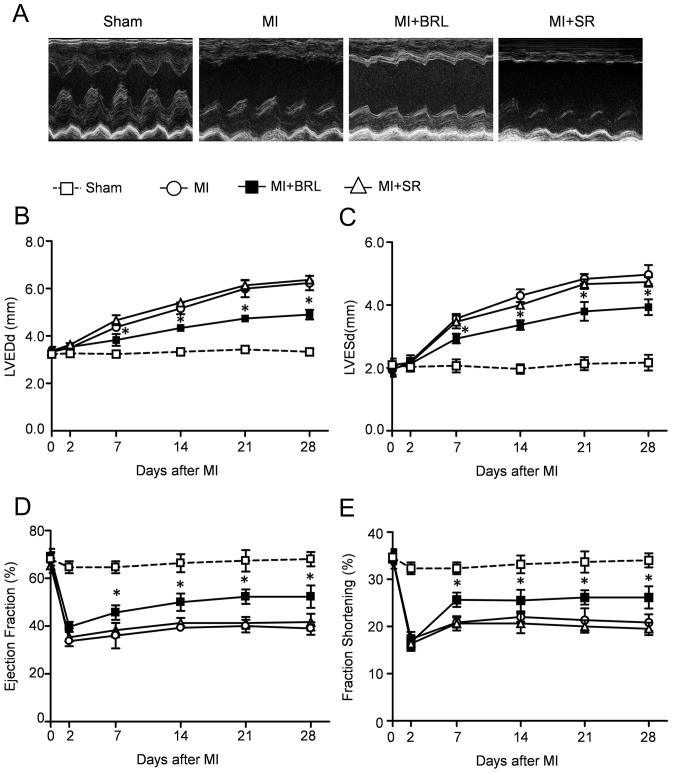
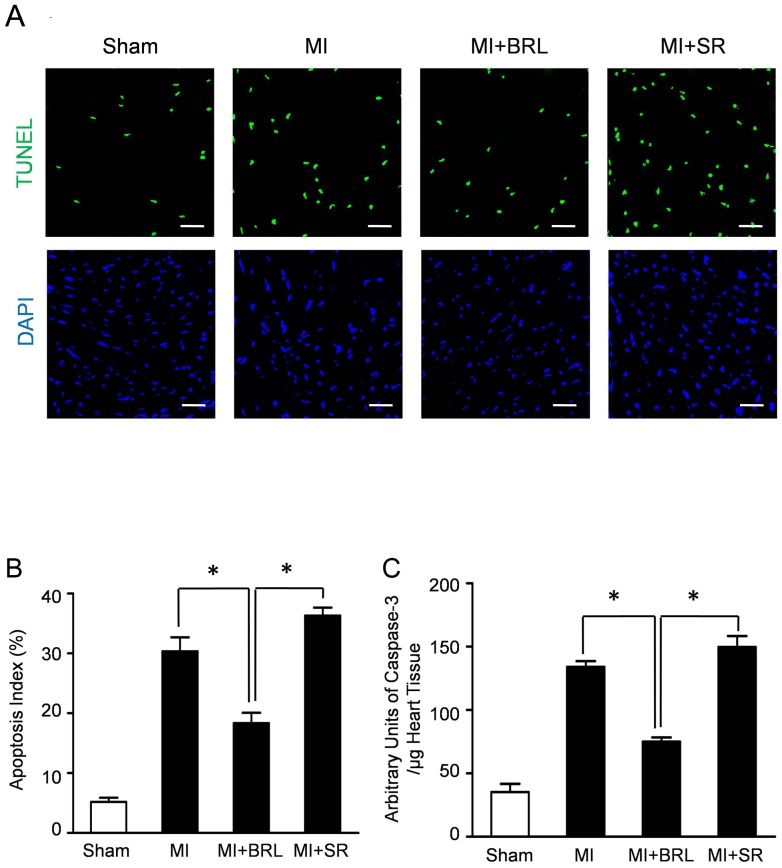
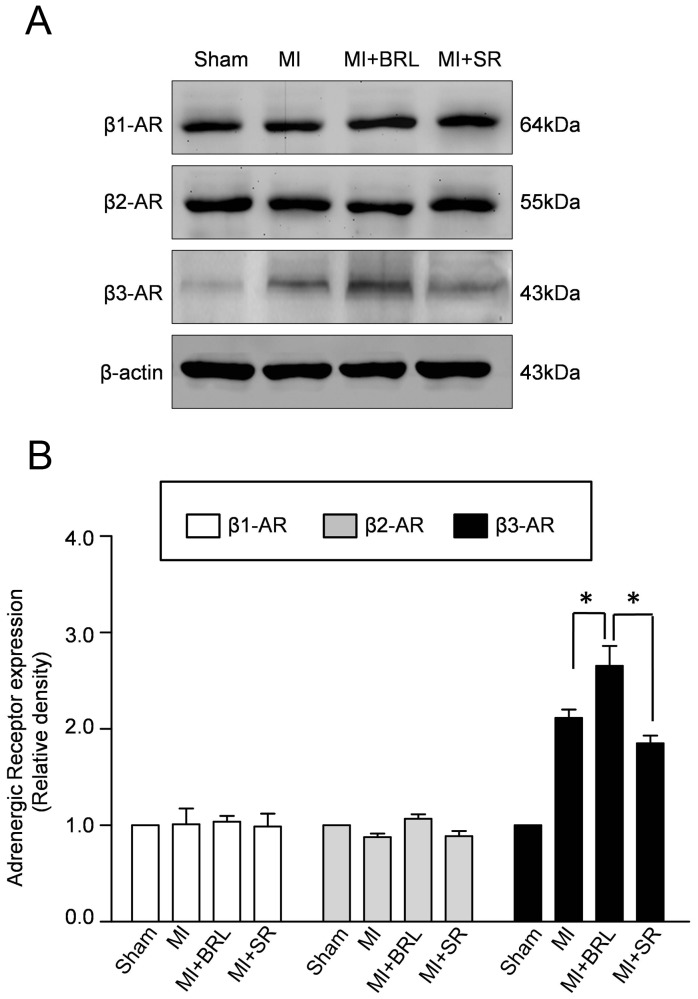
β3-adrenergic receptor (AR) and the downstream signaling, nitric oxide synthase (NOS) isoforms, have been emerged as novel modulators of heart function and even potential therapeutic targets for cardiovascular diseases. However, it is not known whether β3-AR plays cardioprotective effects against myocardial infarction (MI) injury. Therefore, the present study was designed to determine the effects of β3-AR on MI injury and to elucidate the underlying mechanism. MI model was constructed by left anterior descending (LAD) artery ligation. Animals were administrated with β3-AR agonist BRL37344 (BRL) or β3-AR inhibitor SR59230A (SR) respectively at 0.1 mg/kg/hour one day after MI operation. The scar area, cardiac function and the apoptosis of myocardial were assessed by Masson's trichrome stain, echocardiography and TUNEL assay respectively. Western blot analysis was performed to elucidate the expressions of target proteins. β3-AR activation with BRL administration significantly attenuated fibrosis and decreased scar area after MI. Moreover, BRL also preserved heart function, and reduced the apoptosis of cardiomyocyte induced by MI. Furthermore, BRL treatment altered the phosphorylation status of endothelial NOS (eNOS) and increased the expression of neuronal NOS (nNOS). These results suggested that β3-AR stimulation has a substantial effect on recovery of heart function. In addition, the activations of both eNOS and nNOS may be associated with the cardiac protective effects of β3-AR.
β3肾上腺素能受体(AR)及其下游信号通路,即一氧化氮合酶(NOS)同工型,已成为心脏功能的新型调节因子,甚至是心血管疾病的潜在治疗靶点。然而,β3-AR是否对心肌梗死(MI)损伤具有心脏保护作用尚不清楚。因此,本研究旨在确定β3-AR对MI损伤的影响并阐明其潜在机制。通过结扎左前降支(LAD)动脉构建MI模型。在MI手术后一天,动物分别以0.1mg/kg/小时的剂量给予β3-AR激动剂BRL37344(BRL)或β3-AR抑制剂SR59230A(SR)。分别通过Masson三色染色、超声心动图和TUNEL检测评估瘢痕面积、心脏功能和心肌细胞凋亡情况。进行蛋白质免疫印迹分析以阐明靶蛋白的表达。给予BRL激活β3-AR可显著减轻MI后的纤维化并减小瘢痕面积。此外,BRL还可保留心脏功能,并减少MI诱导的心肌细胞凋亡。此外,BRL治疗改变了内皮型NOS(eNOS)的磷酸化状态并增加了神经元型NOS(nNOS)的表达。这些结果表明,刺激β3-AR对心脏功能的恢复有显著影响。此外,eNOS和nNOS的激活可能与β3-AR的心脏保护作用有关。