Wang Bin, Xu Ming, Li Wenju, Li Xiaoli, Zheng Qiangsun, Niu Xiaolin
Department of Cardiology, Tangdu Hospital, Fourth Military Medical University, Xi'an, China.
Department of Physiology, School of Basic Medicine, Shanghai University of Traditional Chinese Medicine, Shanghai, China.
PLoS One. 2017 Jun 16;12(6):e0179648. doi: 10.1371/journal.pone.0179648. eCollection 2017.
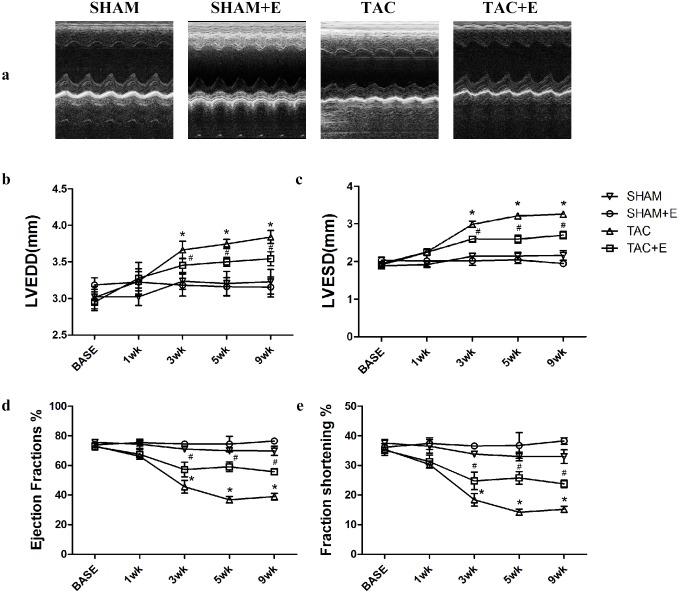
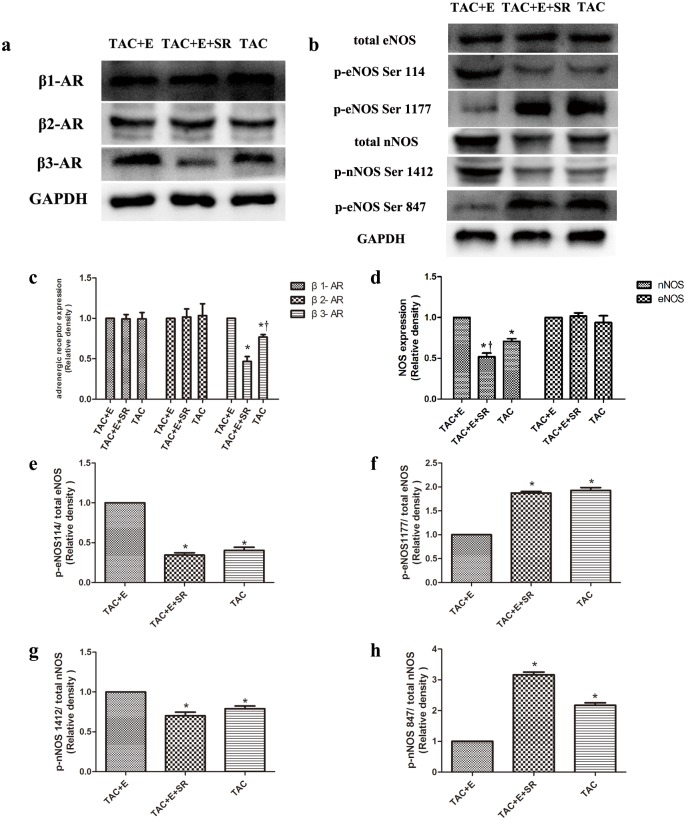
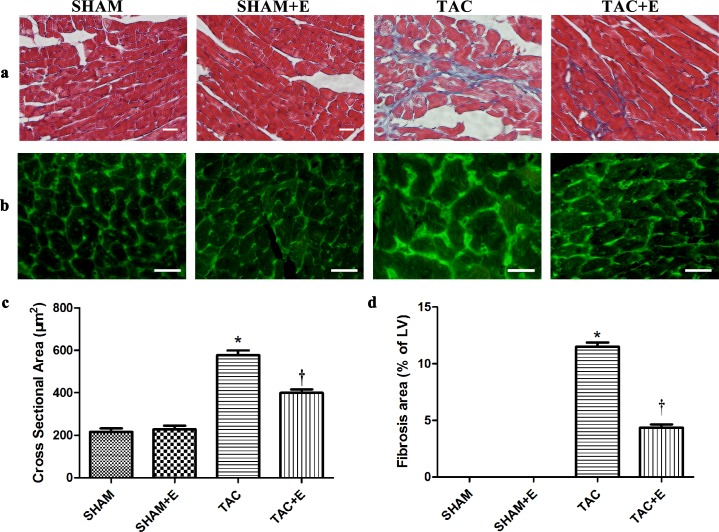
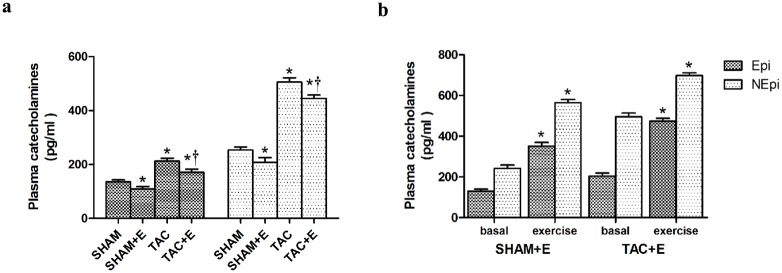
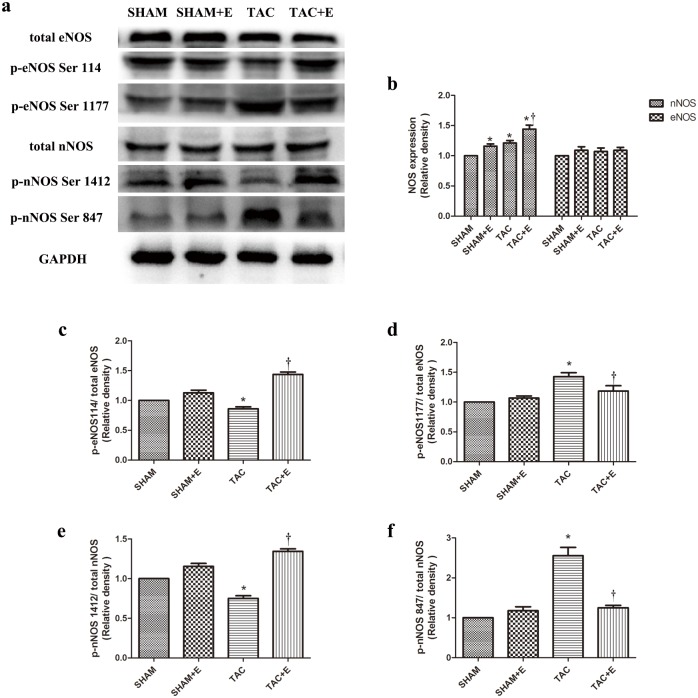
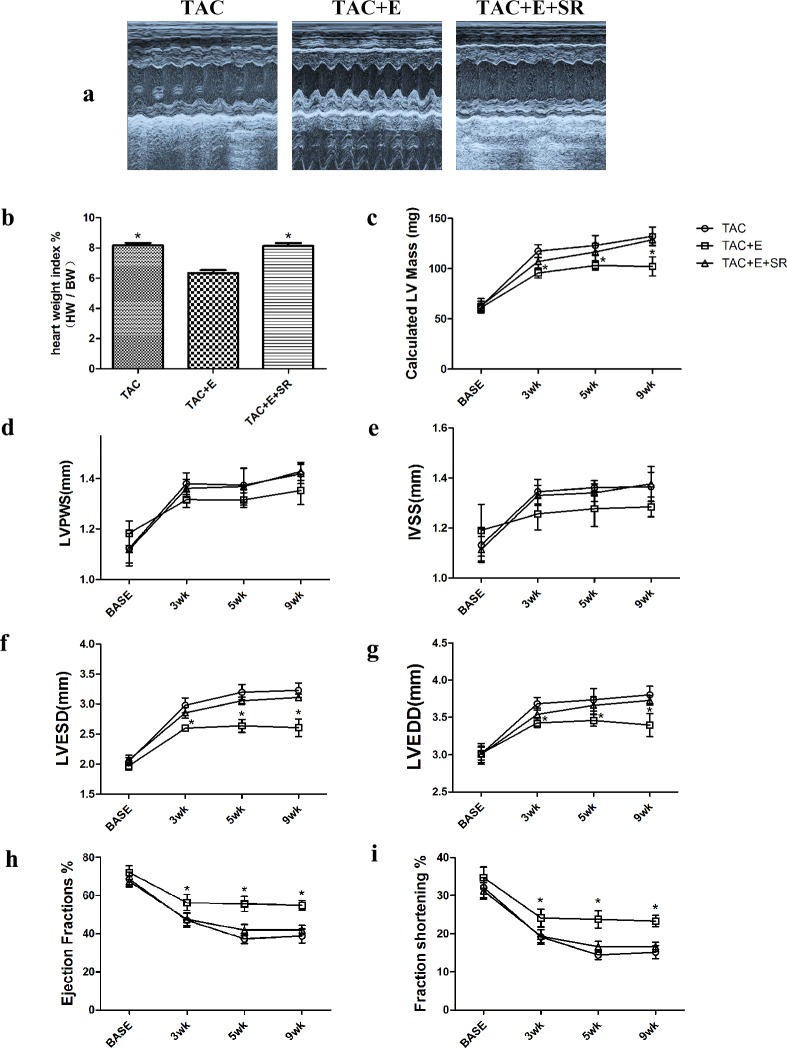
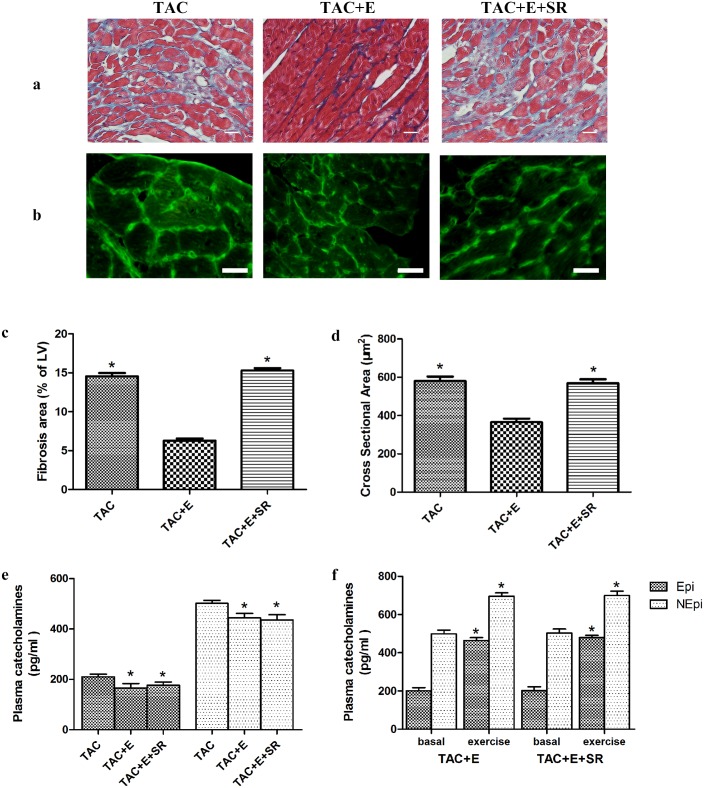
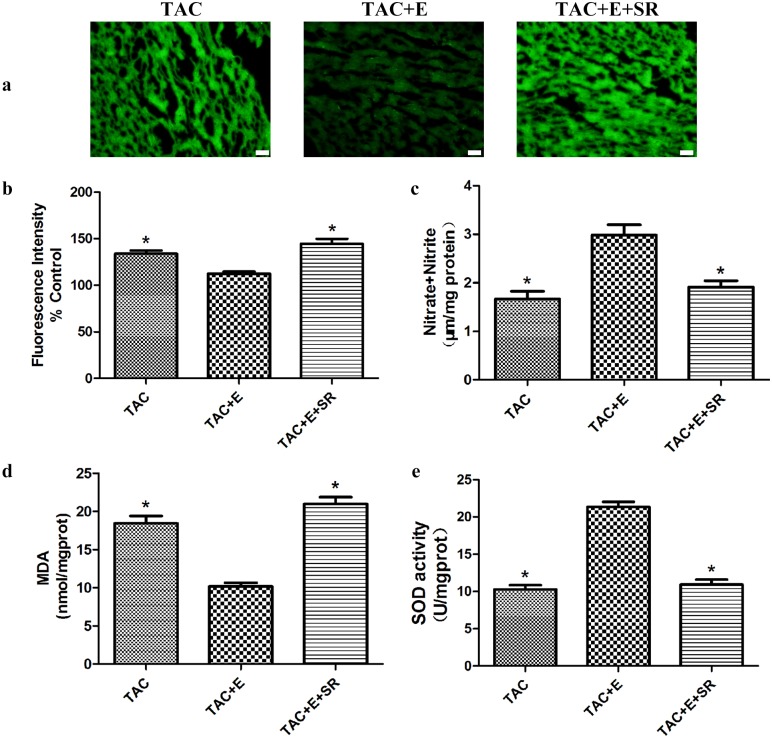
Aerobic exercise confers sustainable protection against cardiac hypertrophy and heart failure (HF). Nitric oxide synthase (NOS) and nitric oxide (NO) are known to play an important role in exercise-mediated cardioprotection, but the mechanism of NOS/NO stimulation during exercise remains unclear. The aim of this study is to determine the role of β3-adrenergic receptors (β3-ARs), NOS activation, and NO metabolites (nitrite and nitrosothiols) in the sustained cardioprotective effects of aerobic exercise. An HF model was constructed by transverse aortic constriction (TAC). Animals were treated with either moderate aerobic exercise by swimming for 9 weeks and/or the β3-AR-specific inhibitor SR59230A at 0.1 mg/kg/hour one day after TAC operation. Myocardial fibrosis, myocyte size, plasma catecholamine (CA) level, cardiac function and geometry were assessed using Masson's trichrome staining, FITC-labeled wheat germ agglutinin staining, enzyme-linked immuno sorbent assay (ELISA) and echocardiography, respectively. Western blot analysis was performed to elucidate the expression of target proteins. The concentration of myocardial NO production was evaluated using the nitrate reductase method. Myocardial oxidative stress was assessed by detecting the concentration of myocardial super oxidative dismutase (SOD), malonyldialdehyde (MDA), and reactive oxygen species (ROS). Aerobic exercise training improved dilated left ventricular function and partially attenuated the degree of cardiac hypertrophy and fibrosis in TAC mice. Moreover, the increased expression of β3-AR, activation of neuronal NOS (nNOS), and production of NO were detected after aerobic exercise training in TAC mice. However, selective inhibition of β3-AR by SR59230A abolished the upregulation and activation of nNOS induced NO production. Furthermore, aerobic exercise training decreased the myocardial ROS and MDA contents and increased myocardial levels of SOD; both effects were partially attenuated by SR59230A. Our study suggested that aerobic exercise training could improve cardiac systolic function and alleviate LV chamber dilation, cardiac fibrosis and hypertrophy in HF mice. The mechanism responsible for the protective effects of aerobic exercise is associated with the activation of the β3-AR-nNOS-NO pathway.
有氧运动可对心脏肥大和心力衰竭(HF)提供持久保护。已知一氧化氮合酶(NOS)和一氧化氮(NO)在运动介导的心脏保护中起重要作用,但运动过程中NOS/NO受刺激的机制仍不清楚。本研究的目的是确定β3-肾上腺素能受体(β3-ARs)、NOS激活和NO代谢产物(亚硝酸盐和亚硝基硫醇)在有氧运动持续心脏保护作用中的作用。通过横向主动脉缩窄(TAC)构建HF模型。动物在TAC手术后一天接受为期9周的适度游泳有氧运动治疗和/或0.1mg/kg/小时的β3-AR特异性抑制剂SR59230A治疗。分别使用Masson三色染色、异硫氰酸荧光素标记的麦胚凝集素染色、酶联免疫吸附测定(ELISA)和超声心动图评估心肌纤维化、心肌细胞大小、血浆儿茶酚胺(CA)水平、心脏功能和心脏形态。进行蛋白质印迹分析以阐明靶蛋白的表达。使用硝酸还原酶法评估心肌NO生成浓度。通过检测心肌超氧化物歧化酶(SOD)、丙二醛(MDA)和活性氧(ROS)的浓度评估心肌氧化应激。有氧运动训练改善了TAC小鼠扩张的左心室功能,并部分减轻了心脏肥大和纤维化程度。此外,在TAC小鼠进行有氧运动训练后,检测到β3-AR表达增加、神经元型NOS(nNOS)激活和NO生成。然而,SR59230A对β3-AR的选择性抑制消除了nNOS诱导的NO生成的上调和激活。此外,有氧运动训练降低了心肌ROS和MDA含量,并增加了心肌SOD水平;这两种作用均被SR59230A部分减弱。我们的研究表明,有氧运动训练可以改善HF小鼠的心脏收缩功能,减轻左心室扩张、心脏纤维化和肥大。有氧运动保护作用的机制与β3-AR-nNOS-NO途径的激活有关。