Matsumiya Magali, Harris Stephanie A, Satti Iman, Stockdale Lisa, Tanner Rachel, O'Shea Matthew K, Tameris Michelle, Mahomed Hassan, Hatherill Mark, Scriba Thomas J, Hanekom Willem A, McShane Helen, Fletcher Helen A
Jenner Institute, University of Oxford, Old Road Campus Research Building, Oxford, UK.
BMC Infect Dis. 2014 Jun 9;14:314. doi: 10.1186/1471-2334-14-314.
Tuberculosis (TB) remains a global health problem, with vaccination likely to be a necessary part of a successful control strategy. Results of the first Phase 2b efficacy trial of a candidate vaccine, MVA85A, evaluated in BCG-vaccinated infants were published last year. Although no improvement in efficacy above BCG alone was seen, cryopreserved samples from this trial provide an opportunity to study the immune response to vaccination in this population.
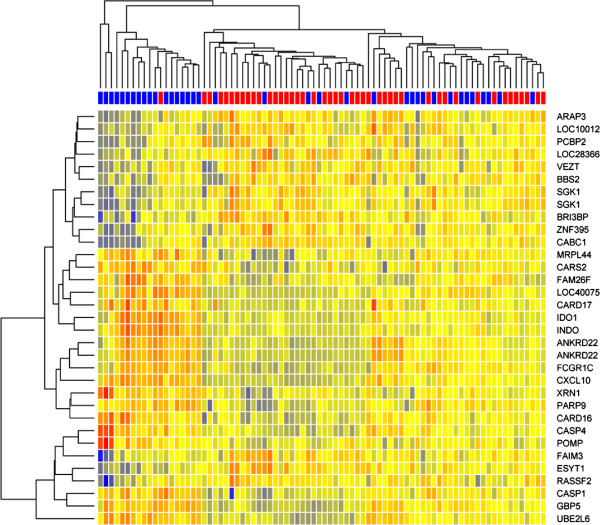
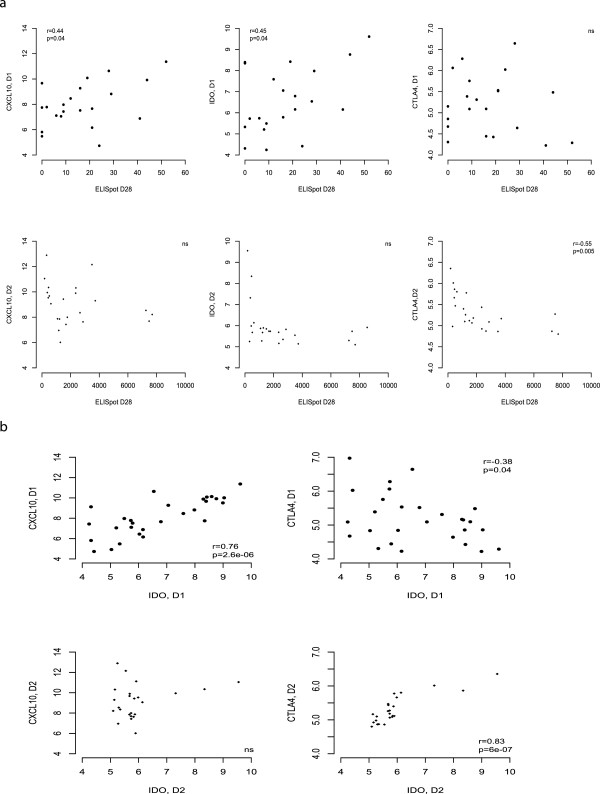
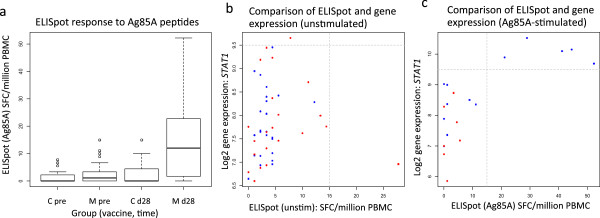
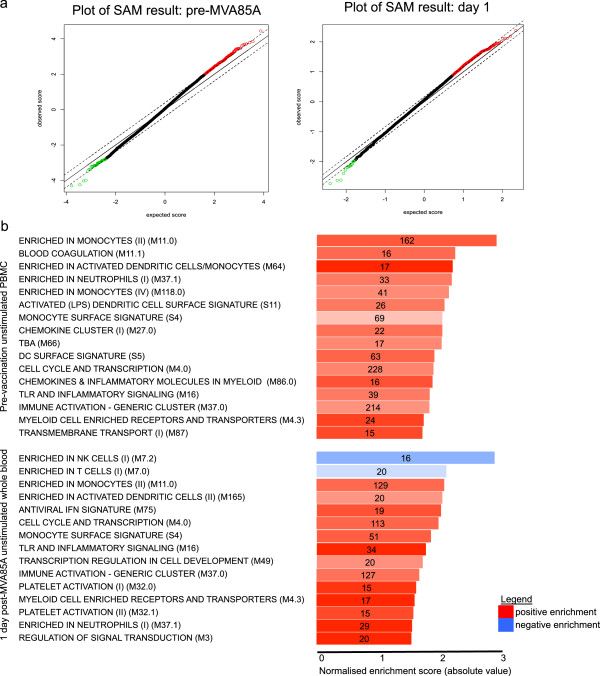
We investigated blood samples taken before vaccination (baseline) and one and 28 days post-vaccination with MVA85A or placebo (Candin). The IFN-γ ELISpot assay was performed at baseline and on day 28 to quantify the adaptive response to Ag85A peptides. Gene expression analysis was performed at all three timepoints to identify early gene signatures predictive of the magnitude of the subsequent adaptive T cell response using the significance analysis of microarrays (SAM) statistical package and gene set enrichment analysis.
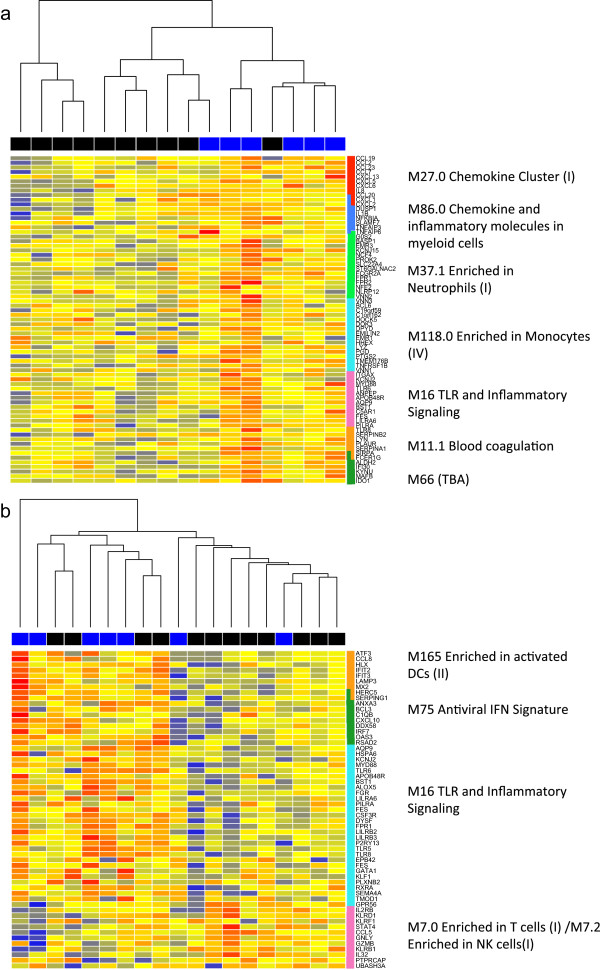
One day post-MVA85A, there is an induction of inflammatory pathways compared to placebo samples. Modules associated with myeloid cells and inflammation pre- and one day post-MVA85A correlate with a higher IFN-γ ELISpot response post-vaccination. By contrast, previous work done in UK adults shows early inflammation in this population is not associated with a strong T cell response but that induction of regulatory pathways inversely correlates with the magnitude of the T cell response. This may be indicative of important mechanistic differences in how T cell responses develop in these two populations following vaccination with MVA85A.
The results suggest the capacity of MVA85A to induce a strong innate response is key to the initiation of an adaptive immune response in South African infants but induction of regulatory pathways may be more important in UK adults. Understanding differences in immune response to vaccination between populations is likely to be an important aspect of developing successful vaccines and vaccination strategies.
ClinicalTrials.gov number NCT00953927.
结核病仍然是一个全球性的健康问题,疫苗接种可能是成功控制策略的必要组成部分。去年公布了在接种卡介苗的婴儿中评估候选疫苗MVA85A的首个2b期疗效试验结果。尽管未观察到疗效比单独使用卡介苗有改善,但该试验的冷冻保存样本为研究该人群对疫苗接种的免疫反应提供了机会。
我们调查了接种疫苗前(基线)以及接种MVA85A或安慰剂(Candin)后1天和28天采集的血样。在基线和第28天进行IFN-γ ELISpot检测,以量化对Ag85A肽的适应性反应。在所有三个时间点进行基因表达分析,使用微阵列显著性分析(SAM)统计软件包和基因集富集分析来识别预测后续适应性T细胞反应强度的早期基因特征。
与安慰剂样本相比,接种MVA85A后1天,炎症通路被诱导。在接种MVA85A前和后1天与髓样细胞和炎症相关的模块与接种疫苗后较高的IFN-γ ELISpot反应相关。相比之下,此前在英国成年人中进行的研究表明,该人群中的早期炎症与强烈的T细胞反应无关,但调节通路的诱导与T细胞反应强度呈负相关。这可能表明在接种MVA85A后,这两个人群中T细胞反应的发展机制存在重要差异。
结果表明,MVA85A诱导强烈先天反应的能力是南非婴儿启动适应性免疫反应的关键,但在英国成年人中,调节通路的诱导可能更为重要。了解不同人群对疫苗接种的免疫反应差异可能是开发成功疫苗和接种策略的一个重要方面。
ClinicalTrials.gov编号NCT00953927。