Schweikert Bernd, Pittrow David, Vizza Carmine Dario, Pepke-Zaba Joanna, Hoeper Marius M, Gabriel Anja, Berg Jenny, Sikirica Mirko
OptumInsight, Konrad-Zuse-Platz 11, D- 81829 Munich, Germany.
BMC Health Serv Res. 2014 Jun 9;14:246. doi: 10.1186/1472-6963-14-246.
Chronic Thromboembolic Pulmonary Hypertension (CTEPH) results from incomplete resolution of a pulmonary embolus, leading to pulmonary hypertension and progressive right heart failure and death. We aimed to describe the demographics, treatment patterns, health resource utilization and related costs of patients with CTEPH.
In specialized PH centres across six European countries, medical charts of CTEPH patients on PH medication were retrospectively extracted (chart review between 2006 and 2009). Resource utilization was valued using country-specific unit costs. Descriptive statistical analyses were performed.
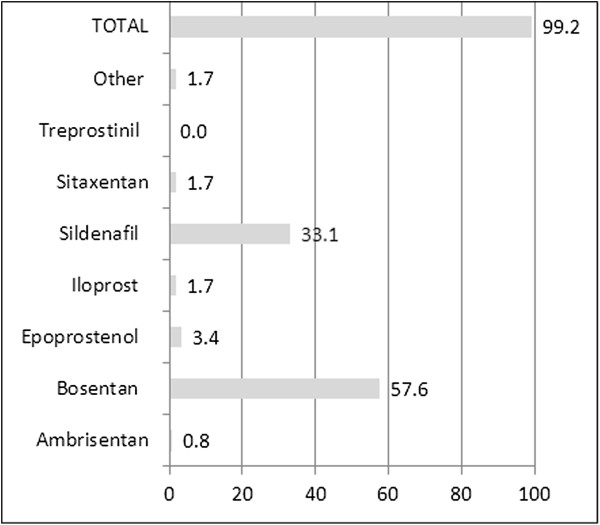
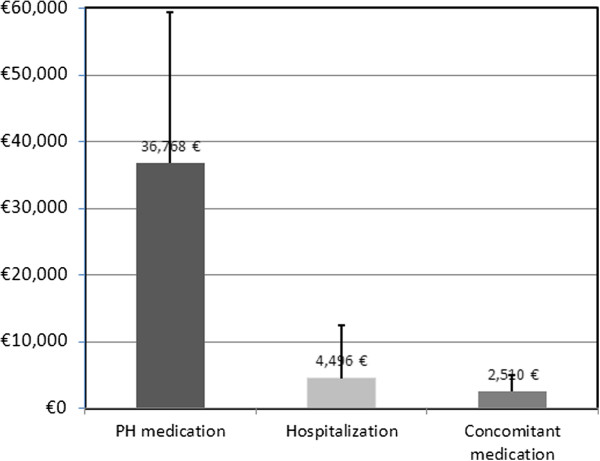
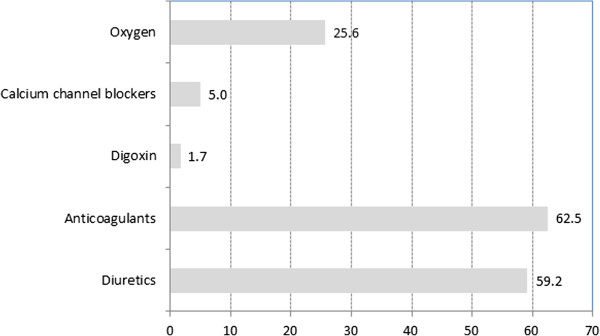
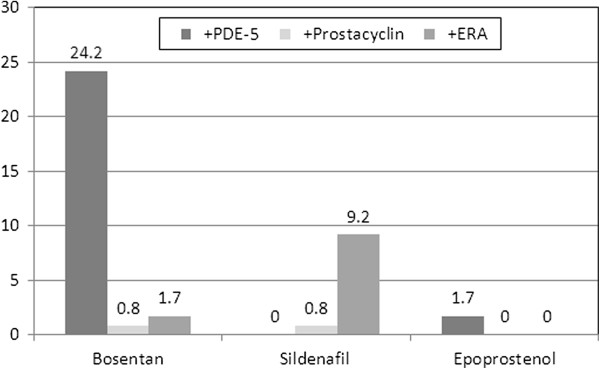
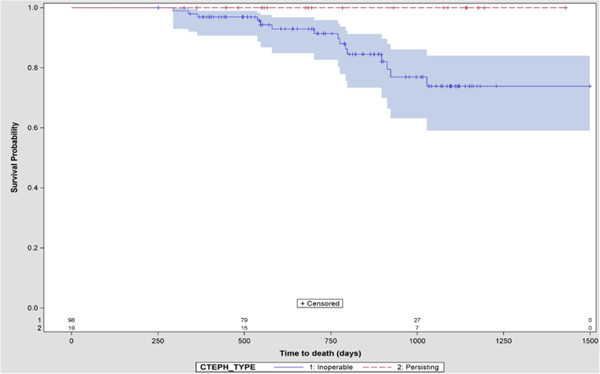
Twenty-one hospitals documented 119 consecutive CTEPH patients over an average of 25.4 months. Patients were inoperable (83.9%) or persistent after surgery (16.0%) with mean age 67.5 ± 12.3 years, 61% were female. The average 6-minute walking distance was 298 ± 120 meters, and NYHA class II/III/IV was 27/59/14%. At baseline, 59.7% patients received endothelin receptor antagonist, 34.4% phosphodiesterase-5 inhibitors, and 5.8% prostacyclin. Adding a second PH medication was the most common regimen change. CTEPH patients experienced 1.8 ± 2.2 hospitalizations per year accounting for 14.8 ± 26.1 days in hospital. Patients paid on average 2.8 office visits per year to their general practitioner and 1.3 visits to a specialist. Unadjusted annual mortality rate was 6.0%. Annual cost of PH specific medication was the predominant economic factor averaging € 36,768 per year. Costs for hospitalizations (€ 4,496) and concomitant medications (€ 2,510) were substantially lower. Other health care resource items only accounted for marginal additional costs.
CTEPH patients are characterised by substantial morbidity and mortality. Health care utilisation, predominantly due to off-label use of PH drugs, is significant.
慢性血栓栓塞性肺动脉高压(CTEPH)由肺栓塞未完全溶解所致,可导致肺动脉高压、进行性右心衰竭及死亡。我们旨在描述CTEPH患者的人口统计学特征、治疗模式、卫生资源利用情况及相关费用。
在六个欧洲国家的专业肺动脉高压中心,对接受肺动脉高压治疗药物的CTEPH患者的病历进行回顾性提取(病历回顾时间为2006年至2009年)。使用各国特定的单位成本对资源利用情况进行估值。进行描述性统计分析。
21家医院记录了119例连续的CTEPH患者,平均随访时间为25.4个月。患者无法进行手术(83.9%)或术后仍有症状(16.0%),平均年龄为67.5±12.3岁,61%为女性。平均6分钟步行距离为298±120米,纽约心脏协会(NYHA)心功能分级II/III/IV级的患者分别占27/59/14%。基线时,59.7%的患者接受内皮素受体拮抗剂治疗,34.4%接受磷酸二酯酶-5抑制剂治疗,5.8%接受前列环素治疗。添加第二种肺动脉高压治疗药物是最常见的治疗方案改变。CTEPH患者每年住院1.8±2.2次,住院时间为14.8±26.1天。患者每年平均看全科医生2.8次,看专科医生1.3次。未经调整的年死亡率为6.0%。肺动脉高压特定药物的年度费用是主要经济因素,平均每年36,768欧元。住院费用(4,496欧元)和伴随用药费用(2,510欧元)则低得多。其他卫生保健资源项目仅占少量额外费用。
CTEPH患者具有较高的发病率和死亡率。卫生保健利用情况显著,主要原因是肺动脉高压药物的非标签使用。