Xu Ming, Li Xiao-Xue, Chen Yang, Pitzer Ashley L, Zhang Yang, Li Pin-Lan
Department of Pharmacology and Toxicology, School of Medicine, Virginia Commonwealth University, Richmond, VA, USA.
J Cell Mol Med. 2014 Nov;18(11):2165-75. doi: 10.1111/jcmm.12326. Epub 2014 Jun 9.
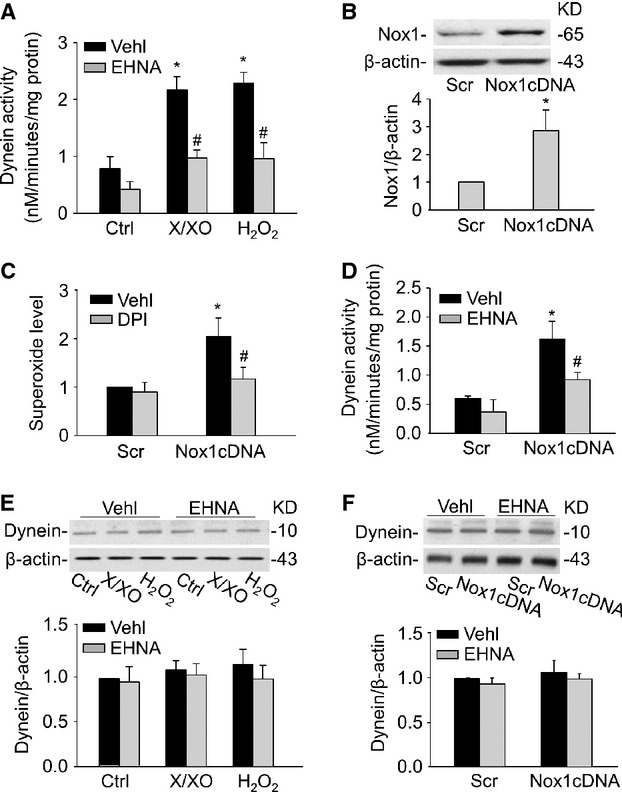
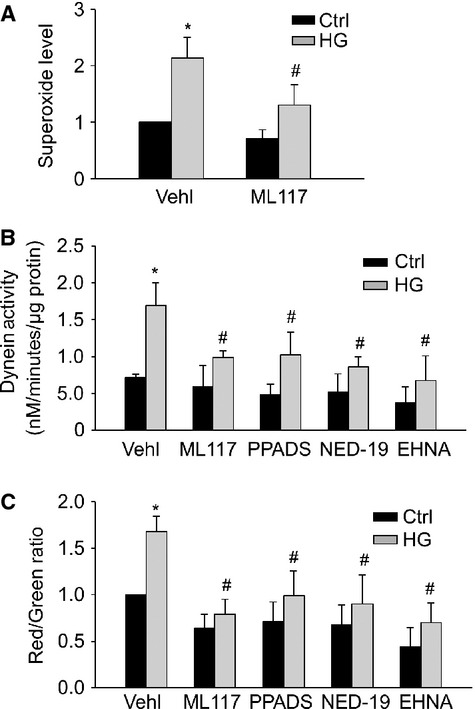
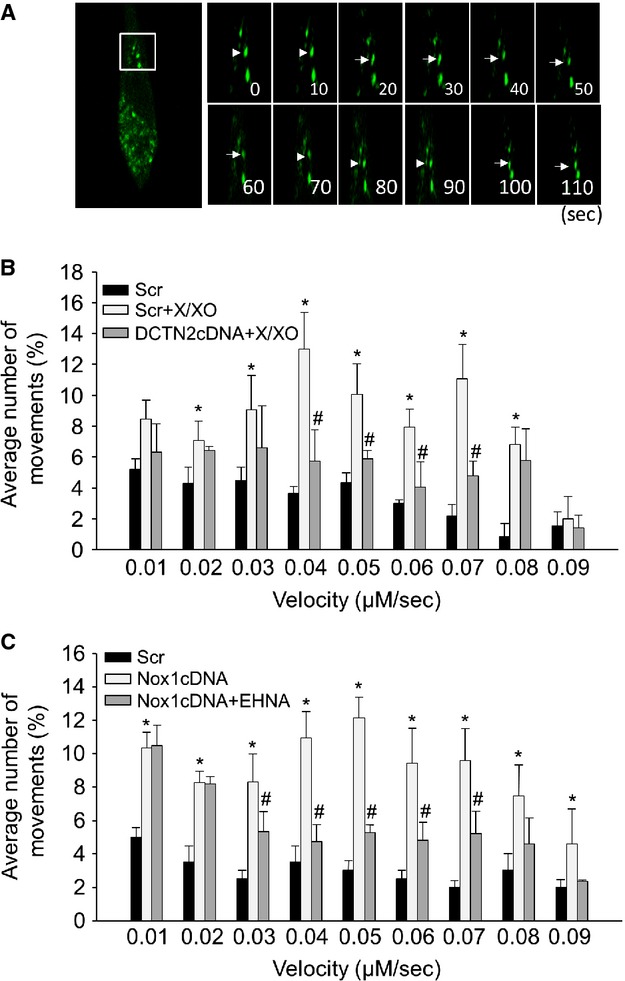
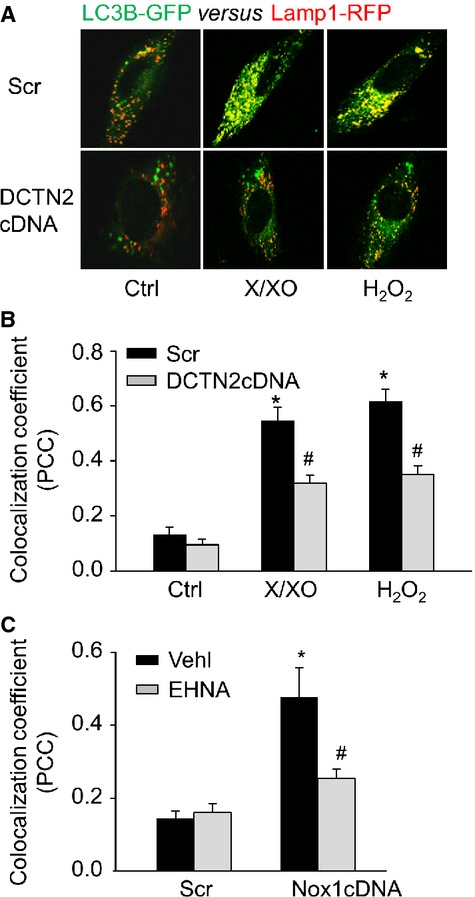
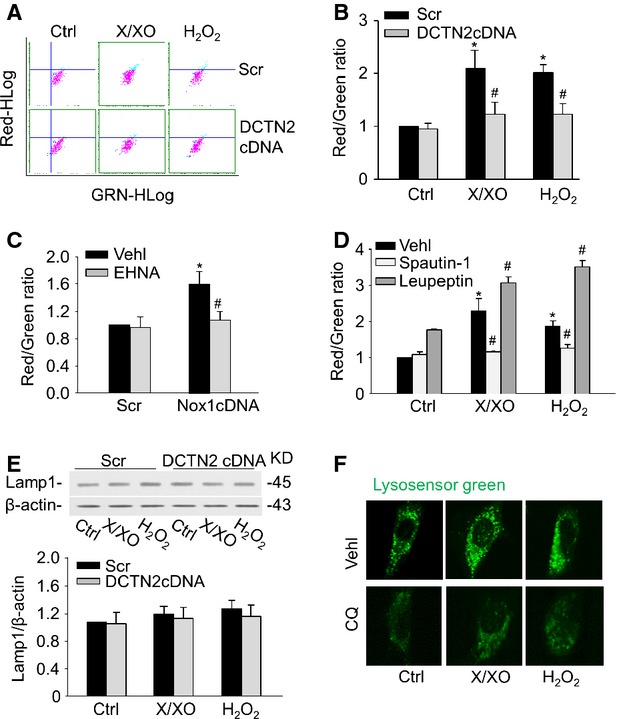
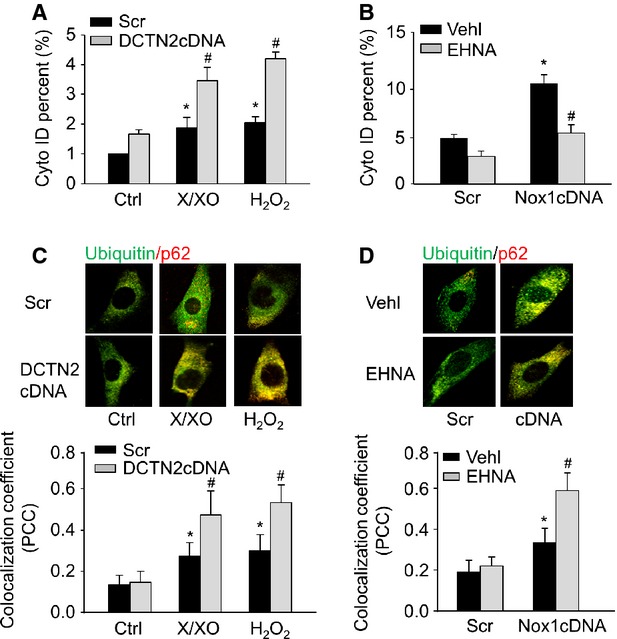
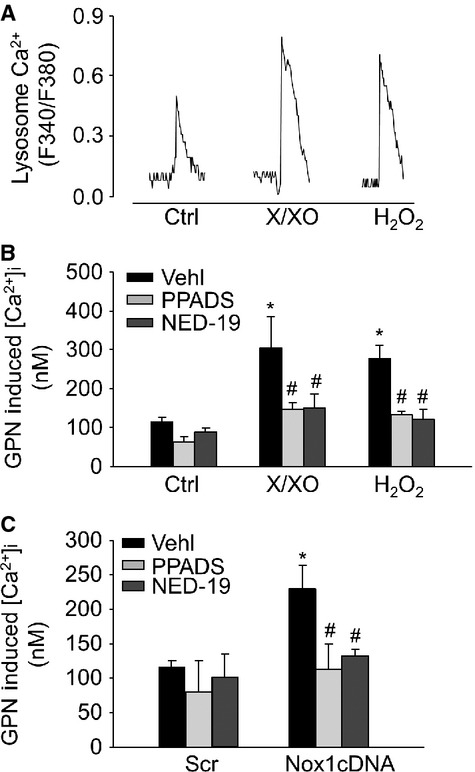
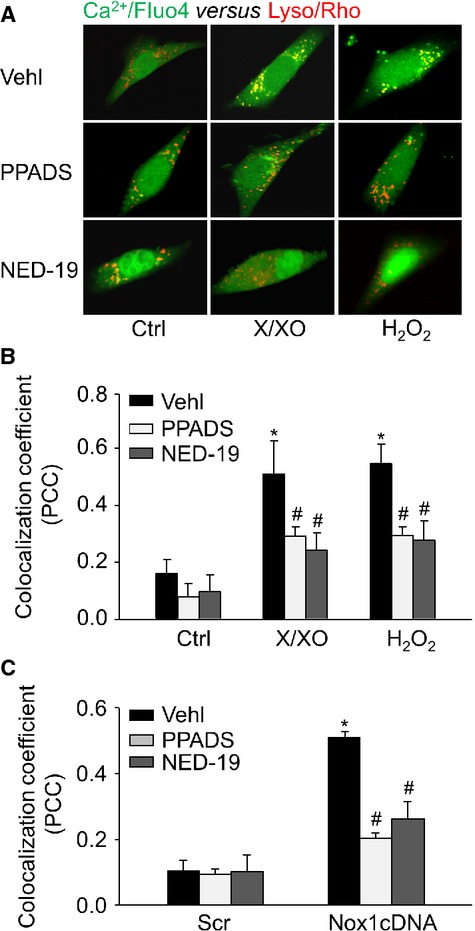
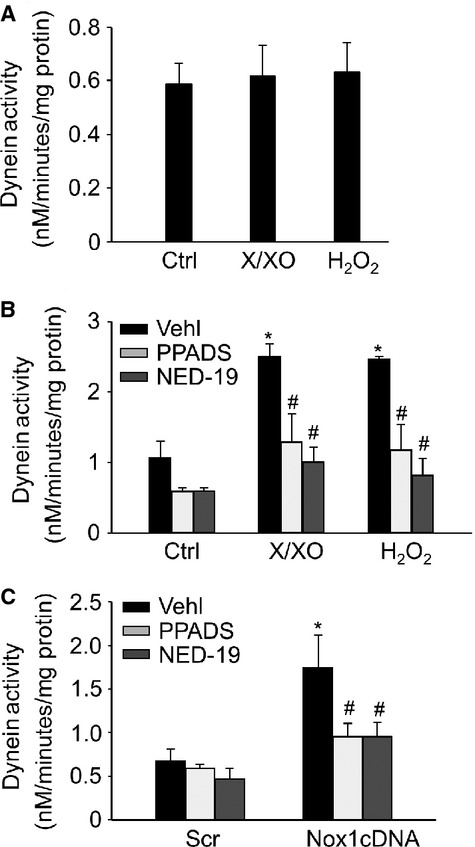
Dynein-mediated autophagosome (AP) trafficking was recently demonstrated to contribute to the formation of autophagolysosomes (APLs) and autophagic flux process in coronary arterial myocytes (CAMs). However, it remains unknown how the function of dynein as a motor protein for AP trafficking is regulated under physiological and pathological conditions. The present study tested whether the dynein-mediated autophagy maturation is regulated by a redox signalling associated with lysosomal Ca(2+) release machinery. In primary cultures of CAMs, reactive oxygen species (ROS) including H2 O2 and O2 (-.) (generated by xanthine/xanthine oxidase) significantly increased dynein ATPase activity and AP movement, which were accompanied by increased lysosomal fusion with AP and APL formation. Inhibition of dynein activity by (erythro-9-(2-hydroxy-3-nonyl)adenine) (EHNA) or disruption of the dynein complex by dynamitin (DCTN2) overexpression blocked ROS-induced dynein activation, AP movement and APL formation, and resulted in an accumulation of AP along with a failed breakdown of AP. Antagonism of nicotinic acid adenine dinucleotide phosphate (NAADP)-mediated Ca(2+) signalling with NED-19 and PPADS abolished ROS-enhanced lysosomal Ca(2+) release and dynein activation in CAMs. In parallel, all these changes were also enhanced by overexpression of NADPH oxidase-1 (Nox1) gene in CAMs. Incubation with high glucose led to a marked O2 (-.) production compared with normoglycaemic CAMs, while Nox1 inhibitor ML117 abrogated this effect. Moreover, ML117 and NED-19 and PPADS significantly suppressed dynein activity and APL formation caused by high glucose. Taken together, these data suggest that ROS function as important players to regulate dynein-dependent AP trafficking leading to efficient autophagic maturation in CAMs.
动力蛋白介导的自噬体(AP)运输最近被证明有助于冠状动脉肌细胞(CAMs)中自噬溶酶体(APLs)的形成和自噬通量过程。然而,在生理和病理条件下,动力蛋白作为AP运输的驱动蛋白的功能是如何被调节的,仍然不清楚。本研究测试了动力蛋白介导的自噬成熟是否受与溶酶体Ca(2+)释放机制相关的氧化还原信号调节。在CAMs的原代培养中,包括H2O2和O2(-.)(由黄嘌呤/黄嘌呤氧化酶产生)在内的活性氧(ROS)显著增加了动力蛋白ATP酶活性和AP运动,同时伴随着溶酶体与AP融合增加和APL形成。用(赤藓红-9-(2-羟基-3-壬基)腺嘌呤)(EHNA)抑制动力蛋白活性或通过过表达动力蛋白结合蛋白(DCTN2)破坏动力蛋白复合物,可阻断ROS诱导的动力蛋白激活、AP运动和APL形成,并导致AP积累以及AP分解失败。用NED-19和PPADS拮抗烟酰胺腺嘌呤二核苷酸磷酸(NAADP)介导的Ca(2+)信号,可消除ROS增强的CAMs溶酶体Ca(2+)释放和动力蛋白激活。同时,CAMs中过表达NADPH氧化酶-1(Nox1)基因也增强了所有这些变化。与正常血糖的CAMs相比,高糖孵育导致显著的O2(-.)产生,而Nox1抑制剂ML117可消除这种效应。此外,ML117以及NED-19和PPADS显著抑制高糖引起的动力蛋白活性和APL形成。综上所述,这些数据表明ROS是调节动力蛋白依赖性AP运输从而导致CAMs中高效自噬成熟的重要因素。