Zhang Yanchen, Zhang Jie, Song Tingting, Li Jinyan, Tian Ji, Jin Kaina, Yao Yuncong
Plant Science and Technology College, Beijing University of Agriculture, Beijing, China.
Plant Science and Technology College, Beijing University of Agriculture, Beijing, China; Key Laboratory of New Technology in Agricultural Application of Beijing, Beijing University of Agriculture, Beijing, China.
PLoS One. 2014 Jun 10;9(6):e97904. doi: 10.1371/journal.pone.0097904. eCollection 2014.
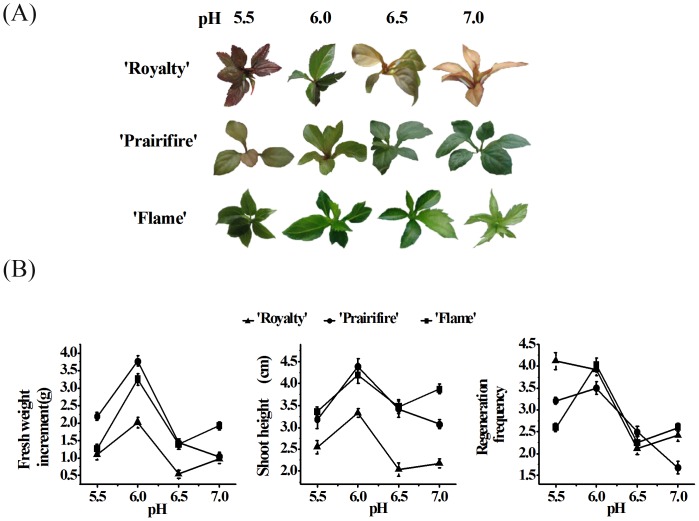
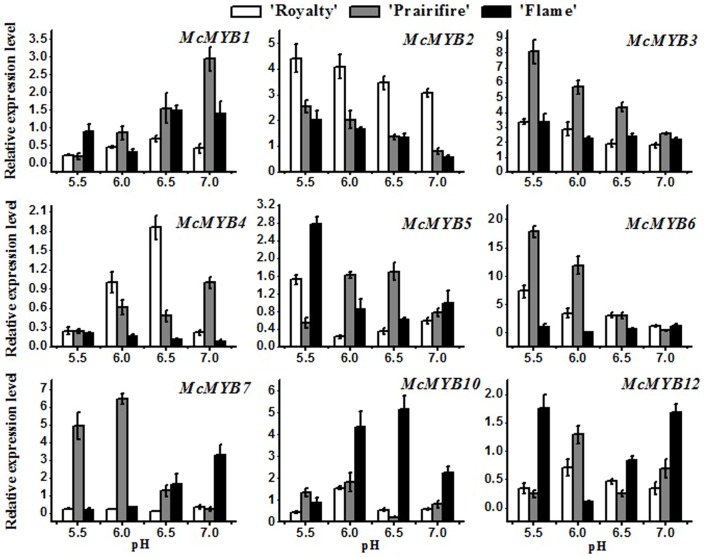
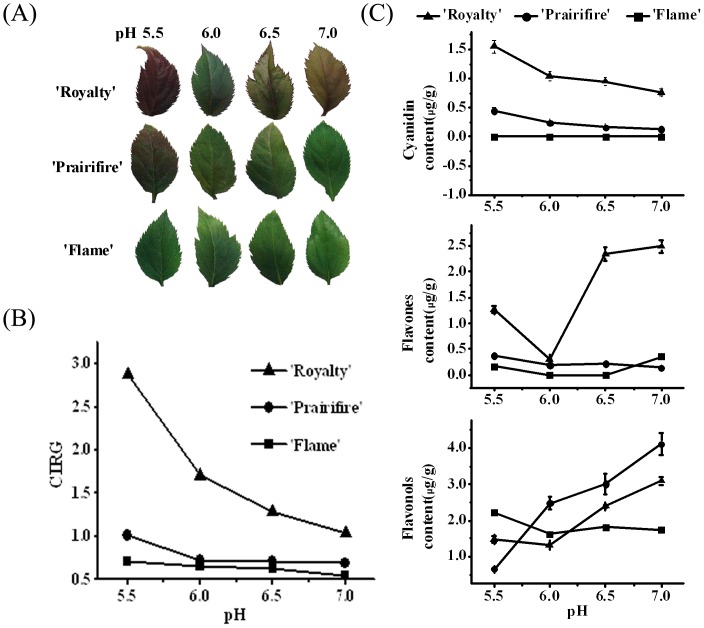
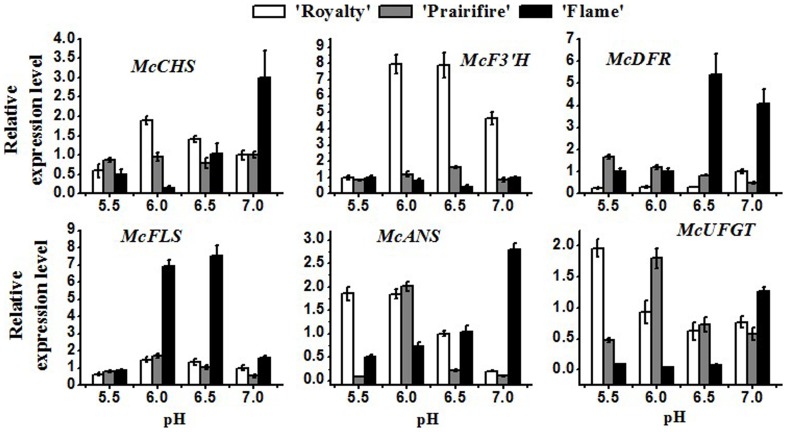
Anthocyanin is a critical factor involved in coloration of plant tissues, but the mechanism how medium pH values affect anthocyanin accumulation in woody plants is unknown. We analyzed anthocyanin composition and the expression of elements encoding anthocyanin and flavonols biosynthesis underlying different medium pH values by using three different leave color type cultivars. HPLC analysis demonstrated that high medium pH values treatment induced a dramatic decrease in the concentration of cyaniding in crabapple leaves. Conversely, the high medium pH values induced up-regulation of the content of flavones and flavonols, suggesting that low pH treatment-induced anthocyanin accumulation. Quantitative real time PCR experiment showed the expression level of anthocyanidin synthase (McANS) and uridine diphosphate glucose flavonoid 3-O-glucosyltransferase (McUFGT) was up-regulated by low pH values treatment, and high medium pH value treatment up-regulate the transcription level of flavonol synthase (McFLS). Meanwhile, several MYB TFs have been suggested in the regulation of pH responses. These results strongly indicate that the low pH treatment-induced anthocyanin accumulation is mediated by the variation of mRNA transcription of the anthocyanin biosynthetic genes.
花青素是参与植物组织着色的关键因素,但培养基pH值影响木本植物花青素积累的机制尚不清楚。我们使用三种不同叶色类型的品种,分析了不同培养基pH值下花青素的组成以及花青素和黄酮醇生物合成相关元件的表达。高效液相色谱分析表明,高培养基pH值处理导致海棠叶片中花青素浓度显著降低。相反,高培养基pH值诱导黄酮和黄酮醇含量上调,表明低pH处理诱导花青素积累。实时定量PCR实验表明,低pH值处理上调了花青素合酶(McANS)和尿苷二磷酸葡萄糖类黄酮3-O-葡萄糖基转移酶(McUFGT)的表达水平,高培养基pH值处理上调了黄酮醇合酶(McFLS)的转录水平。同时,有几种MYB转录因子被认为参与了pH响应的调控。这些结果有力地表明,低pH处理诱导的花青素积累是由花青素生物合成基因mRNA转录的变化介导的。