Saunders Norman R, Noor Natassya M, Dziegielewska Katarzyna M, Wheaton Benjamin J, Liddelow Shane A, Steer David L, Ek C Joakim, Habgood Mark D, Wakefield Matthew J, Lindsay Helen, Truettner Jessie, Miller Robert D, Smith A Ian, Dietrich W Dalton
Department of Pharmacology & Therapeutics, The University of Melbourne, Victoria, Australia.
Department of Pharmacology & Therapeutics, The University of Melbourne, Victoria, Australia; Department of Neurobiology, Stanford University, Stanford, California, United States of America.
PLoS One. 2014 Jun 10;9(6):e99080. doi: 10.1371/journal.pone.0099080. eCollection 2014.
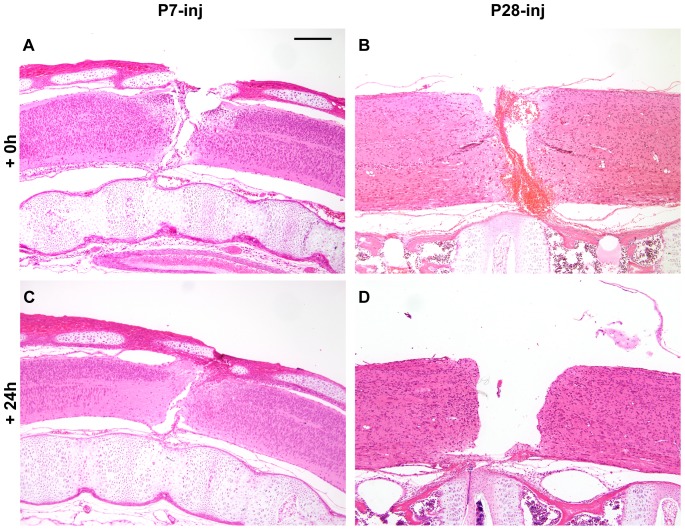
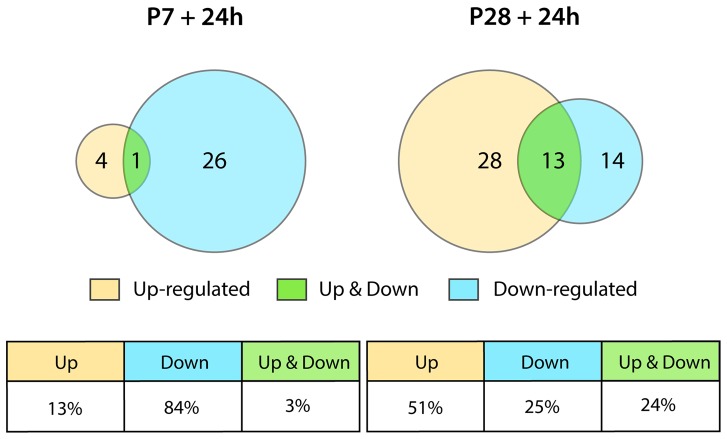
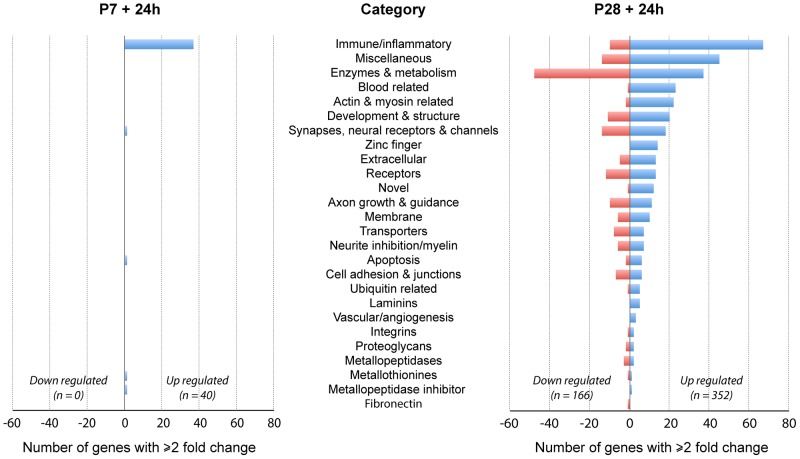
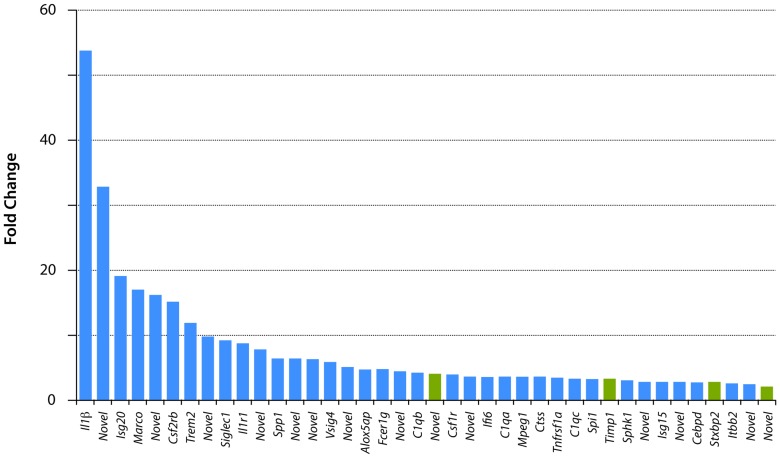
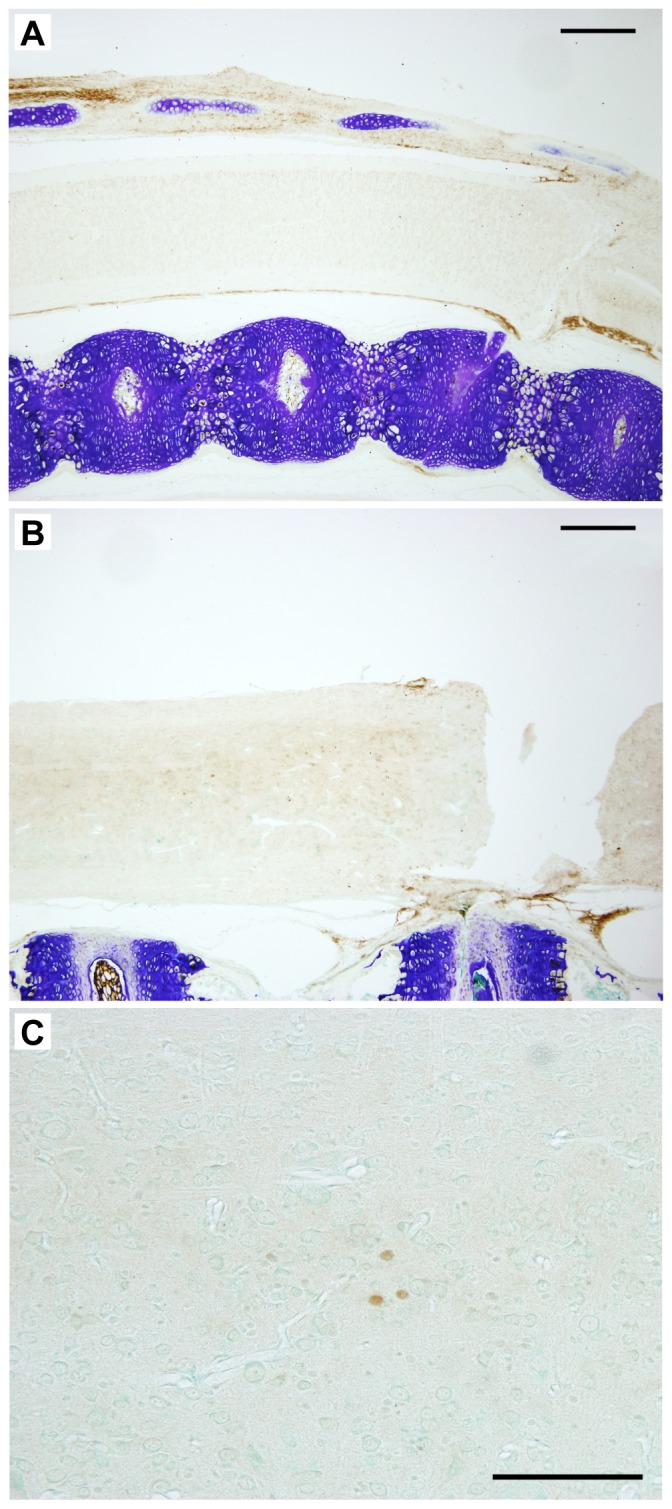
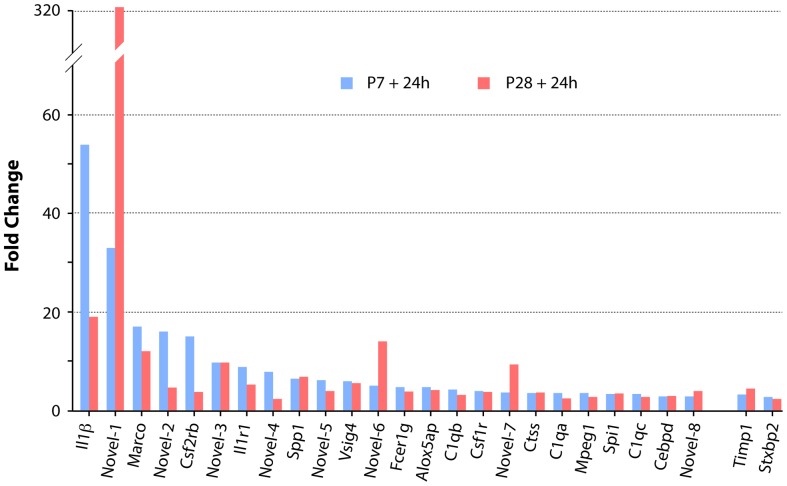
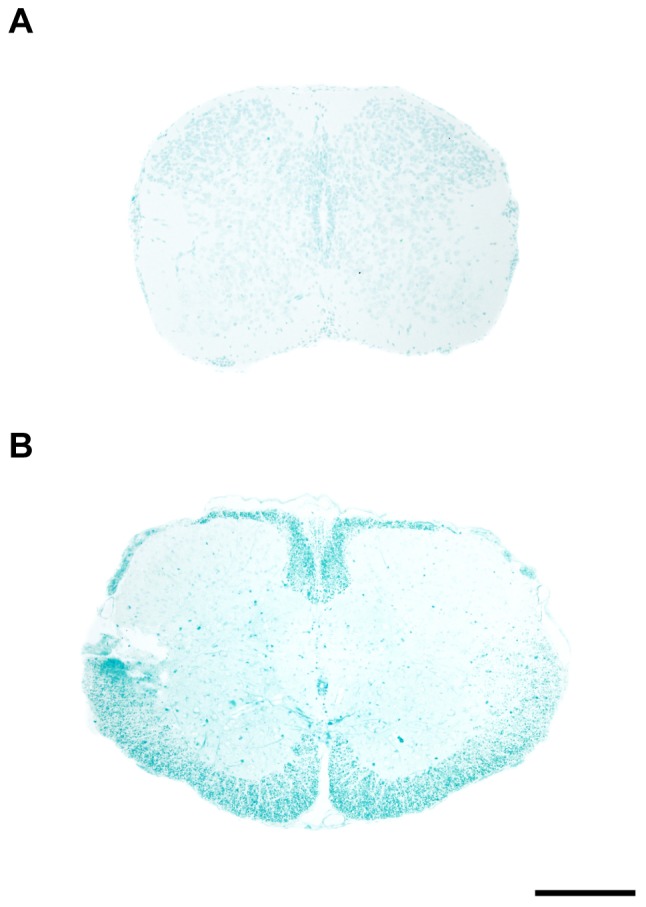
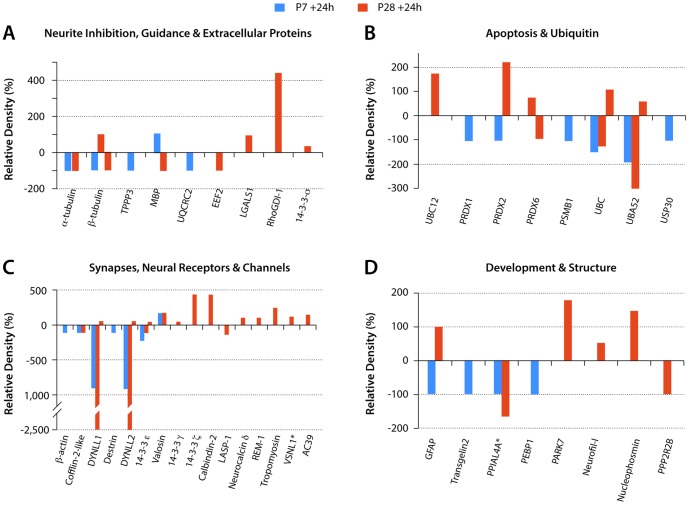
This study describes a combined transcriptome and proteome analysis of Monodelphis domestica response to spinal cord injury at two different postnatal ages. Previously we showed that complete transection at postnatal day 7 (P7) is followed by profuse axon growth across the lesion with near-normal locomotion and swimming when adult. In contrast, at P28 there is no axon growth across the lesion, the animals exhibit weight-bearing locomotion, but cannot use hind limbs when swimming. Here we examined changes in gene and protein expression in the segment of spinal cord rostral to the lesion at 24 h after transection at P7 and at P28. Following injury at P7 only forty genes changed (all increased expression); most were immune/inflammatory genes. Following injury at P28 many more genes changed their expression and the magnitude of change for some genes was strikingly greater. Again many were associated with the immune/inflammation response. In functional groups known to be inhibitory to regeneration in adult cords the expression changes were generally muted, in some cases opposite to that required to account for neurite inhibition. For example myelin basic protein expression was reduced following injury at P28 both at the gene and protein levels. Only four genes from families with extracellular matrix functions thought to influence neurite outgrowth in adult injured cords showed substantial changes in expression following injury at P28: Olfactomedin 4 (Olfm4, 480 fold compared to controls), matrix metallopeptidase (Mmp1, 104 fold), papilin (Papln, 152 fold) and integrin α4 (Itga4, 57 fold). These data provide a resource for investigation of a priori hypotheses in future studies of mechanisms of spinal cord regeneration in immature animals compared to lack of regeneration at more mature stages.
本研究描述了家短尾负鼠在两个不同出生后年龄对脊髓损伤反应的转录组和蛋白质组联合分析。此前我们发现,出生后第7天(P7)进行完全横断后,会有大量轴突穿过损伤部位生长,成年后运动和游泳功能接近正常。相比之下,在P28时,损伤部位没有轴突生长,动物表现出负重运动,但游泳时不能使用后肢。在此,我们检测了在P7和P28横断后24小时,损伤部位头侧脊髓节段中基因和蛋白质表达的变化。P7损伤后只有40个基因发生变化(均为表达增加);大多数是免疫/炎症基因。P28损伤后,更多基因改变了表达,一些基因的变化幅度显著更大。同样,许多基因与免疫/炎症反应相关。在已知对成年脊髓再生有抑制作用的功能组中,表达变化通常不明显,在某些情况下与解释神经突抑制所需的变化相反。例如,P28损伤后,髓磷脂碱性蛋白在基因和蛋白质水平上的表达均降低。在P28损伤后,来自被认为会影响成年损伤脊髓中神经突生长的具有细胞外基质功能的家族中,只有四个基因显示出表达的显著变化:嗅觉介质4(Olfm4,与对照组相比增加480倍)、基质金属蛋白酶(Mmp1,增加104倍)、乳头蛋白(Papln,增加152倍)和整合素α4(Itga4,增加57倍)。这些数据为未来研究未成熟动物与更成熟阶段缺乏再生相比的脊髓再生机制的先验假设提供了资源。