Kelly Christine M, van Oosterhout Joep J, Ngwalo Chisomo, Stewart Robert C, Benjamin Laura, Robertson Kevin R, Khoo Saye, Allain Theresa J, Solomon Tom
Brain Infection Group, Institute of Infection and Global Health, University of Liverpool, Liverpool, United Kingdom; Malawi-Liverpool-Wellcome Clinical Research Programme, Queen Elizabeth Central Hospital, College of Medicine, Blantyre, Malawi.
Department of Medicine, College of Medicine, Blantyre, Malawi; Dignitas International, Zomba, Malawi.
PLoS One. 2014 Jun 10;9(6):e98962. doi: 10.1371/journal.pone.0098962. eCollection 2014.
Little is known about the prevalence and burden of HIV associated neurocognitive disorder (HAND) among patients on combination antiretroviral therapy (cART) in sub-Saharan Africa. We estimated the prevalence of HAND in adult Malawians on cART and investigated the relationship between HAND and adherence to cART.
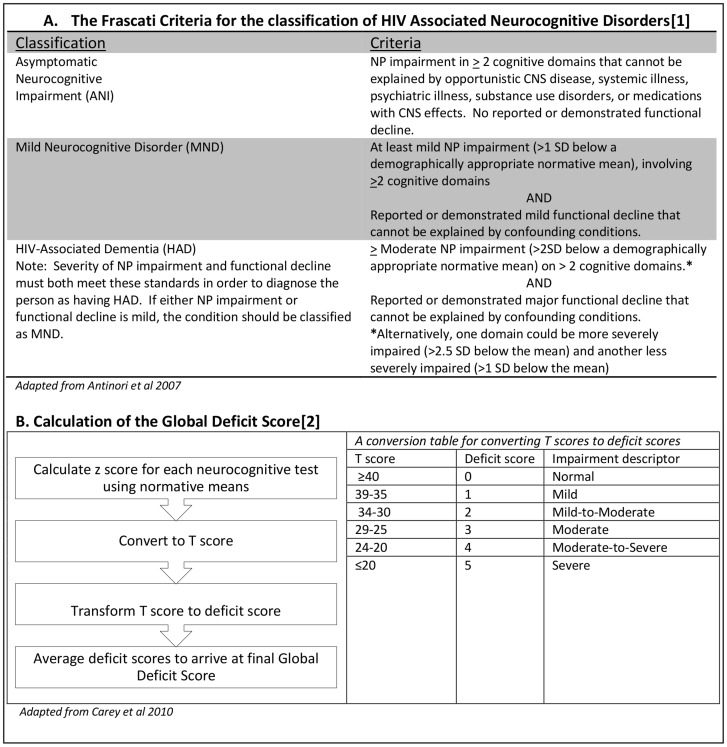
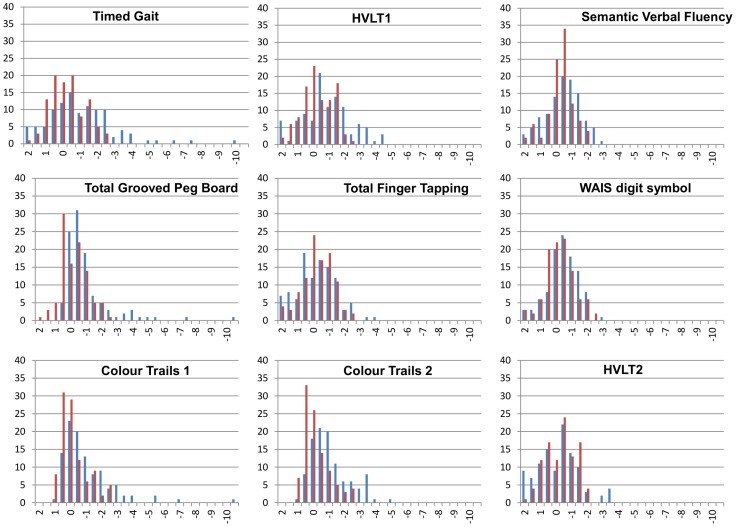
HIV positive adults in Blantyre, Malawi underwent a full medical history, neurocognitive test battery, depression score, Karnofsky Performance Score and adherence assessment. The Frascati criteria were used to diagnose HAND and the Global Deficit Score (GDS) was also assessed. Blood was drawn for CD4 count and plasma nevirapine and efavirenz concentrations. HIV negative adults were recruited from the HIV testing clinic to provide normative scores for the neurocognitive battery.
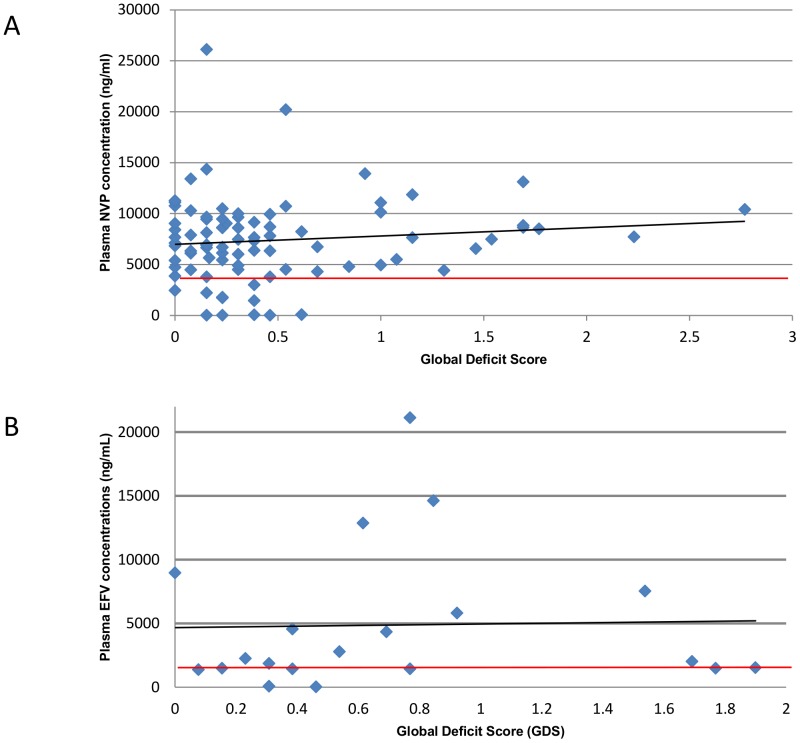
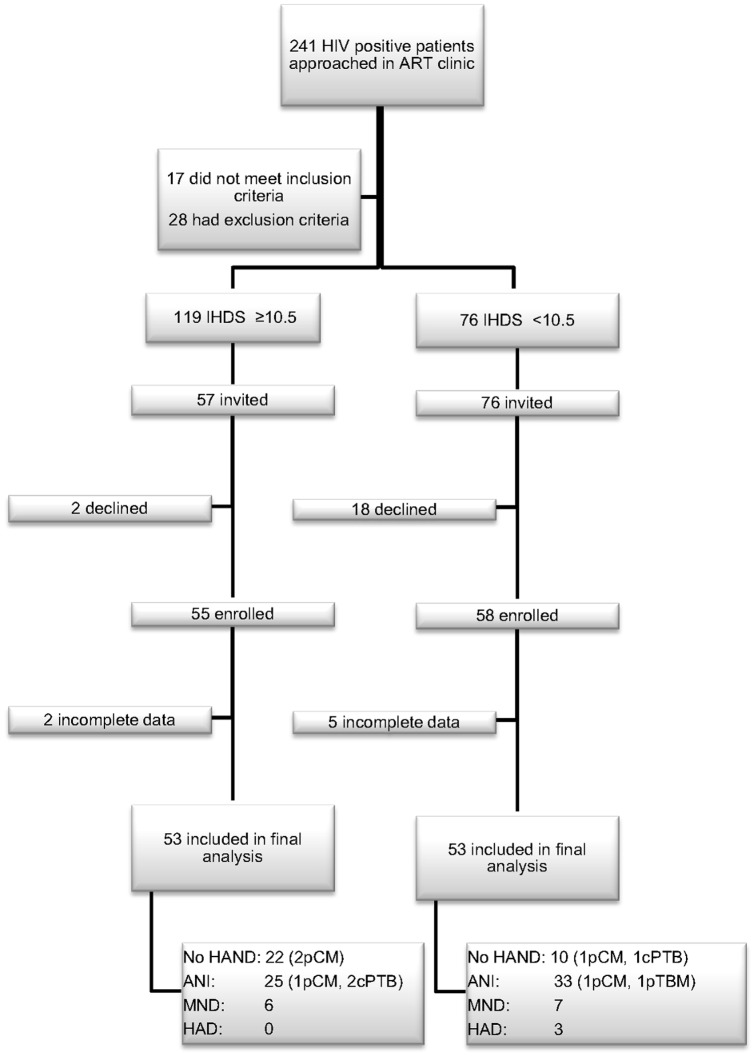
One hundred and six HIV positive patients, with median (range) age 39 (18-71) years, 73% female and median (range) CD4 count 323.5 (68-1039) cells/µl were studied. Symptomatic neurocognitive impairment was present in 15% (12% mild neurocognitive disorder [MND], 3% HIV associated dementia [HAD]). A further 55% fulfilled Frascati criteria for asymptomatic neurocognitive impairment (ANI); however factors other than neurocognitive impairment could have confounded this estimate. Neither the symptomatic (MND and HAD) nor asymptomatic (ANI) forms of HAND were associated with subtherapeutic nevirapine/efavirenz concentrations, adjusted odds ratio 1.44 (CI. 0.234, 8.798; p = 0.696) and aOR 0.577 (CI. 0.09, 3.605; p = 0.556) respectively. All patients with subtherapeutic nevirapine/efavirenz levels had a GDS of less than 0.6, consistent with normal neurocognition.
DISCUSSION/CONCLUSION: Fifteen percent of adult Malawians on cART had a diagnosis of MND or HAD. Subtherapeutic drug concentrations were found exclusively in patients with normal neurocognitive function suggesting HAND did not affect cART adherence. Further study of HAND requires more robust locally derived normative neurocognitive values and determination of the clinical relevance of ANI.
在撒哈拉以南非洲地区,接受联合抗逆转录病毒治疗(cART)的患者中,关于人类免疫缺陷病毒相关神经认知障碍(HAND)的患病率和负担知之甚少。我们估计了马拉维接受cART治疗的成年人中HAND的患病率,并研究了HAND与cART依从性之间的关系。
马拉维布兰太尔的HIV阳性成年人接受了全面的病史、神经认知测试组、抑郁评分、卡诺夫斯基功能评分和依从性评估。采用弗拉斯卡蒂标准诊断HAND,并评估全球缺陷评分(GDS)。采集血液检测CD4细胞计数以及血浆奈韦拉平和依非韦伦浓度。从HIV检测诊所招募HIV阴性成年人,为神经认知测试组提供正常参考值。
研究了106例HIV阳性患者,年龄中位数(范围)为39(18 - 71)岁,73%为女性,CD4细胞计数中位数(范围)为323.5(68 - 1039)个/微升。有症状的神经认知障碍患者占15%(12%为轻度神经认知障碍[MND],3%为HIV相关痴呆[HAD])。另有55%符合弗拉斯卡蒂无症状神经认知障碍(ANI)标准;然而,除神经认知障碍外的其他因素可能混淆了这一估计。有症状(MND和HAD)和无症状(ANI)形式的HAND均与奈韦拉平/依非韦伦浓度低于治疗水平无关,调整后的优势比分别为1.44(CI. 0.234, 8.798;p = 0.696)和aOR 0.577(CI. 0.09, 3.605;p = 0.556)。所有奈韦拉平/依非韦伦水平低于治疗水平的患者GDS均小于0.6,与正常神经认知一致。
讨论/结论:接受cART治疗的成年马拉维人中有15%被诊断为MND或HAD。仅在神经认知功能正常的患者中发现药物浓度低于治疗水平,这表明HAND不影响cART依从性。对HAND的进一步研究需要更可靠的本地得出的正常神经认知值,并确定ANI的临床相关性。