Durham Centre for Crop Improvement Technology, School of Biological and Biomedical Sciences, Durham University, South Road, DH1 3LE Durham, UK.
BMC Genomics. 2014 Jun 10;15(1):456. doi: 10.1186/1471-2164-15-456.
Abiotic stresses which include drought and heat are amongst the main limiting factors for plant growth and crop productivity. In the field, these stress types are rarely presented individually and plants are often subjected to a combination of stress types. Sorghum bicolor is a cereal crop which is grown in arid and semi-arid regions and is particularly well adapted to the hot and dry conditions in which it originates and is now grown as a crop. In order to better understand the mechanisms underlying combined stress tolerance in this important crop, we have used microarrays to investigate the transcriptional response of Sorghum subjected to heat and drought stresses imposed both individually and in combination.
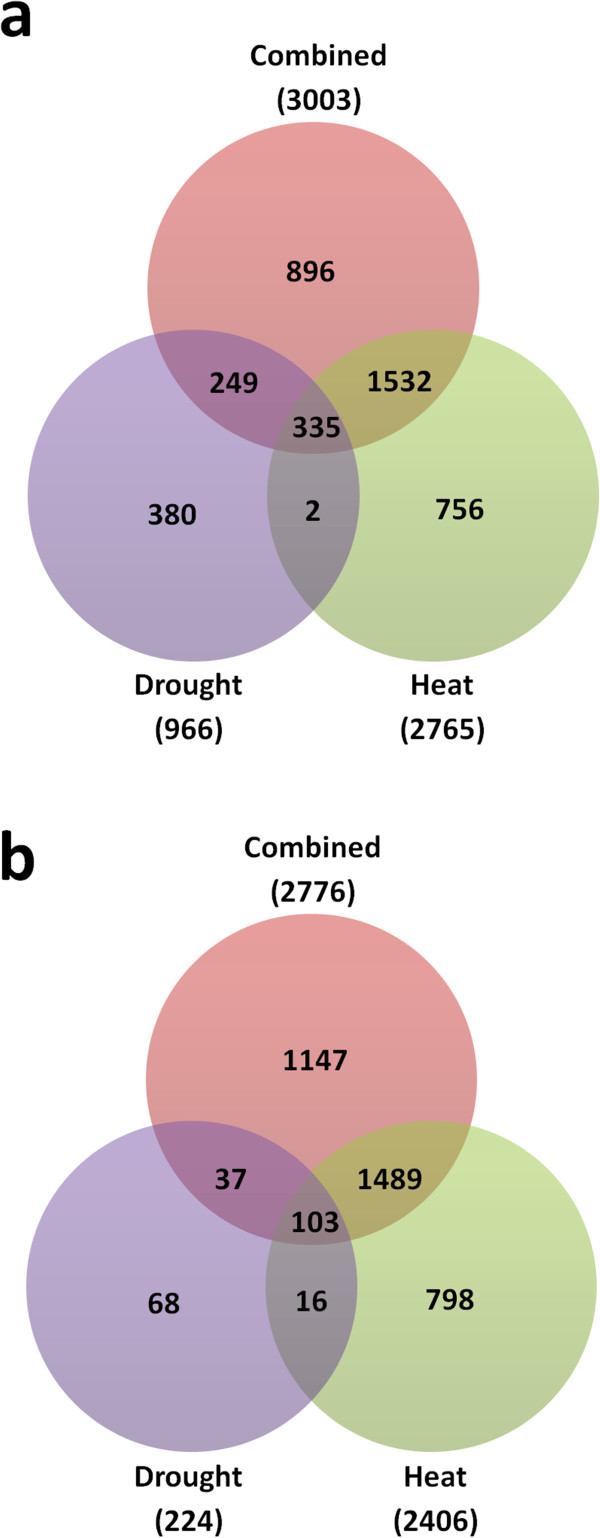
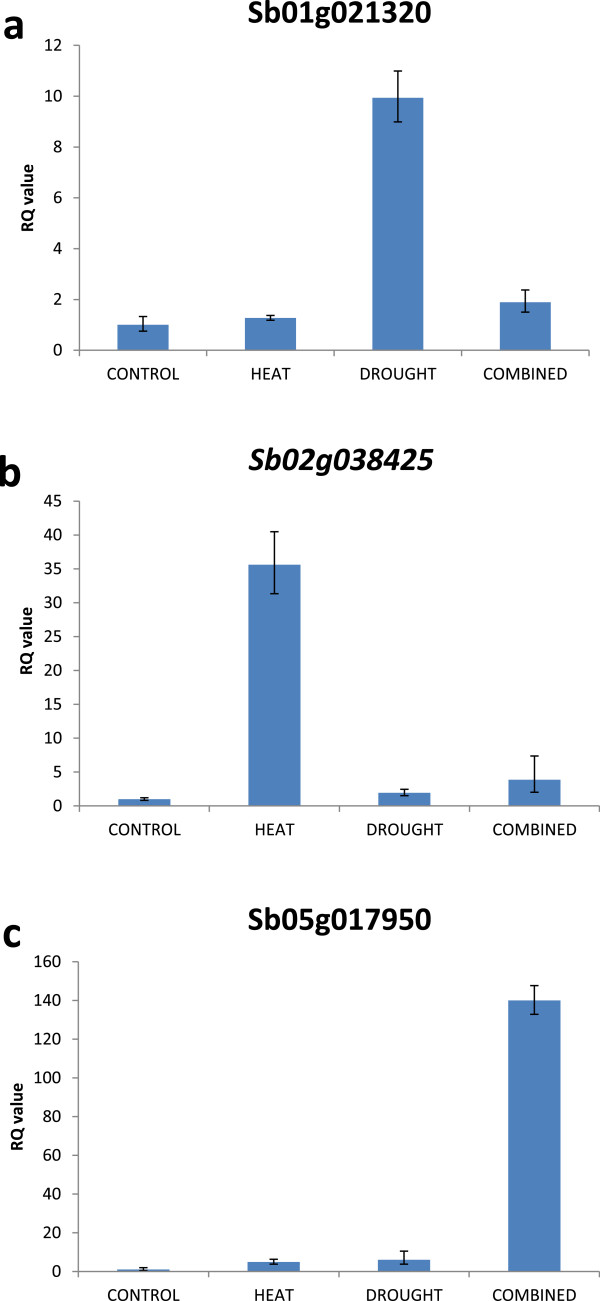
Microarrays consisting of 28585 gene probes identified gene expression changes equating to ~4% and 18% of genes on the chip following drought and heat stresses respectively. In response to combined stress ~20% of probes were differentially expressed. Whilst many of these transcript changes were in common with those changed in response to heat or drought alone, the levels of 2043 specific transcripts (representing 7% of all gene probes) were found to only be changed following the combined stress treatment. Ontological analysis of these 'unique' transcripts identified a potential role for specific transcription factors including MYB78 and ATAF1, chaperones including unique heat shock proteins (HSPs) and metabolic pathways including polyamine biosynthesis in the Sorghum combined stress response.
These results show evidence for both cross-talk and specificity in the Sorghum response to combined heat and drought stress. It is clear that some aspects of the combined stress response are unique compared to those of individual stresses. A functional characterization of the genes and pathways identified here could lead to new targets for the enhancement of plant stress tolerance, which will be particularly important in the face of climate change and the increasing prevalence of these abiotic stress types.
非生物胁迫,包括干旱和热胁迫,是植物生长和作物生产力的主要限制因素之一。在田间,这些胁迫类型很少单独出现,植物通常会受到多种胁迫类型的共同作用。高粱是一种在干旱和半干旱地区种植的谷类作物,特别适应其起源地炎热干燥的环境条件,现在已作为一种作物种植。为了更好地理解这种重要作物在复合胁迫下的耐受机制,我们使用微阵列技术研究了高粱在单独和组合施加干旱和热胁迫下的转录响应。
由 28585 个基因探针组成的微阵列鉴定出,干旱和热胁迫分别导致芯片上约 4%和 18%的基因表达发生变化。在复合胁迫下,约 20%的探针表现出差异表达。虽然许多这些转录变化与单独应对热或干旱时的变化相同,但在组合胁迫处理后,仅发现 2043 个特定转录本(代表所有基因探针的 7%)的水平发生变化。对这些“独特”转录本的本体论分析表明,特定转录因子(包括 MYB78 和 ATAF1)、伴侣蛋白(包括独特的热休克蛋白(HSPs))和代谢途径(包括多胺生物合成)在高粱复合胁迫反应中可能发挥作用。
这些结果表明,高粱对复合热干旱胁迫的反应既有交叉对话又有特异性。很明显,与单一胁迫相比,复合胁迫反应的某些方面是独特的。对这里鉴定的基因和途径进行功能表征可能会为提高植物胁迫耐受性提供新的目标,这在应对气候变化和这些非生物胁迫类型日益普遍的情况下尤为重要。