Gu Qing, Deng Jinsong, Wang Ke, Lin Yi, Li Jun, Gan Muye, Ma Ligang, Hong Yang
Institute of Applied Remote Sensing & Information Technology, Zhejiang University, Hangzhou 310058, Zhejiang, China.
School of Civil Engineering and Environmental Sciences and School of Meteorology, University of Oklahoma, Norman, OK 73019, USA.
Int J Environ Res Public Health. 2014 Jun 10;11(6):6069-84. doi: 10.3390/ijerph110606069.
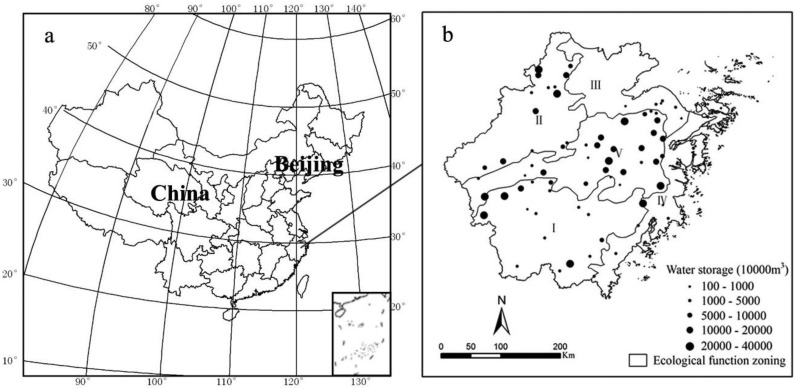
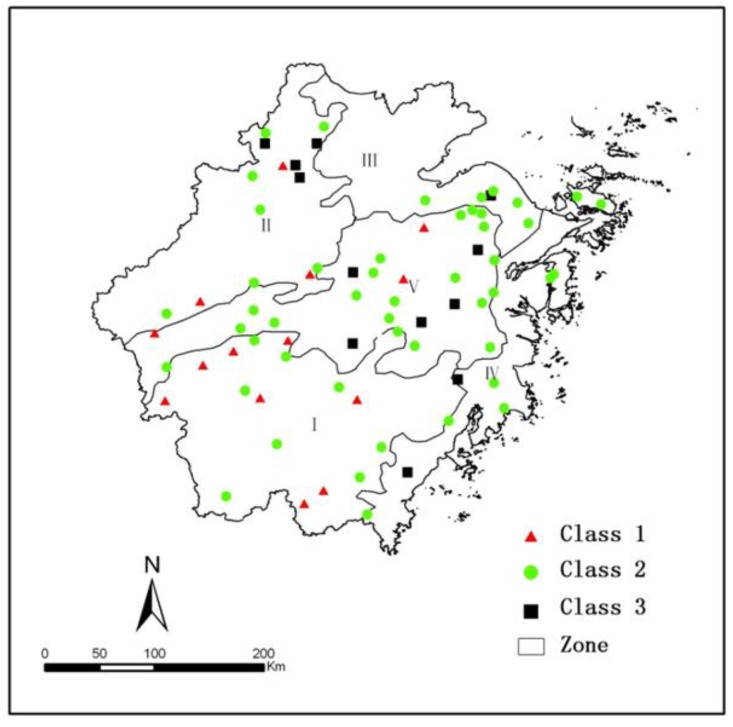
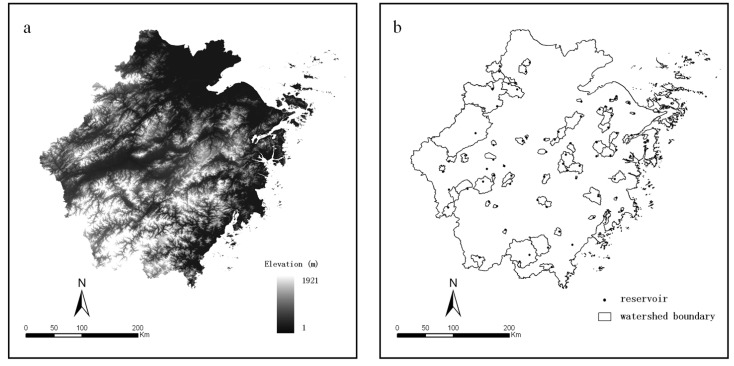
Various reservoirs have been serving as the most important drinking water sources in Zhejiang Province, China, due to the uneven distribution of precipitation and severe river pollution. Unfortunately, rapid urbanization and industrialization have been continuously challenging the water quality of the drinking-water reservoirs. The identification and assessment of potential impacts is indispensable in water resource management and protection. This study investigates the drinking water reservoirs in Zhejiang Province to better understand the potential impact on water quality. Altogether seventy-three typical drinking reservoirs in Zhejiang Province encompassing various water storage levels were selected and evaluated. Using fifty-two reservoirs as training samples, the classification and regression tree (CART) method and sixteen comprehensive variables, including six sub-sets (land use, population, socio-economy, geographical features, inherent characteristics, and climate), were adopted to establish a decision-making model for identifying and assessing their potential impacts on drinking-water quality. The water quality class of the remaining twenty-one reservoirs was then predicted and tested based on the decision-making model, resulting in a water quality class attribution accuracy of 81.0%. Based on the decision rules and quantitative importance of the independent variables, industrial emissions was identified as the most important factor influencing the water quality of reservoirs; land use and human habitation also had a substantial impact on water quality. The results of this study provide insights into the factors impacting the water quality of reservoirs as well as basic information for protecting reservoir water resources.
由于降水分布不均以及河流污染严重,中国浙江省的各类水库一直是最重要的饮用水水源。不幸的是,快速的城市化和工业化不断对饮用水水库的水质构成挑战。在水资源管理和保护中,识别和评估潜在影响是必不可少的。本研究对浙江省的饮用水水库进行调查,以更好地了解对水质的潜在影响。共选取并评估了浙江省73座涵盖不同蓄水水平的典型饮用水水库。以52座水库作为训练样本,采用分类回归树(CART)方法和16个综合变量(包括六个子集:土地利用、人口、社会经济、地理特征、固有特征和气候)建立了一个用于识别和评估其对饮用水水质潜在影响的决策模型。然后基于该决策模型对其余21座水库的水质类别进行预测和检验,水质类别归属准确率达到81.0%。根据自变量的决策规则和量化重要性,确定工业排放是影响水库水质的最重要因素;土地利用和人类居住也对水质有重大影响。本研究结果为影响水库水质的因素提供了见解,并为保护水库水资源提供了基础信息。