Department of Experimental Psychology, University of Oxford Oxford, UK.
Research Institute of Child Development and Education, University of Amsterdam Amsterdam, Netherlands.
Front Hum Neurosci. 2014 Jun 2;8:346. doi: 10.3389/fnhum.2014.00346. eCollection 2014.
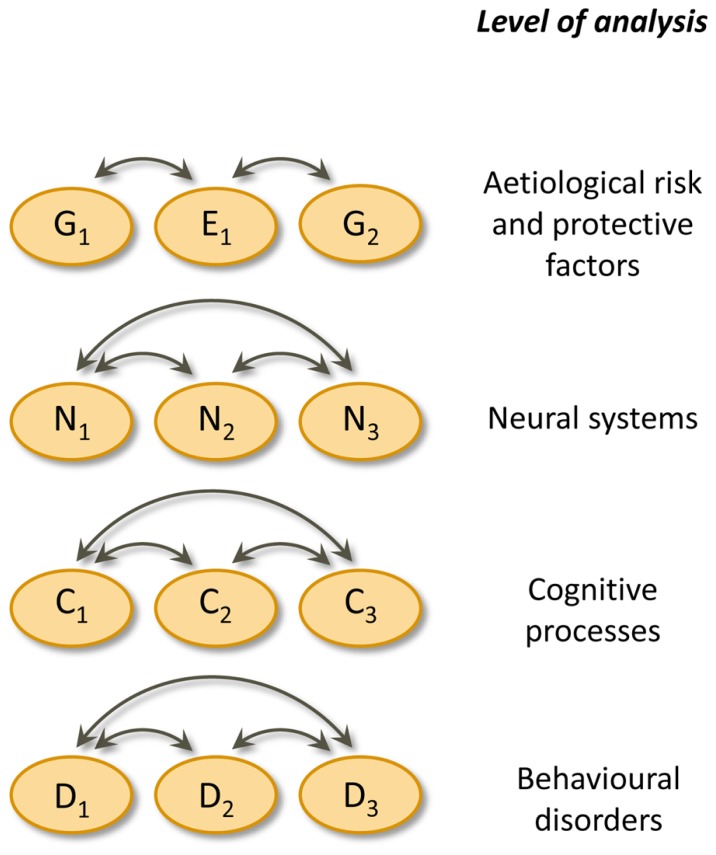
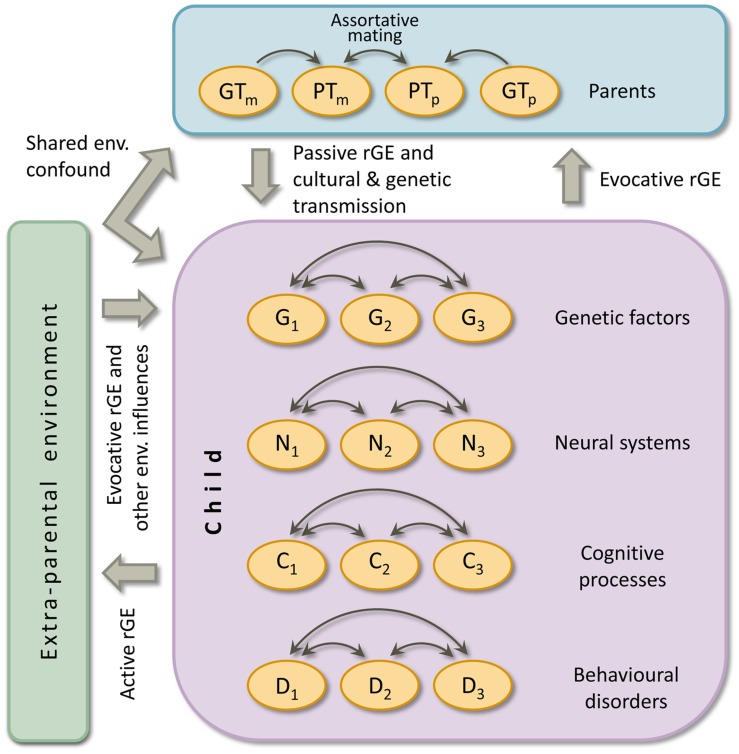
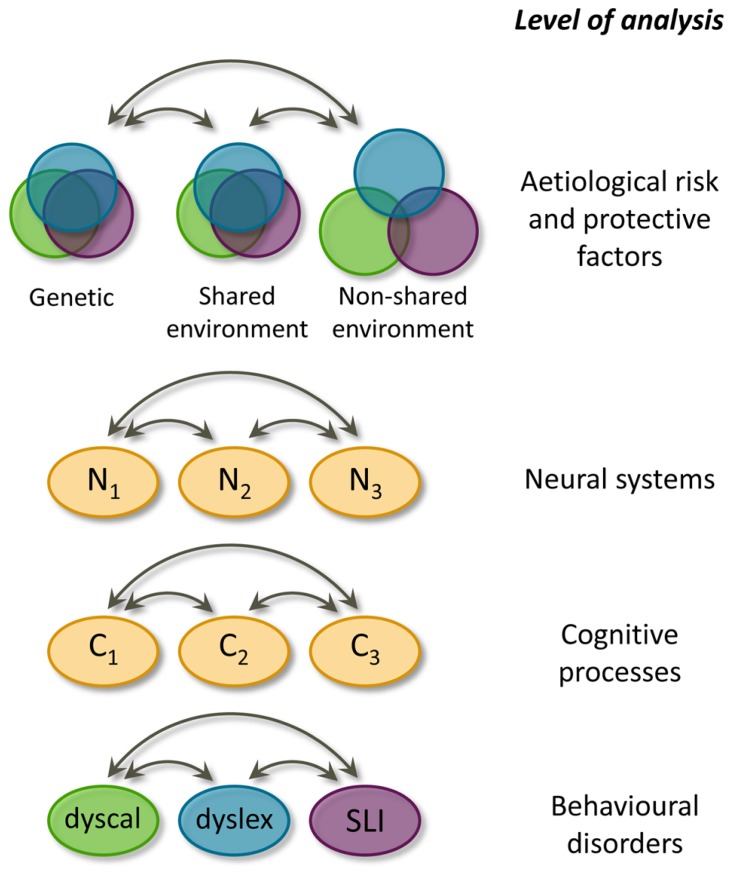
Which children go on to develop dyslexia? Since dyslexia has a multifactorial etiology, this question can be restated as: what are the factors that put children at high risk for developing dyslexia? It is argued that a useful theoretical framework to address this question is Pennington's (2006) multiple deficit model (MDM). This model replaces models that attribute dyslexia to a single underlying cause. Subsequently, the generalist genes hypothesis for learning (dis)abilities (Plomin and Kovas, 2005) is described and integrated with the MDM. Next, findings are presented from a longitudinal study with children at family risk for dyslexia. Such studies can contribute to testing and specifying the MDM. In this study, risk factors at both the child and family level were investigated. This led to the proposed intergenerational MDM, in which both parents confer liability via intertwined genetic and environmental pathways. Future scientific directions are discussed to investigate parent-offspring resemblance and transmission patterns, which will shed new light on disorder etiology.
哪些儿童会发展为阅读障碍?由于阅读障碍具有多因素病因,因此这个问题可以重新表述为:哪些因素使儿童有发展为阅读障碍的高风险?有人认为,佩宁顿(Pennington)的(2006)多重缺陷模型(MDM)是解决这个问题的有用理论框架。该模型取代了将阅读障碍归因于单一潜在原因的模型。随后,描述了用于学习(障碍)的通才基因假说(Plomin 和 Kovas,2005),并将其与 MDM 整合在一起。接下来,介绍了一项针对有阅读障碍家族风险的儿童的纵向研究的结果。此类研究有助于测试和具体说明 MDM。在这项研究中,研究了儿童和家庭层面的风险因素。这导致了提出的代际 MDM,其中父母双方通过交织的遗传和环境途径导致易感性。讨论了未来的科学方向,以研究父母与子女之间的相似性和传递模式,这将为疾病病因学提供新的线索。