Katayama Hiroto, Kohmura Kunihiro, Tanaka Satoshi, Imaeda Miho, Kawano Naoko, Noda Yukihiro, Nishioka Kazuo, Ando Masahiko, Aleksic Branko, Iidaka Tetsuya, Ozaki Norio
Department of Psychiatry, Nagoya University Hospital, 65 Tsurumai-cho, Showa-ku, Nagoya, Aichi-ken 466-8550, Japan.
BMC Psychiatry. 2014 Jun 12;14:173. doi: 10.1186/1471-244X-14-173.
Functional neuroimaging techniques are widely used to elucidate changes in brain activity, and various questionnaires are used to investigate psychopathological features in patients with eating disorders (ED). It is well known that social skills and interpersonal difficulties are strongly associated with the psychopathology of patients with ED. However, few studies have examined the association between brain activity and social relationships in patients with ED, particularly in patients with extremely low body weight.
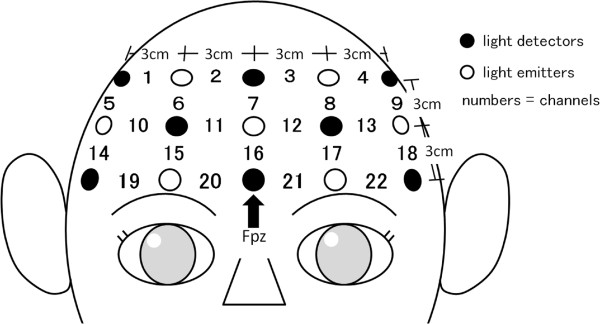
In this study, 22-channel near-infrared spectroscopy was used to quantify regional hemodynamic changes during a letter fluency task (LFT) in 20 female patients with ED with a mean body mass index of 14.0 kg/m(2) and 31 female controls (CTLs). Symptoms were assessed using the Eating Disorder Inventory-2 and Beck Depression Inventory. We hypothesized that frontal activity in patients with ED would be lower than in CTLs and would show different correlations with psychopathological features compared with CTLs.
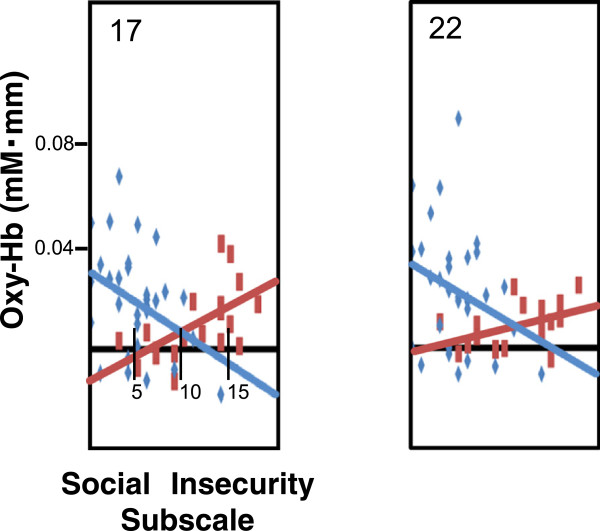
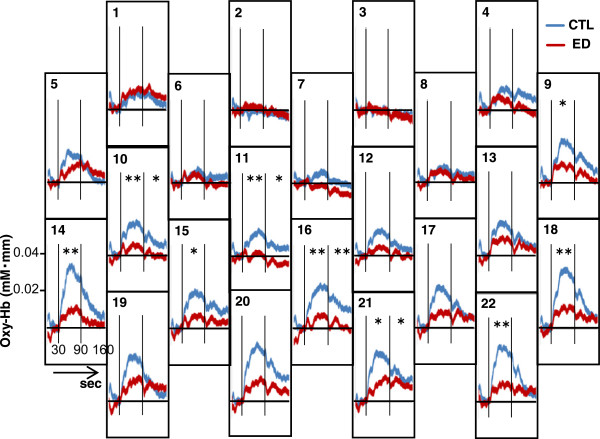
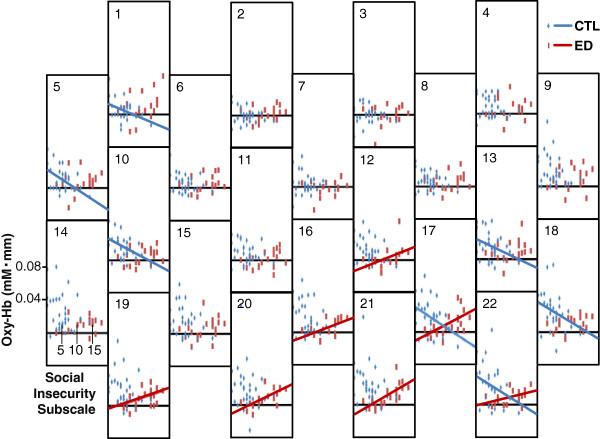
The LFT performance and score on the social insecurity subscale of the Eating Disorder Inventory-2 were significantly higher in the ED group than in the CTL group. The mean change in oxygenated hemoglobin (oxy-Hb) in bilateral frontal regions during the LFT was significantly smaller in the ED group than in the CTL group. Social insecurity score was positively correlated with the concentration of oxy-Hb in the bilateral orbitofrontal cortex in the ED group but not in the CTL group.
These results suggest that activity of the orbitofrontal cortex is associated with social insecurity and disturbed in patients with ED. Therefore, disturbed orbitofrontal cortex activity may underlie the lack of insight and social isolation that is characteristic of patients with ED.
功能神经成像技术被广泛用于阐明大脑活动的变化,并且各种问卷被用于调查饮食失调(ED)患者的精神病理学特征。众所周知,社交技能和人际困难与ED患者的精神病理学密切相关。然而,很少有研究考察ED患者大脑活动与社会关系之间的关联,尤其是体重极低的患者。
在本研究中,使用22通道近红外光谱技术对20名平均体重指数为14.0kg/m²的女性ED患者和31名女性对照者(CTLs)在字母流畅性任务(LFT)期间的局部血流动力学变化进行量化。使用饮食失调量表-2和贝克抑郁量表评估症状。我们假设ED患者的额叶活动低于CTLs,并且与CTLs相比,其与精神病理学特征的相关性会有所不同。
ED组在LFT上的表现以及饮食失调量表-2社交不安全感子量表的得分显著高于CTL组。ED组在LFT期间双侧额叶区域氧合血红蛋白(oxy-Hb)的平均变化显著小于CTL组。在ED组中,社交不安全感得分与双侧眶额皮质中oxy-Hb的浓度呈正相关,而在CTL组中则不然。
这些结果表明眶额皮质的活动与社交不安全感相关,并且在ED患者中受到干扰。因此,眶额皮质活动紊乱可能是ED患者缺乏洞察力和社会隔离的基础。