1] Department of Physiology and Global Top5 Research Program, Ewha Woman's University School of Medicine, Seoul, Korea [2] Tissue Injury Defense Research Center, Ewha Woman's University School of Medicine, Seoul, Korea.
1] Tissue Injury Defense Research Center, Ewha Woman's University School of Medicine, Seoul, Korea [2] Department of Pharmacology, Ewha Woman's University School of Medicine, Seoul, Korea.
Exp Mol Med. 2014 Jun 13;46(6):e100. doi: 10.1038/emm.2014.26.
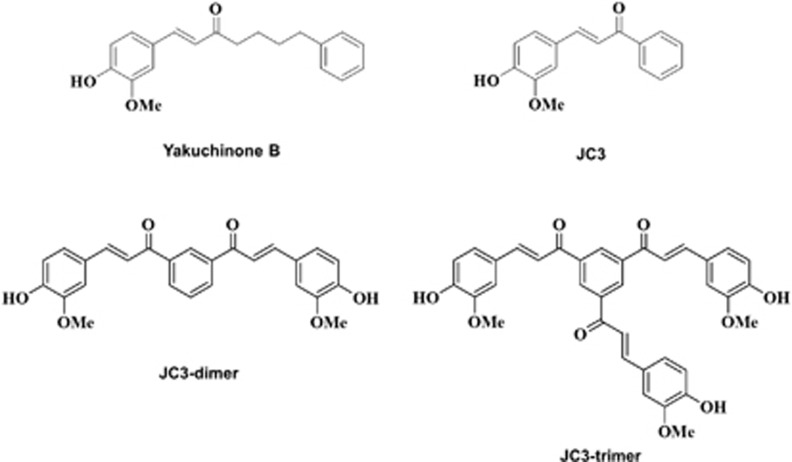
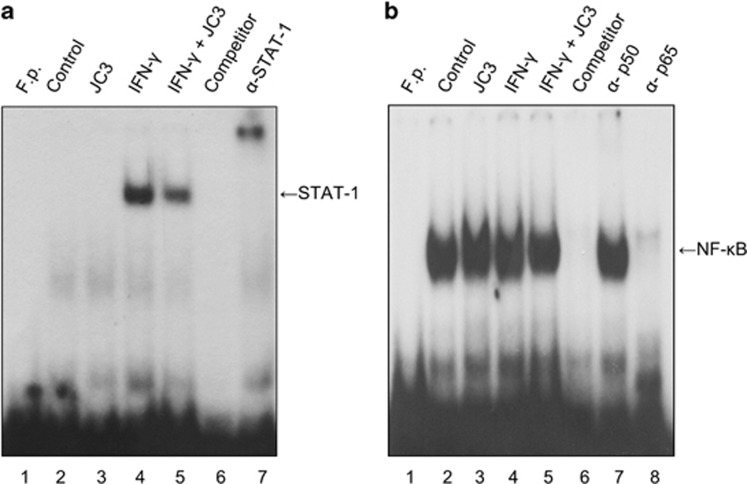
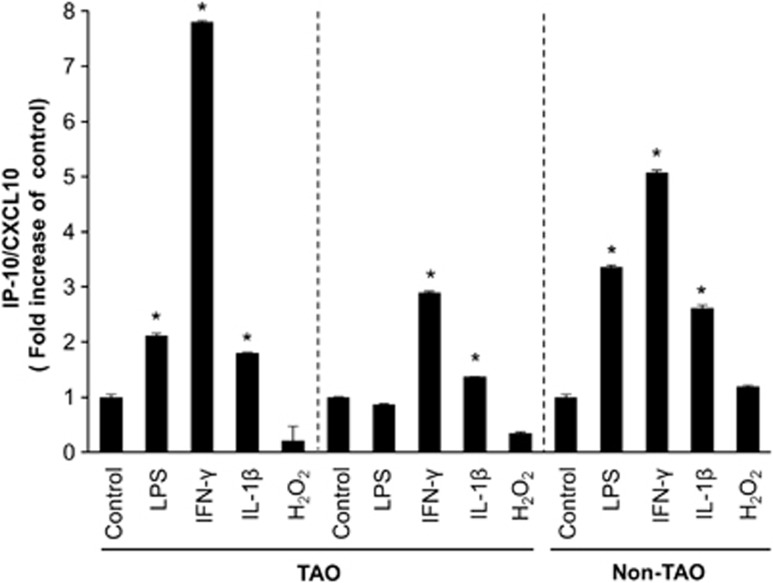
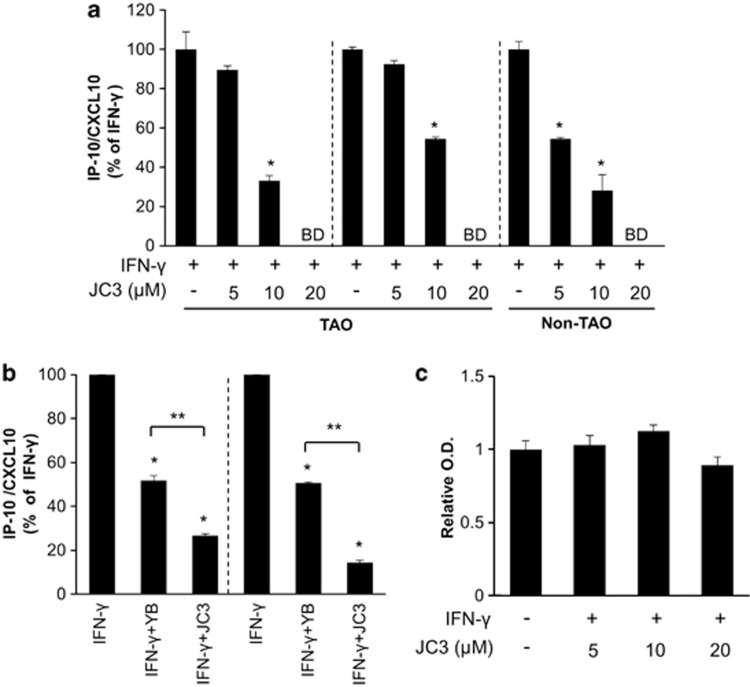
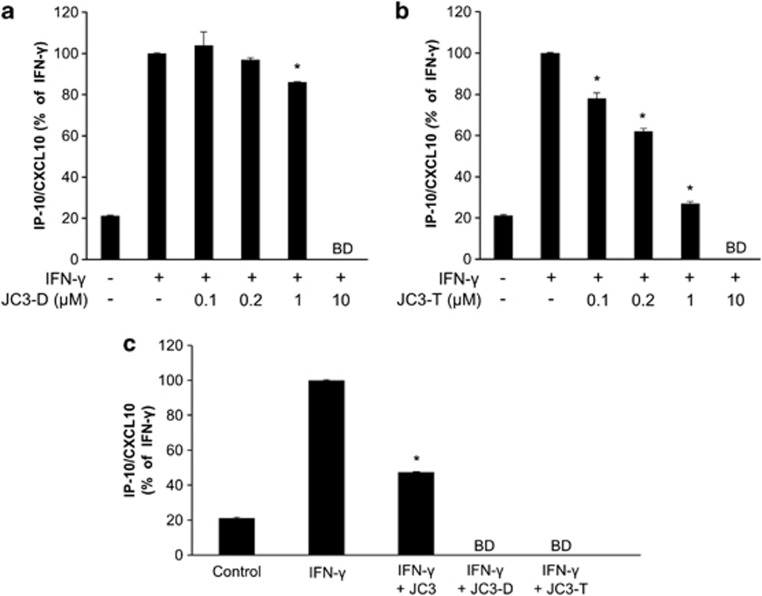
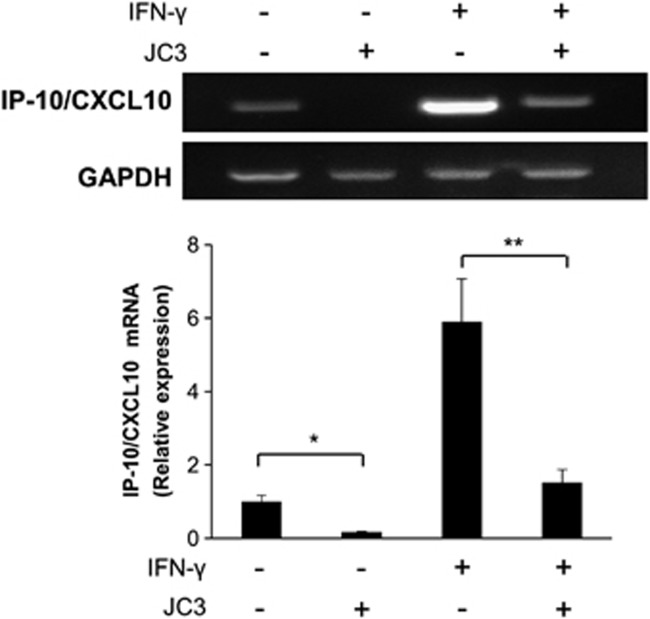
The aim of the present study was to identify a new candidate anti-inflammatory compound for use in the active stage of thyroid-associated ophthalmopathy (TAO). Benzylideneacetophenone compound JC3 [(2E)-3-(4-hydroxy-3-methoxyphenyl)phenylpro-2-en-l-one] was synthesized based on a structural modification of yakuchinone B, a constituent of the seeds of Alpinia oxyphylla, which belongs to the ginger family (Zingiberaceae), has been widely used in folk medicine as an anti-inflammatory phytochemical. Orbital fibroblasts were primarily cultured from patients with TAO, and the potential of JC3 to suppress the interferon (IFN)-γ-induced protein (IP)-10/CXCL10 production in these cells was determined. IFN-γ strongly increased the level of IP-10/CXCL10 in orbital fibroblasts from patients with TAO. JC3 exerted a significant inhibitory effect on the IFN-γ-induced increase in IP-10/CXCL10 in a dose-dependent manner; its potency was greater than that of an identical concentration of yakuchinone B with no toxicity to cells at the concentration range used. Moreover, the constructed dimer and trimer polystructures of JC3, showed greater potency than JC3 in suppressing the IFN-γ-induced production of IP-10/CXCL10. JC3 significantly attenuated the IP-10/CXCL10 mRNA expression induced by IFN-γ, and a gel-shift assay showed that JC3 suppressed IFN-γ-induced DNA binding of signal transducer and activator of transcription-1 (STAT-1) in TAO orbital fibroblasts. Our results provide initial evidence that the JC3 compound reduces the levels of IP-10/CXCL10 protein and mRNA induced by IFN-γ in orbital fibroblasts of TAO patients. Therefore, JC3 might be considered as a future candidate for therapeutic application in TAO that exerts its effects by modulating the pathogenic mechanisms in orbital fibroblasts.
本研究旨在寻找一种新的候选抗炎化合物,用于甲状腺相关眼病(TAO)的活动期。根据姜科植物益智种子中的成分 Yakuchinone B 的结构修饰,合成了苯亚甲基乙酰苯酮化合物 JC3[(2E)-3-(4-羟基-3-甲氧基苯基)苯基-2-烯-1-酮],该化合物已广泛用于民间医学作为一种抗炎植物化学物质。原代培养 TAO 患者的眼眶成纤维细胞,测定 JC3 抑制这些细胞中干扰素(IFN)-γ诱导的蛋白(IP)-10/CXCL10 产生的潜力。IFN-γ 强烈增加 TAO 患者眼眶成纤维细胞中 IP-10/CXCL10 的水平。JC3 以剂量依赖性方式对 IFN-γ诱导的 IP-10/CXCL10 增加表现出显著的抑制作用;其效力大于相同浓度 Yakuchinone B,在使用的浓度范围内对细胞没有毒性。此外,JC3 的构建二聚体和三聚体多聚体显示出比 JC3 更强的抑制 IFN-γ诱导的 IP-10/CXCL10 产生的能力。JC3 显著减弱 IFN-γ诱导的 IP-10/CXCL10 mRNA 表达,凝胶迁移分析显示 JC3 抑制 TAO 眼眶成纤维细胞中 IFN-γ诱导的信号转导和转录激活因子 1(STAT-1)DNA 结合。我们的结果提供了初步证据,表明 JC3 化合物降低了 TAO 患者眼眶成纤维细胞中由 IFN-γ诱导的 IP-10/CXCL10 蛋白和 mRNA 的水平。因此,JC3 可能被认为是治疗 TAO 的候选药物,通过调节眼眶成纤维细胞中的致病机制发挥作用。