King Thea, Kocharunchitt Chawalit, Gobius Kari, Bowman John P, Ross Tom
Commonwealth Scientific and Industrial Research Organisation, Animal, Food and Health Sciences, North Ryde, New South Wales, Australia.
Food Safety Centre, Tasmanian Institute of Agriculture, University of Tasmania, Hobart, Tasmania, Australia.
PLoS One. 2014 Jun 13;9(6):e99627. doi: 10.1371/journal.pone.0099627. eCollection 2014.
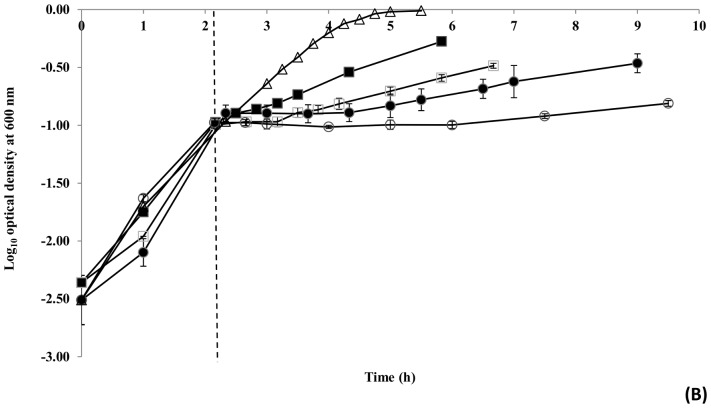
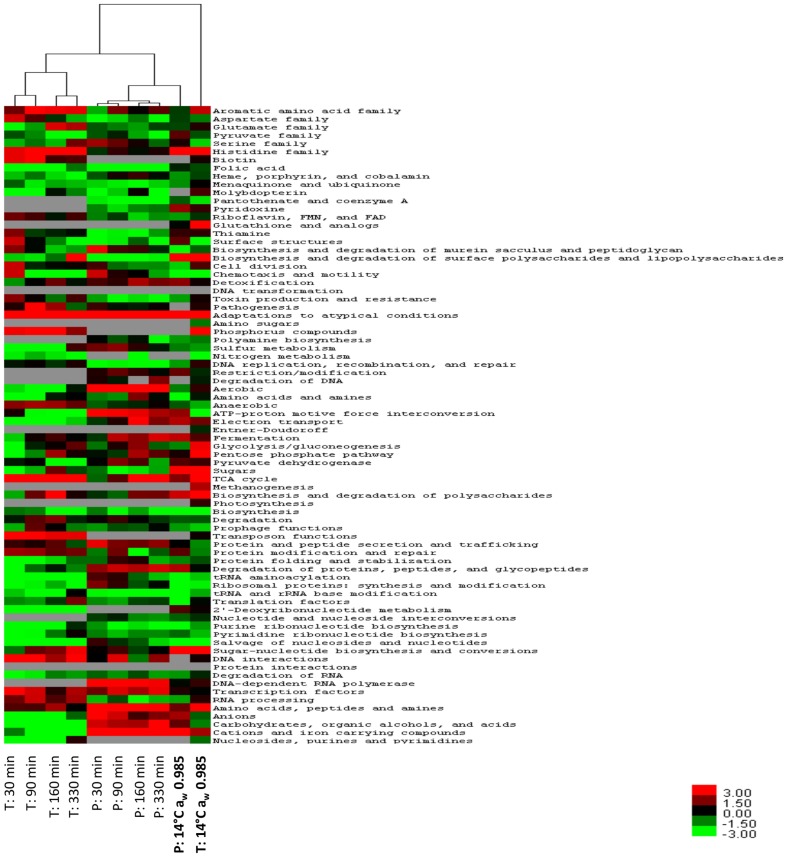
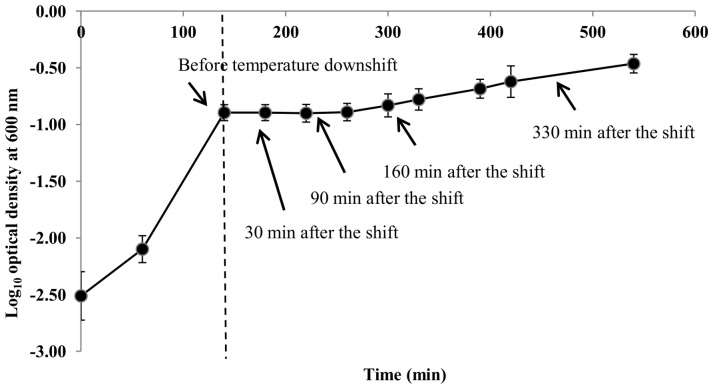
Escherichia coli O157∶H7 is a mesophilic food-borne pathogen. We investigated the growth kinetics of E. coli O157∶H7 Sakai during an abrupt temperature downshift from 35°C to either 20°C, 17°C, 14°C or 10°C; as well as the molecular mechanisms enabling growth after cold stress upon an abrupt downshift from 35°C to 14°C in an integrated transcriptomic and proteomic analysis. All downshifts caused a lag period of growth before growth resumed at a rate typical of the post-shift temperature. Lag and generation time increased with the magnitude of the shift or with the final temperature, while relative lag time displayed little variation across the test range. Analysis of time-dependent molecular changes revealed, in keeping with a decreased growth rate at lower temperature, repression of genes and proteins involved in DNA replication, protein synthesis and carbohydrate catabolism. Consistent with cold-induced remodelling of the bacterial cell envelope, alterations occurred in the expression of genes and proteins involved in transport and binding. The RpoS regulon exhibited sustained induction confirming its importance in adaptation and growth at 14°C. The RpoE regulon was transiently induced, indicating a potential role for this extracytoplasmic stress response system in the early phase of low temperature adaptation during lag phase. Interestingly, genes previously reported to be amongst the most highly up-regulated under oxidative stress were consistently down-regulated. This comprehensive analysis provides insight into the molecular mechanisms operating during adaptation of E. coli to growth at low temperature and is relevant to its physiological state during chilling in foods, such as carcasses.
大肠杆菌O157∶H7是一种嗜温性食源性病原体。我们研究了大肠杆菌O157∶H7阪崎株在温度从35°C突然降至20°C、17°C、14°C或10°C时的生长动力学;以及在转录组学和蛋白质组学综合分析中,该菌株从35°C突然降至14°C后冷应激下实现生长的分子机制。所有降温都会导致生长出现滞后期,之后生长以转移后温度的典型速率恢复。滞后期和代时随温度降幅或最终温度的升高而增加,而相对滞时在测试范围内变化不大。对随时间变化的分子变化的分析表明,与较低温度下生长速率降低一致,参与DNA复制、蛋白质合成和碳水化合物分解代谢的基因和蛋白质受到抑制。与细菌细胞膜的冷诱导重塑一致,参与转运和结合的基因和蛋白质的表达发生了改变。RpoS调节子表现出持续诱导,证实了其在14°C适应和生长中的重要性。RpoE调节子被短暂诱导,表明这种胞外应激反应系统在滞后期低温适应的早期阶段可能发挥作用。有趣的是,先前报道在氧化应激下上调程度最高的基因一直被下调。这项全面分析深入了解了大肠杆菌在适应低温生长过程中起作用的分子机制,并且与肉类等食品冷藏期间其生理状态相关。