Shoravi Siamak, Olsson Gustaf D, Karlsson Björn C G, Nicholls Ian A
Bioorganic & Biophysical Chemistry Laboratory, Linnæus University Centre for Biomaterials Chemistry, Linnæus University, SE-391 82 Kalmar, Sweden.
Int J Mol Sci. 2014 Jun 12;15(6):10622-34. doi: 10.3390/ijms150610622.
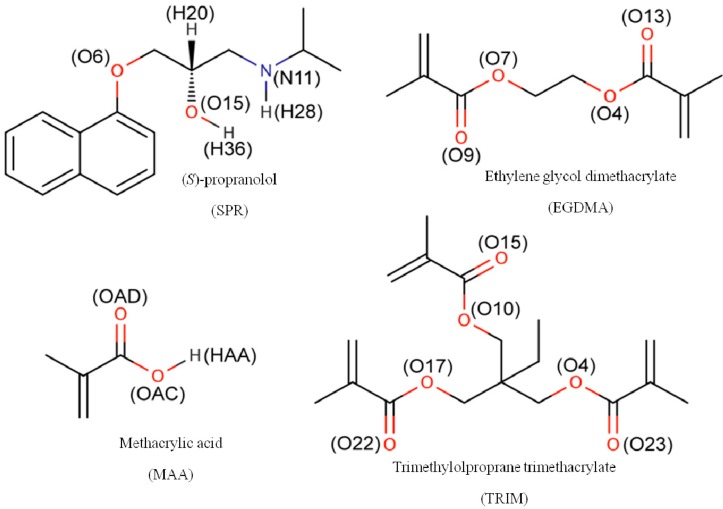
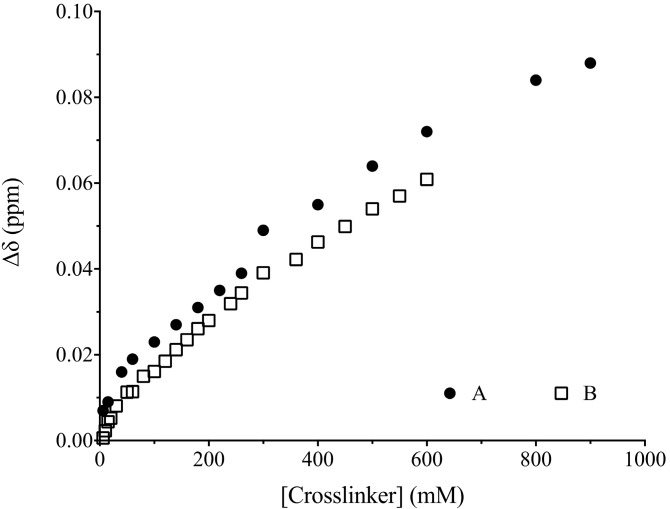
Aspects of the molecular-level basis for the function of ethylene glycol dimethacrylate and trimethylolproprane trimethacrylate crosslinked methacrylic acid copolymers molecularly imprinted with (S)-propranolol have been studied using a series of all-component and all-atom molecular dynamics studies of the corresponding prepolymerization systems. The crosslinking agents were observed to contribute to template complexation, and the results were contrasted with previously reported template-recognition behavior of the corresponding polymers. Differences in the extent to which the two crosslinkers interacted with the functional monomer were identified, and correlations were made to polymer-ligand recognition behavior and the results of nuclear magnetic resonance spectroscopic studies studies. This study demonstrates the importance of considering the functional monomer-crosslinker interaction when designing molecularly imprinted polymers, and highlights the often neglected general contribution of crosslinker to determining the nature of molecularly imprinted polymer-template selectivity.
利用一系列对应预聚合体系的全组分和全原子分子动力学研究,对用(S)-普萘洛尔分子印迹的乙二醇二甲基丙烯酸酯和三羟甲基丙烷三甲基丙烯酸酯交联甲基丙烯酸共聚物功能的分子水平基础方面进行了研究。观察到交联剂有助于模板络合,并将结果与先前报道的相应聚合物的模板识别行为进行了对比。确定了两种交联剂与功能单体相互作用程度的差异,并与聚合物-配体识别行为以及核磁共振光谱研究结果建立了相关性。这项研究证明了在设计分子印迹聚合物时考虑功能单体-交联剂相互作用的重要性,并强调了交联剂在确定分子印迹聚合物-模板选择性本质方面常常被忽视的普遍贡献。