Hagemeijer Marne C, Monastyrska Iryna, Griffith Janice, van der Sluijs Peter, Voortman Jarno, van Bergen en Henegouwen Paul M, Vonk Annelotte M, Rottier Peter J M, Reggiori Fulvio, de Haan Cornelis A M
Virology Division, Department of Infectious Diseases & Immunology, Faculty of Veterinary Medicine, Utrecht University, Yalelaan 1, 3584 CL Utrecht, The Netherlands.
Department of Cell Biology and Institute of Biomembranes, University Medical Centre Utrecht, Utrecht, The Netherlands.
Virology. 2014 Jun;458-459:125-35. doi: 10.1016/j.virol.2014.04.027. Epub 2014 May 13.
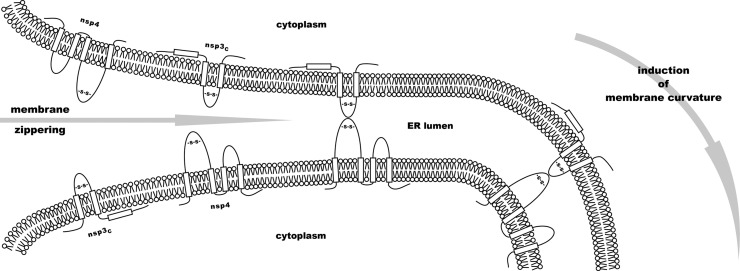
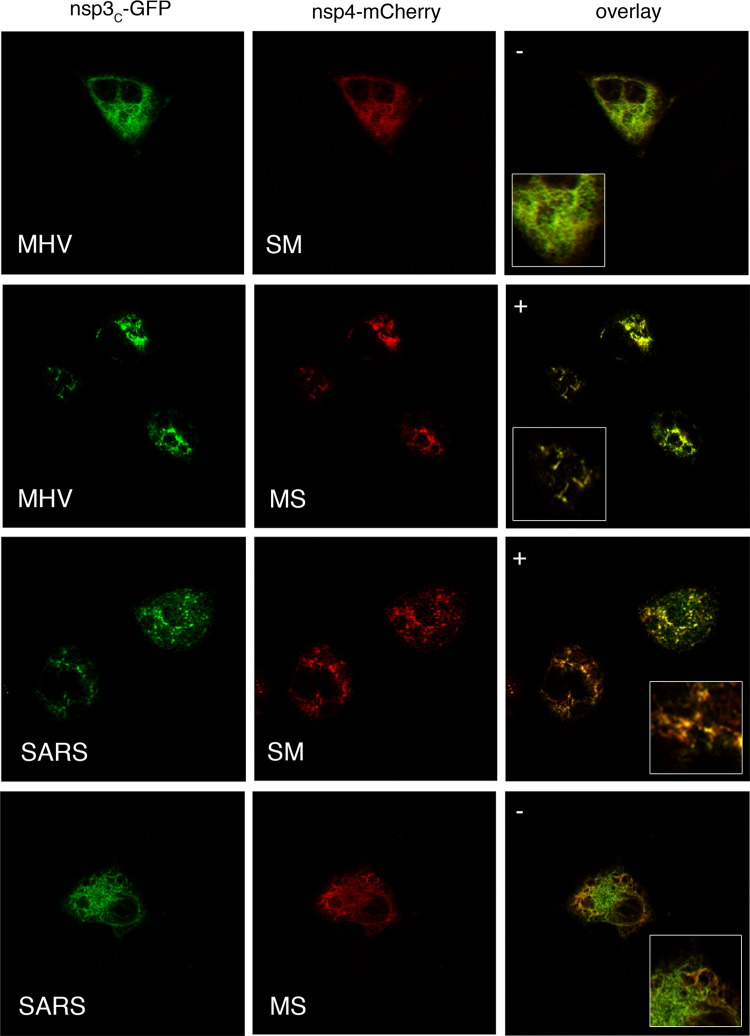
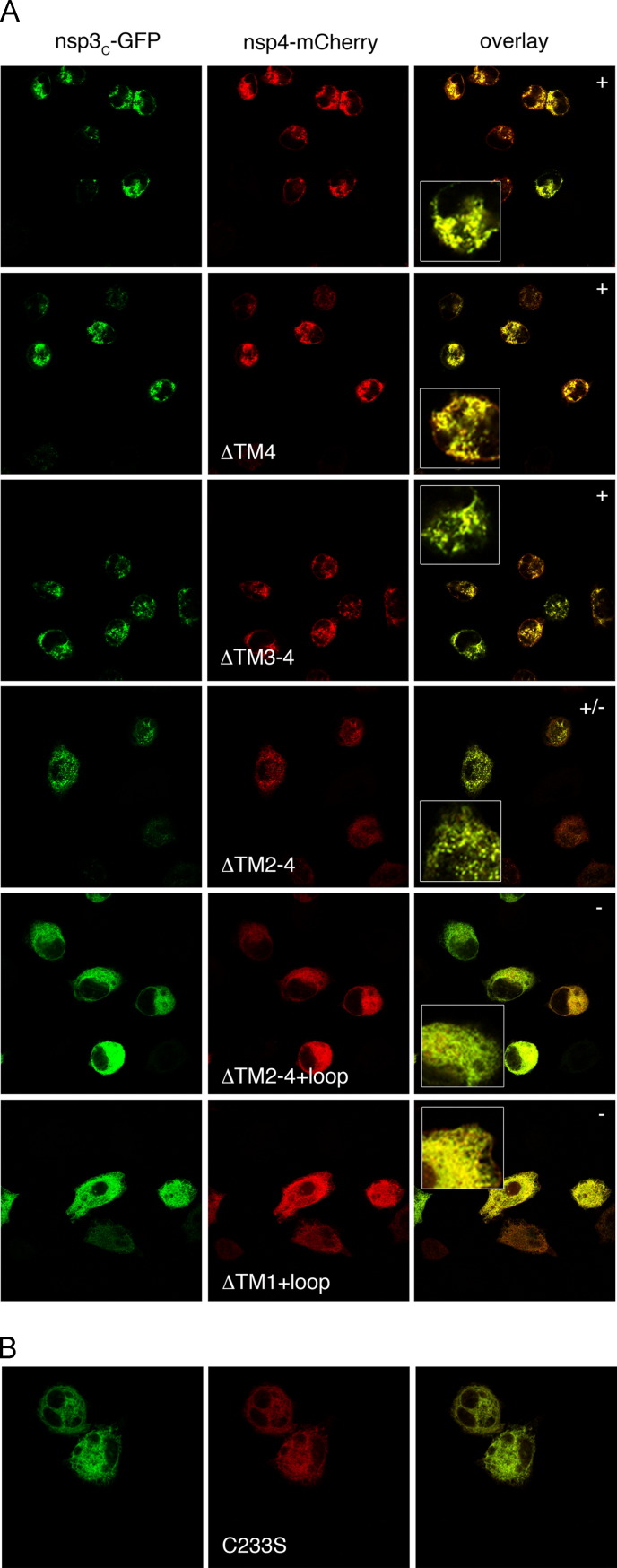
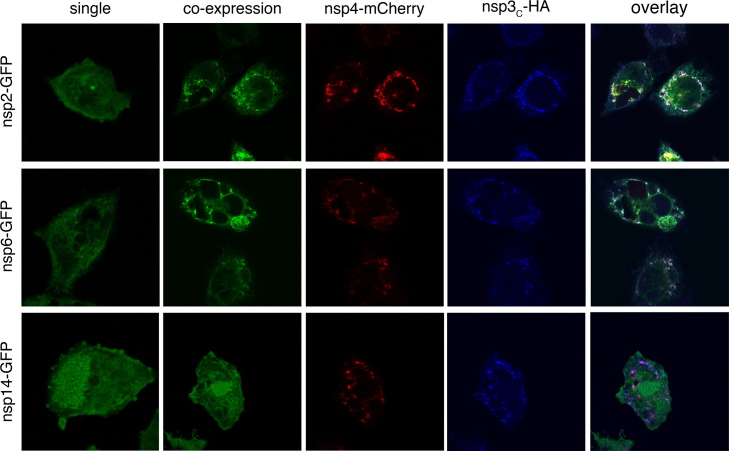
Coronaviruses replicate their genomes in association with rearranged cellular membranes. The coronavirus nonstructural integral membrane proteins (nsps) 3, 4 and 6, are key players in the formation of the rearranged membranes. Previously, we demonstrated that nsp3 and nsp4 interact and that their co-expression results in the relocalization of these proteins from the endoplasmic reticulum (ER) into discrete perinuclear foci. We now show that these foci correspond to areas of rearranged ER-derived membranes, which display increased membrane curvature. These structures, which were able to recruit other nsps, were only detected when nsp3 and nsp4 were derived from the same coronavirus species. We propose, based on the analysis of a large number of nsp3 and nsp4 mutants, that interaction between the large luminal loops of these proteins drives the formation of membrane rearrangements, onto which the coronavirus replication-transcription complexes assemble in infected cells.
冠状病毒在与重排的细胞膜相关联的情况下复制其基因组。冠状病毒非结构整合膜蛋白(nsps)3、4和6是重排膜形成的关键参与者。此前,我们证明nsp3和nsp4相互作用,并且它们的共表达导致这些蛋白从内质网(ER)重新定位到离散的核周病灶中。我们现在表明,这些病灶对应于重排的内质网衍生膜区域,其显示出增加的膜曲率。这些能够招募其他nsps的结构,只有当nsp3和nsp4来自同一冠状病毒物种时才能检测到。基于对大量nsp3和nsp4突变体的分析,我们提出,这些蛋白的大腔环之间的相互作用驱动了膜重排的形成,冠状病毒复制转录复合体在感染细胞中组装在这些膜重排上。