Pistone G, Pistone A, Sorbello D, Viviano E, Bongiorno M R
Department of Dermatology, University of Palermo, Palermo, Italy.
Case Rep Dermatol. 2014 May 17;6(2):145-9. doi: 10.1159/000354030. eCollection 2014 May.
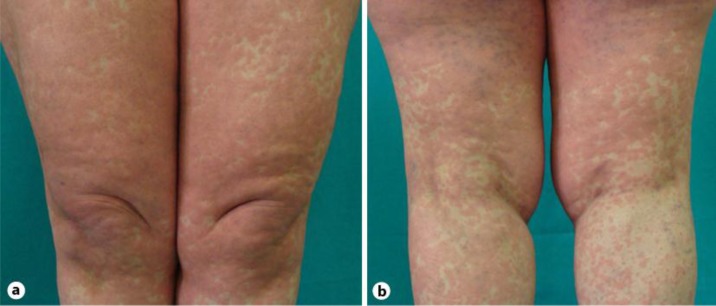
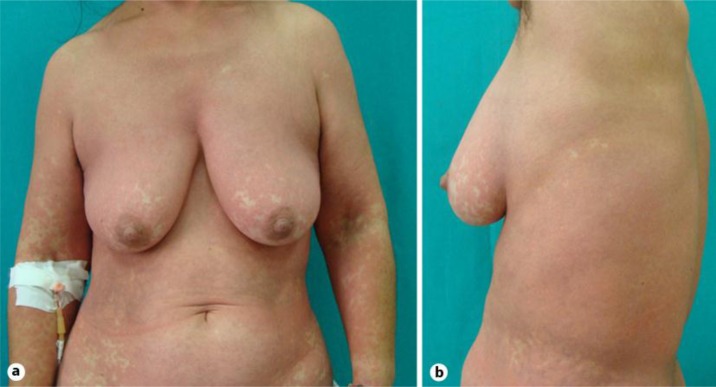
Adverse drug reactions to highly antiretroviral therapy (HAART) are major obstacles in its success. Although overall mortality from HIV has dramatically declined owing to HAART, these antiretroviral regimens have been associated with a wide spectrum of severe cutaneous reactions. The severity of cutaneous adverse reactions varies greatly, and some may be difficult to manage. To optimize adherence and efficacy of antiretroviral treatment, clinicians must focus on preventing adverse effects whenever possible, and distinguish those that are self-limited from those that are potentially serious. This paper presents the case of a serious cutaneous adverse reaction to Atripla in a HIV-positive 50-year-old Caucasian woman.
高效抗逆转录病毒疗法(HAART)的药物不良反应是其成功应用的主要障碍。尽管由于HAART,HIV导致的总体死亡率已大幅下降,但这些抗逆转录病毒治疗方案与多种严重的皮肤反应相关。皮肤不良反应的严重程度差异很大,有些可能难以处理。为了优化抗逆转录病毒治疗的依从性和疗效,临床医生必须尽可能专注于预防不良反应,并区分那些自限性的反应和潜在严重的反应。本文介绍了一名50岁HIV阳性白人女性对依法韦仑/恩曲他滨/替诺福韦复方制剂(Atripla)发生严重皮肤不良反应的病例。