Ohnishi Nobuaki, Tahara Yu, Kuriki Daisuke, Haraguchi Atsushi, Shibata Shigenobu
Laboratory of Physiology and Pharmacology, School of Advanced Science and Engineering, Waseda University, Tokyo, Japan.
PLoS One. 2014 Jun 16;9(6):e100272. doi: 10.1371/journal.pone.0100272. eCollection 2014.
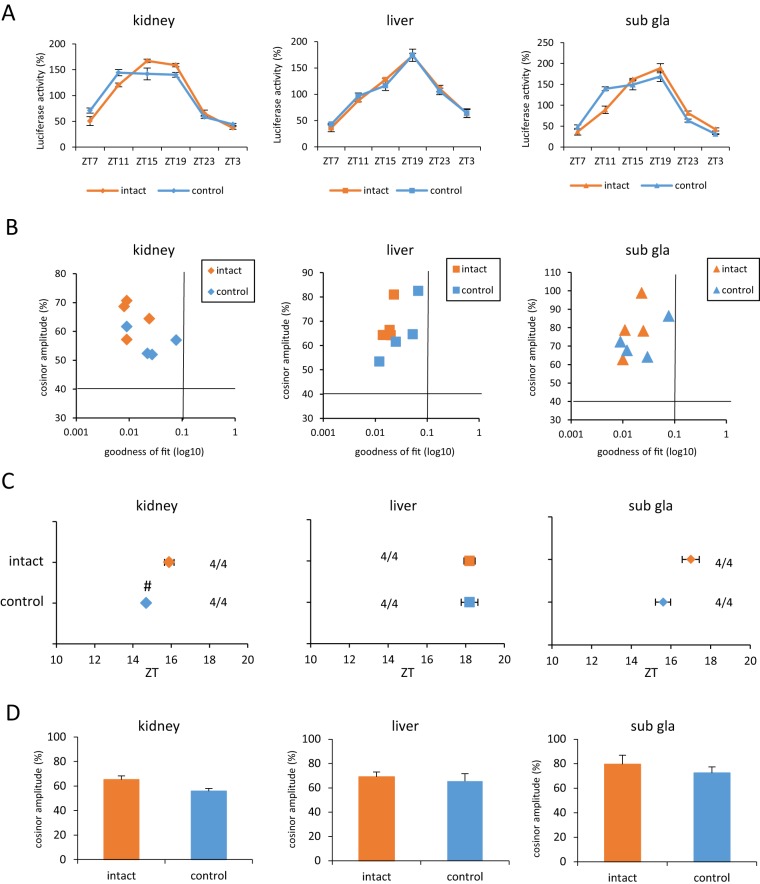
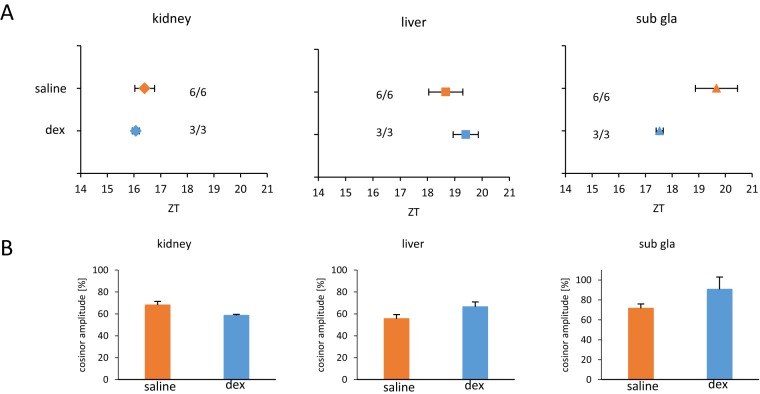
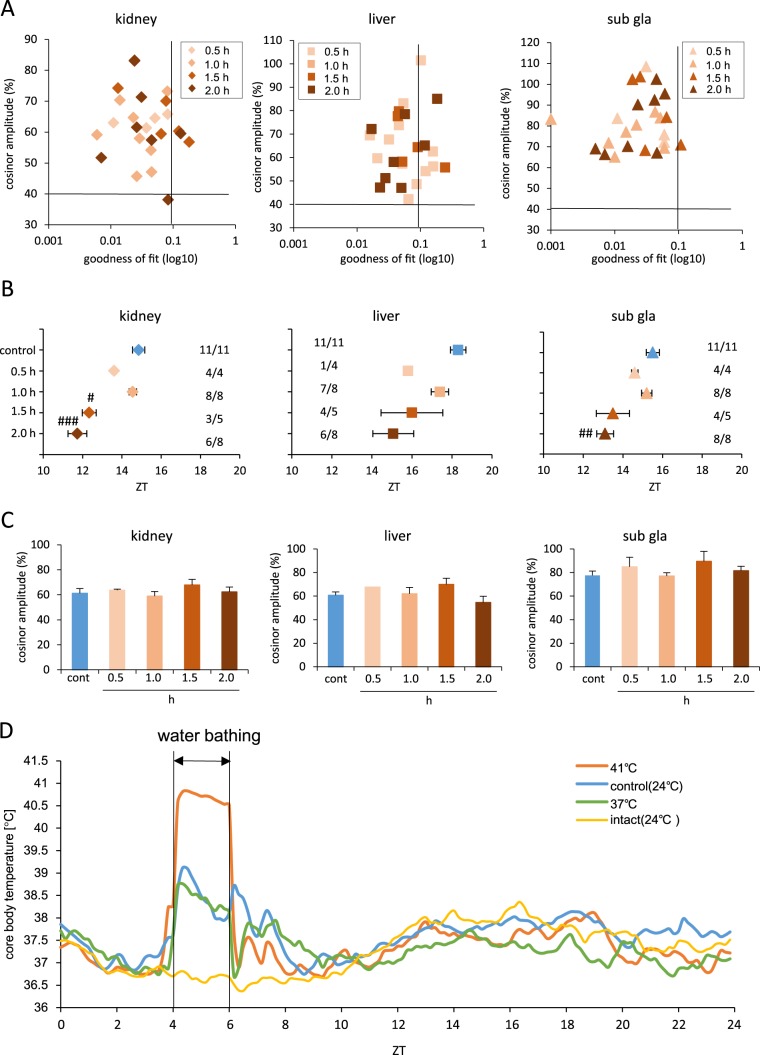
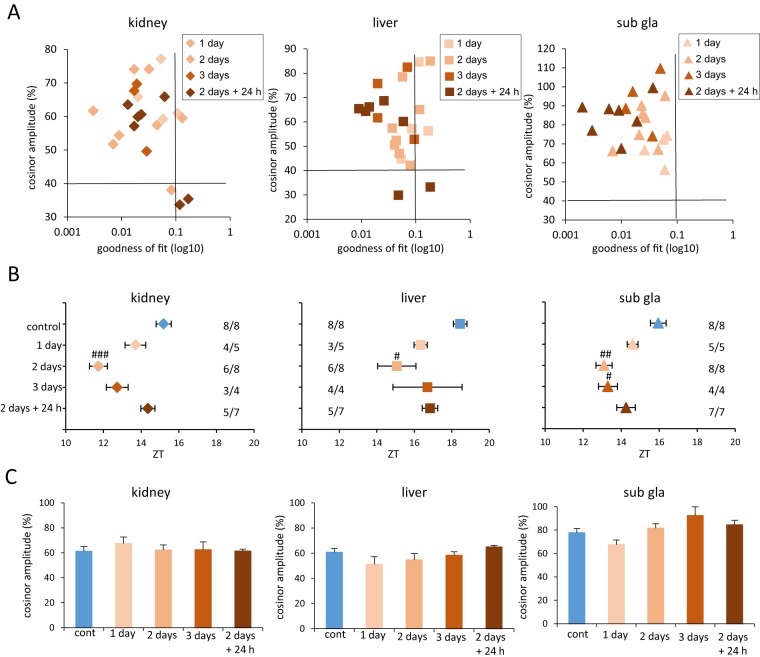
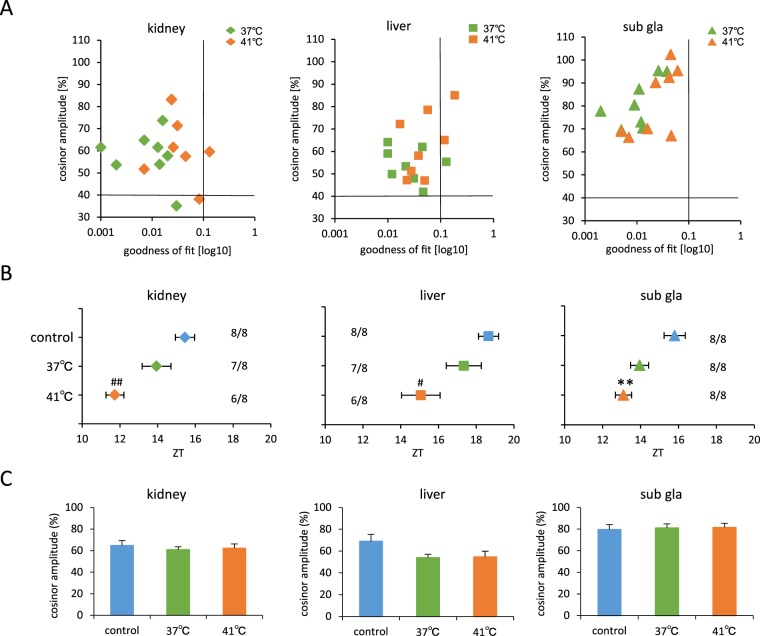
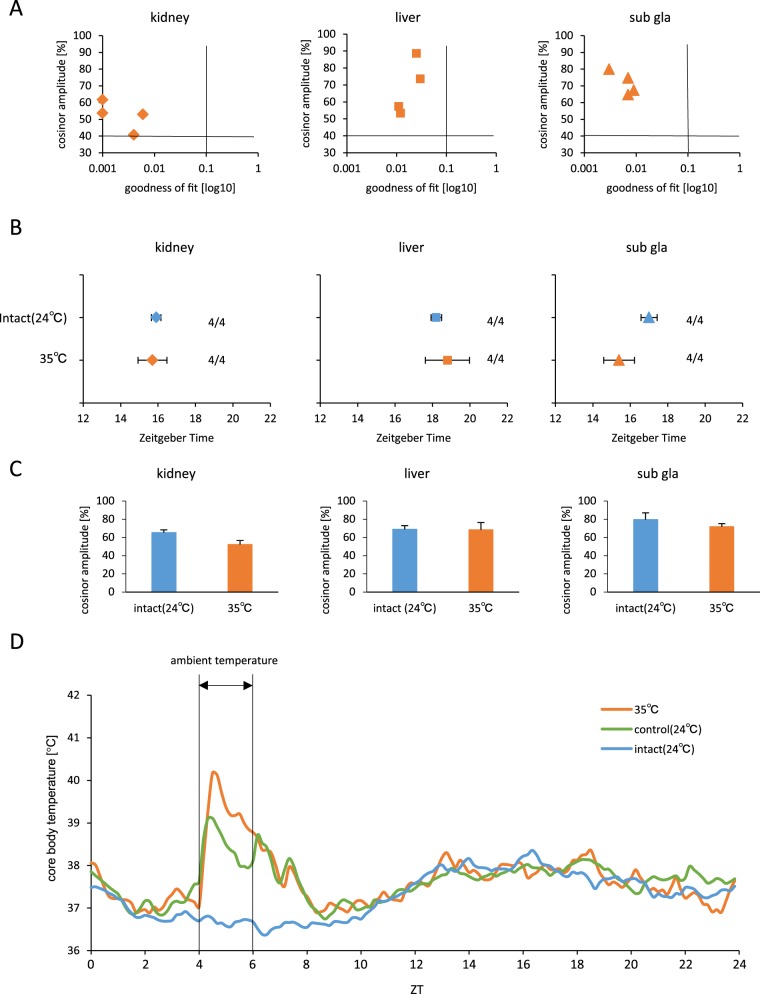
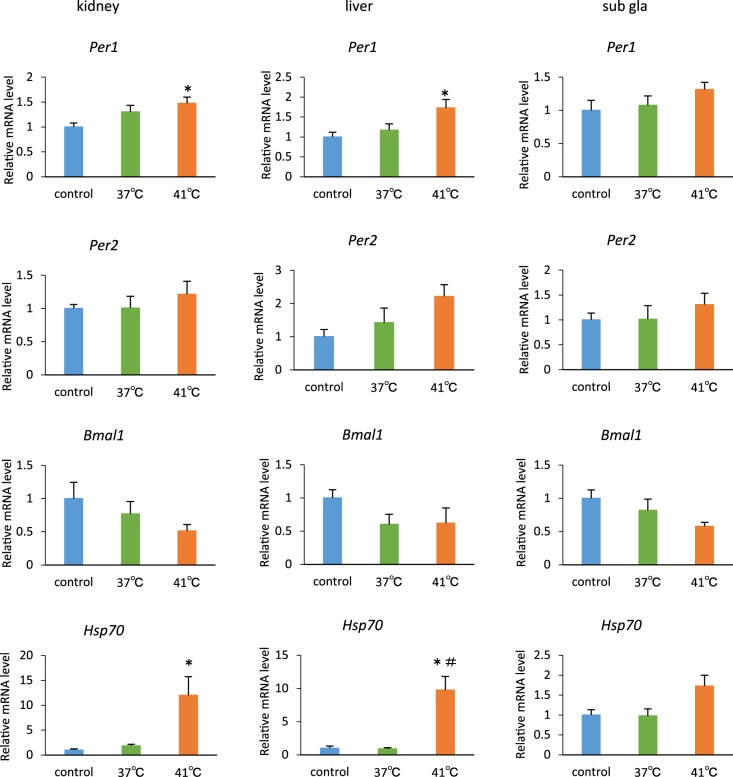
Circadian clocks in the peripheral tissues of mice are known to be entrained by pulse stimuli such as restricted feeding, novel wheel running, and several other agents. However, there are no reports on high temperature pulse-mediated entrainment on the phase-shift of peripheral clocks in vivo. Here we show that temperature treatment of mice for two days at 41°C, instead of 37°C, for 1-2 h during the inactive period, using a temperature controlled water bath stimulated phase-advance of peripheral clocks in the kidney, liver, and submandibular gland of PER2::LUCIFERASE mice. On the other hand, treatment for 2 days at 35°C ambient room temperature for 2 h did not cause a phase-advance. Maintenance of mice at 41°C in a water bath, sustained the core body temperature at 40-41°C. However, the use of 37°C water bath or the 35°C ambient room temperature elevated the core body temperature to 38.5°C, suggesting that at least a core body temperature of 40-41°C is necessary to cause phase-advance under light-dark cycle conditions. The temperature pulse stimulation at 41°C, instead of 37°C water bath for 2 h led to the elevated expression of Per1 and Hsp70 in the peripheral tissue of mice. In summary, the present study demonstrates that transient high temperature pulse using water bath during daytime causes phase-advance in mouse peripheral clocks in vivo. The present results suggest that hot water bath may affect the phase of peripheral clocks.
已知小鼠外周组织中的生物钟会被限时进食、新奇的轮转运动等脉冲刺激以及其他多种因素所调节。然而,尚无关于高温脉冲介导的体内外周生物钟相移的报道。在此,我们表明,在不活跃期,使用温度可控的水浴将小鼠置于41°C而非37°C处理1 - 2小时,持续两天,可刺激PER2::LUCIFERASE小鼠肾脏、肝脏和下颌下腺的外周生物钟提前。另一方面,在35°C的室温环境下处理2天,每次2小时,并未导致相位提前。将小鼠置于41°C的水浴中,可使核心体温维持在40 - 41°C。然而,使用37°C的水浴或35°C的室温会使核心体温升高至38.5°C,这表明在明暗循环条件下,至少40 - 41°C的核心体温是导致相位提前所必需的。41°C而非37°C的温度脉冲刺激2小时会导致小鼠外周组织中Per1和Hsp70的表达升高。总之,本研究表明,白天使用水浴进行短暂高温脉冲可使小鼠体内外周生物钟提前。目前的结果表明,热水浴可能会影响外周生物钟的相位。