Niu Pan-Pan, Cao Yu, Gong Ting, Guo Jin-Hui, Zhang Bi-Kui, Jia Su-Jie
Department of Pharmaceutics, The Third Xiangya Hospital, Central South University, Tongzipo Road #138, Changsha 410013, China.
J Transl Med. 2014 Jun 16;12:170. doi: 10.1186/1479-5876-12-170.
Circulating endothelial progenitor cells (EPCs) may be a biomarker for vascular function and cardiovascular risk in patients with coronary artery disease (CAD). Dimethylarginine dimethylaminohydrolase 2 (DDAH2) regulates the function of EPCs. This study aimed to examine whether hypermethylation of DDAH2 promoter contributes to impaired function of EPCs in CAD patients.
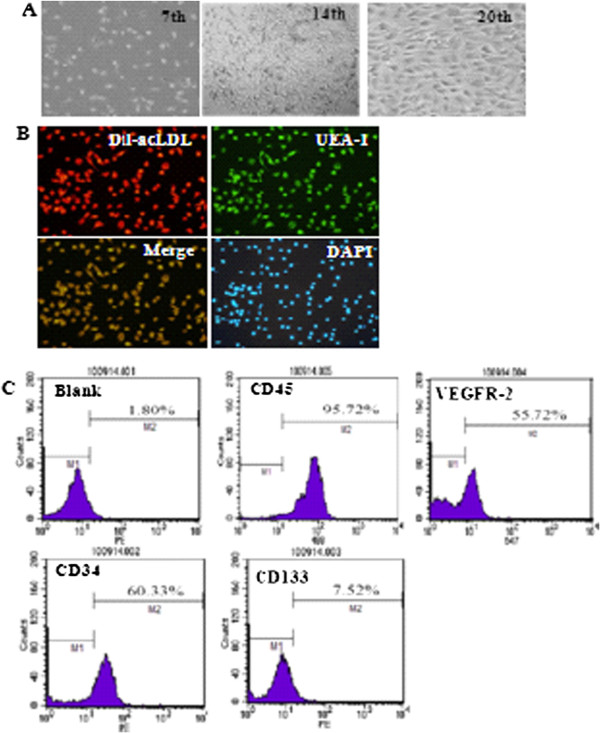
Peripheral blood mono-nuclear cells from 25 CAD patients and 15 healthy volunteers were collected and differentiated into EPCs. EPCs were tested for their adhesive capability. DDAH2 mRNA expression was analyzed by real-time PCR, and the methylation of DDAH2 promoter was detected by bisulfite genomic sequencing.
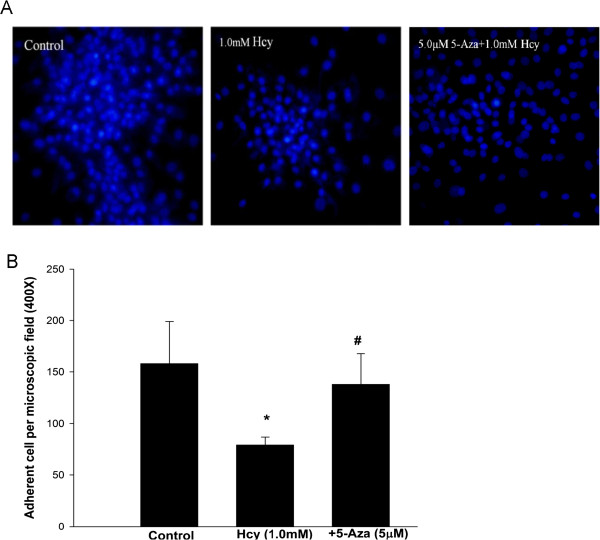
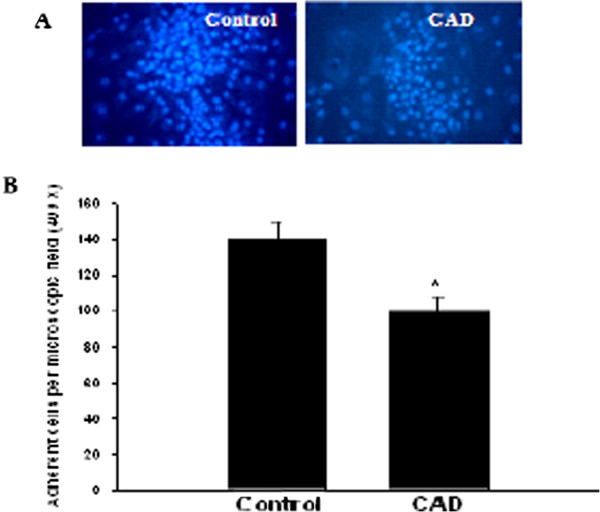
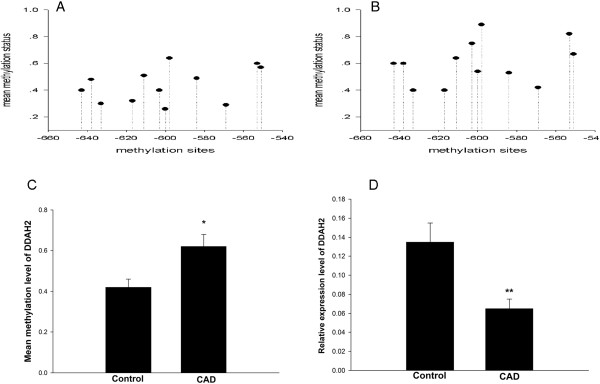
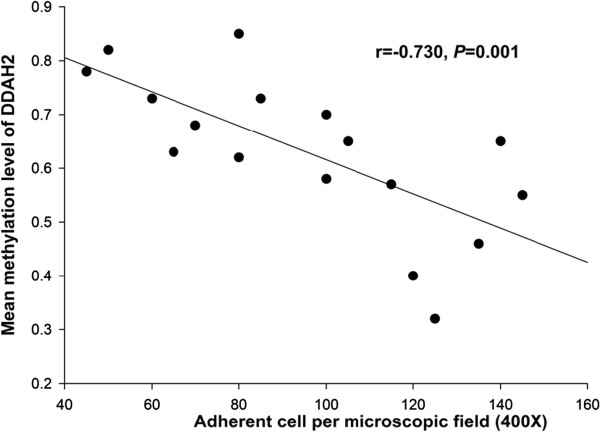
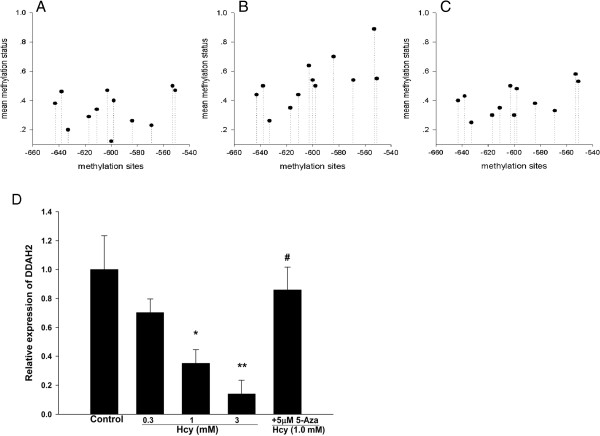
DDAH2 promoter in EPCs from CAD patients was hypermethylated and the methylation level was negatively correlated to DDAH2 mRNA level and adhesion function of EPCs. Homocysteine impaired the adhesion function of EPCs, accompanied by lower DDAH2 expression and higher methylation level of DDAH2 promoter, compared to controls. These effects of homocysteine were reversed by pretreatment with Aza, an inhibitor of DNA methyltransferase.
Hypermethylation in DDAH2 promoter is positively correlated to the dysfunction of EPCs in CAD patients. Homocysteine disrupts EPCs function via inducing the hypermethylation of DDAH2 promoter, suggesting a key role of epigenetic mechanism in the progression of atherosclerosis.
循环内皮祖细胞(EPCs)可能是冠心病(CAD)患者血管功能和心血管风险的生物标志物。二甲基精氨酸二甲胺水解酶2(DDAH2)调节EPCs的功能。本研究旨在探讨DDAH2启动子的高甲基化是否导致CAD患者EPCs功能受损。
收集25例CAD患者和15名健康志愿者的外周血单个核细胞并将其分化为EPCs。检测EPCs的黏附能力。通过实时PCR分析DDAH2 mRNA表达,并通过亚硫酸氢盐基因组测序检测DDAH2启动子的甲基化情况。
CAD患者EPCs中的DDAH2启动子发生高甲基化,且甲基化水平与DDAH2 mRNA水平及EPCs的黏附功能呈负相关。与对照组相比,同型半胱氨酸损害EPCs的黏附功能,同时伴有DDAH2表达降低和DDAH2启动子甲基化水平升高。DNA甲基转移酶抑制剂Aza预处理可逆转同型半胱氨酸的这些作用。
DDAH2启动子的高甲基化与CAD患者EPCs功能障碍呈正相关。同型半胱氨酸通过诱导DDAH2启动子的高甲基化破坏EPCs功能,提示表观遗传机制在动脉粥样硬化进展中起关键作用。