Lilly Research Centre, Eli Lilly & Co, Ltd,, Sunninghill Road, GU20 6PH Windlesham, Surrey, UK.
Mol Pain. 2014 Jun 16;10:37. doi: 10.1186/1744-8069-10-37.
Genetic causes of exaggerated or reduced pain sensitivity in humans are well known. Recently, single nucleotide polymorphisms (SNPs) in the gene P2RX7, coding for the ATP-gated ion channel P2X7, have been described that cause gain-of-function (GOF) and loss-of-function (LOF), respectively of this channel. Importantly, P2RX7 SNPs have been associated with more or less severe pain scores in patient suffering of post-mastectomy pain and osteoarthritis.
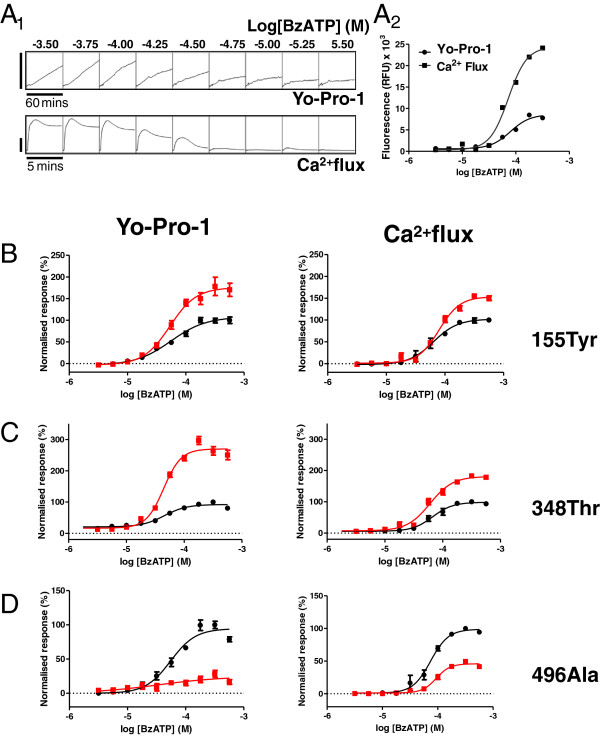
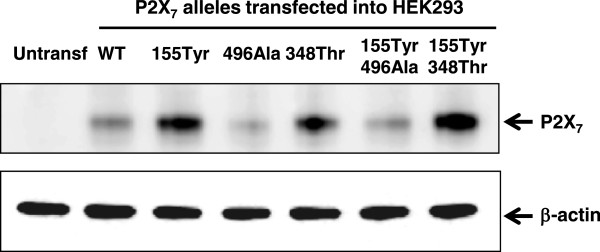
The functional consequences of some P2RX7 SNPs (rs208294 (His155Tyr), rs1718119 (Ala348Thr) and rs3751143 (Glu496Ala)) were studied in recombinant cells in vitro. Our findings suggest a correlation between GOF and LOF of P2X7 and actual channel protein expression. Both channel and pore function for these mutant P2X7 receptors changed in parallel to protein levels. On the other hand, the mutant receptors did not differ in their sensitivity to known P2X7 agonists and antagonists. We further demonstrated that in patients with diabetic peripheral neuropathic pain (DPNP), the presence of the GOF SNPs rs208294 (His155Tyr) and rs1718119 (Ala348Thr) is associated, in females, with higher pain intensity scores.
Our present results confirm the physiological relevance of some of the SNPs in the P2RX7 gene and show that the presence of these genetic variants correlates with pain sensitivity also in a diabetic neuropathic pain patient population.
人类对疼痛敏感性的夸大或降低的遗传原因众所周知。最近,编码 ATP 门控离子通道 P2X7 的基因 P2RX7 中的单核苷酸多态性(SNP)已被描述为分别导致该通道的功能获得(GOF)和功能丧失(LOF)。重要的是,P2RX7 SNP 与接受乳房切除术疼痛和骨关节炎治疗的患者的疼痛评分或多或少严重相关。
在体外重组细胞中研究了一些 P2RX7 SNP(rs208294(His155Tyr),rs1718119(Ala348Thr)和 rs3751143(Glu496Ala))的功能后果。我们的研究结果表明,P2X7 的 GOF 和 LOF 与实际通道蛋白表达之间存在相关性。对于这些突变 P2X7 受体,通道和孔功能与其蛋白水平平行变化。另一方面,这些突变受体在对已知 P2X7 激动剂和拮抗剂的敏感性方面没有差异。我们进一步证明,在患有糖尿病周围神经性疼痛(DPNP)的患者中,GOF SNP rs208294(His155Tyr)和 rs1718119(Ala348Thr)的存在与女性疼痛强度评分较高相关。
我们目前的结果证实了 P2RX7 基因中某些 SNP 的生理相关性,并表明这些遗传变异的存在也与糖尿病性神经病理性疼痛患者人群的疼痛敏感性相关。