Department of General Surgery, Ren Ji Hospital, School of Medicine, Shanghai Jiao Tong University, Shanghai, China.
Cancer Cell Int. 2014 Jun 7;14:47. doi: 10.1186/1475-2867-14-47. eCollection 2014.
The aim of this study was to investigate the relationship of MACC-1 (metastasis-associated in colon cancer 1) and microRNA (miRNA) hsa-miR-574-5p and the function of hsa-miR-574-5p in colorectal cancer liver metastasis.
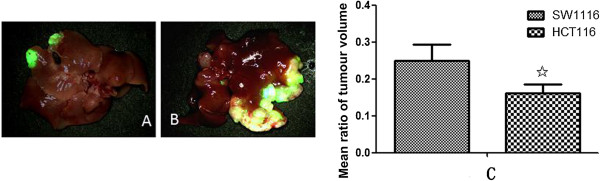
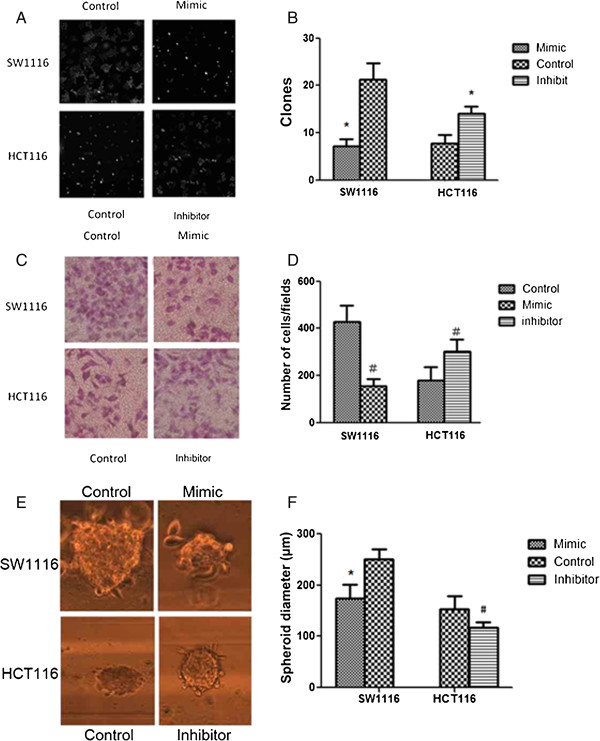
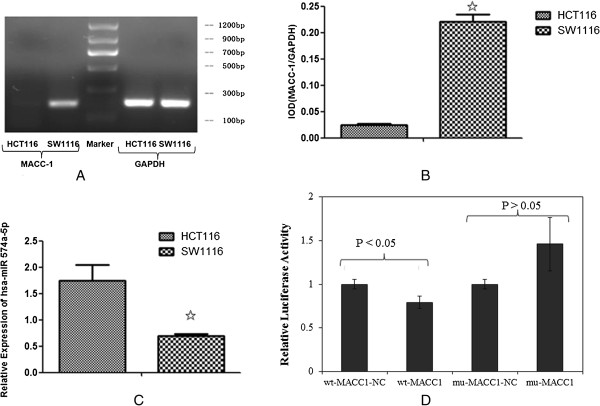
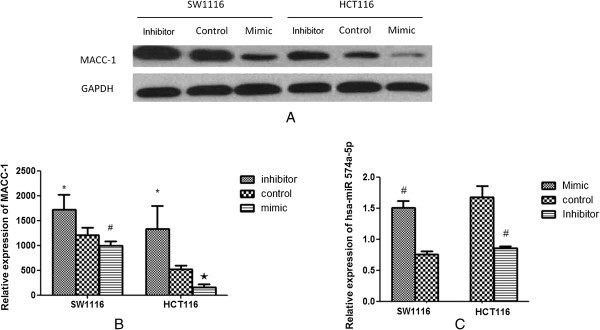
Liver-metastatic nude mice model was constructed by injecting two human colorectal cancer cell lines (SW1116 and HCT116) labeled with green fluorescent protein (GFP) through spleen, and liver metastasis incidences were evaluated. We identified miRNAs that might regulate MACC-1 expression by bioinformatics analysis and further investigated the relationship of MACC-1 and hsa-miR-574-5p by luciferase reporter assay, quantitative RT-PCR and western blot. The effect of hsa-miR-574-5p on colony formation, cell invasion and cell spheroid formation was investigated by antisense transfected HCT116 cells and miRNA mimic transfected SW1116 cells.
The volume of liver metastasis induced by SW1116 cells (25.0 ± 4.4%) was significantly higher than that induced by HCT116 cells. Bioinformatics analysis showed hsa-miR-574-5p negatively regulated MACC-1 and then their interaction was demonstrated at mRNA and protein level. The direct relation between them was confirmed by luciferase reporter assay. And the knockdown of has-miR-574-5p demonstrated increased colony formation, cell invasion and cell spheroid formation in HCT116 cells, compared to control group (P < 0.05). Reverse results were obtained in mimic transfected SW1116 cells.
Our work firstly demonstrated that hsa-miR-574-5p negatively regulated MACC-1 expression in colorectal cancer cells. It was partly elucidated that hsa-miR-574-5p played a suppressive role in colorectal cancer liver metastasis by negatively directing MACC-1 expression, offering a novel therapeutic approach for colorectal cancer liver metastasis.
本研究旨在探讨 MACC-1(结肠癌转移相关基因 1)与微小 RNA(miRNA)hsa-miR-574-5p 的关系,以及 hsa-miR-574-5p 在结直肠癌细胞肝转移中的作用。
通过脾脏注射标记有绿色荧光蛋白(GFP)的两种人结直肠癌细胞系(SW1116 和 HCT116)构建肝转移裸鼠模型,评估肝转移发生率。通过生物信息学分析鉴定可能调节 MACC-1 表达的 miRNA,并进一步通过荧光素酶报告基因检测、定量 RT-PCR 和 Western blot 研究 MACC-1 与 hsa-miR-574-5p 的关系。通过反义转染 HCT116 细胞和 miRNA 模拟转染 SW1116 细胞研究 hsa-miR-574-5p 对集落形成、细胞侵袭和细胞球体形成的影响。
SW1116 细胞诱导的肝转移体积(25.0±4.4%)明显高于 HCT116 细胞。生物信息学分析显示 hsa-miR-574-5p 负调控 MACC-1,并且在 mRNA 和蛋白水平上证明了它们之间的相互作用。通过荧光素酶报告基因检测证实了它们之间的直接关系。与对照组相比,hsa-miR-574-5p 敲低后 HCT116 细胞集落形成、细胞侵袭和细胞球体形成能力增强(P<0.05)。在转染 mimics 的 SW1116 细胞中则得到了相反的结果。
本研究首次证明 hsa-miR-574-5p 负调控结直肠癌细胞中 MACC-1 的表达。部分阐明 hsa-miR-574-5p 通过负向调节 MACC-1 表达在结直肠癌细胞肝转移中发挥抑制作用,为结直肠癌细胞肝转移提供了一种新的治疗方法。