Department of Pharmaceutical Sciences, The State University of New York at Buffalo, Buffalo, New York, United States of America.
PLoS One. 2012;7(11):e48622. doi: 10.1371/journal.pone.0048622. Epub 2012 Nov 1.
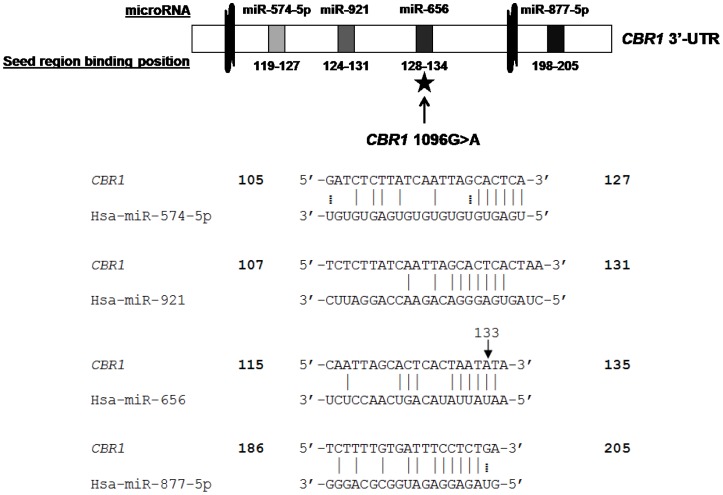
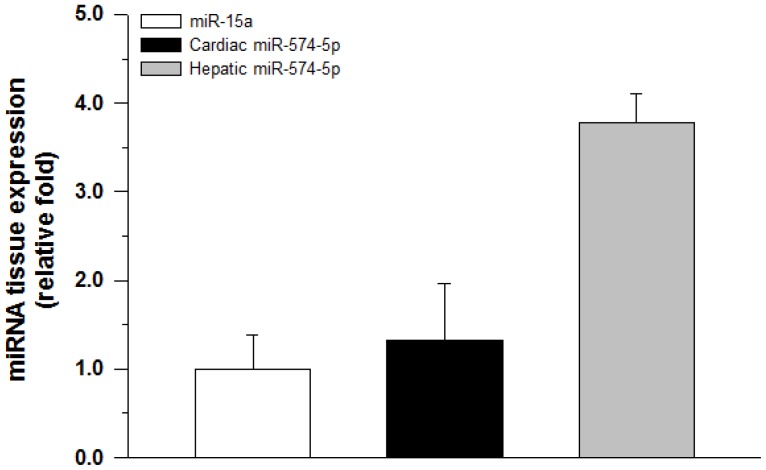
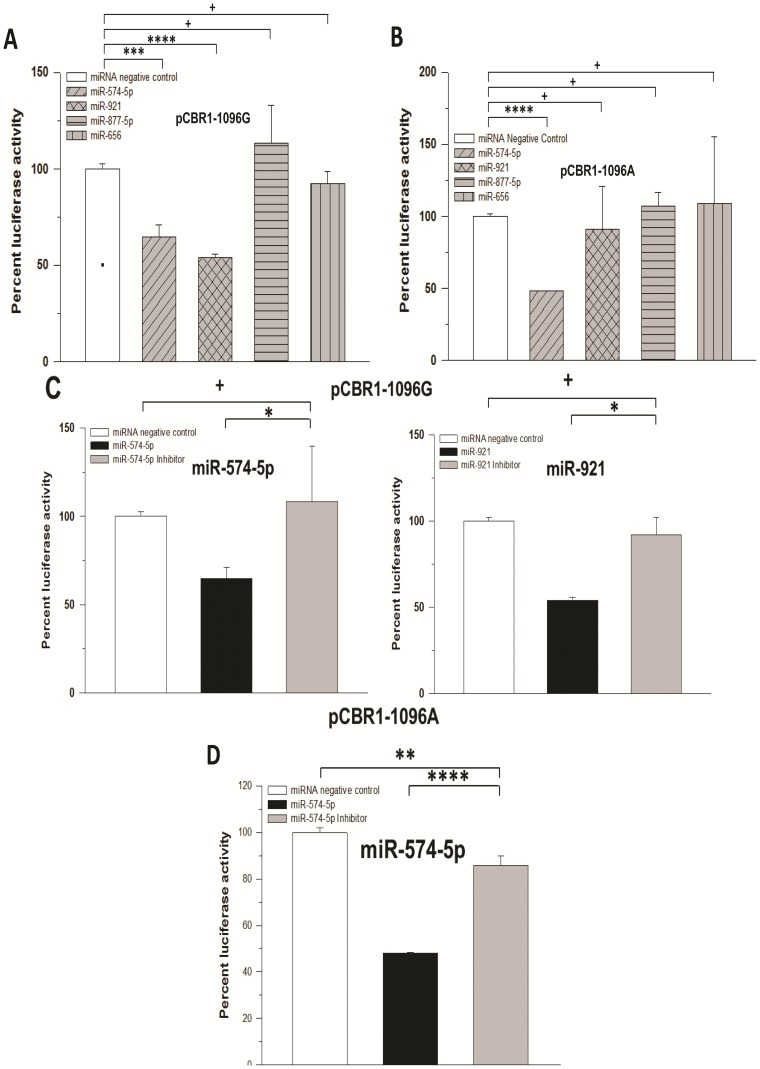
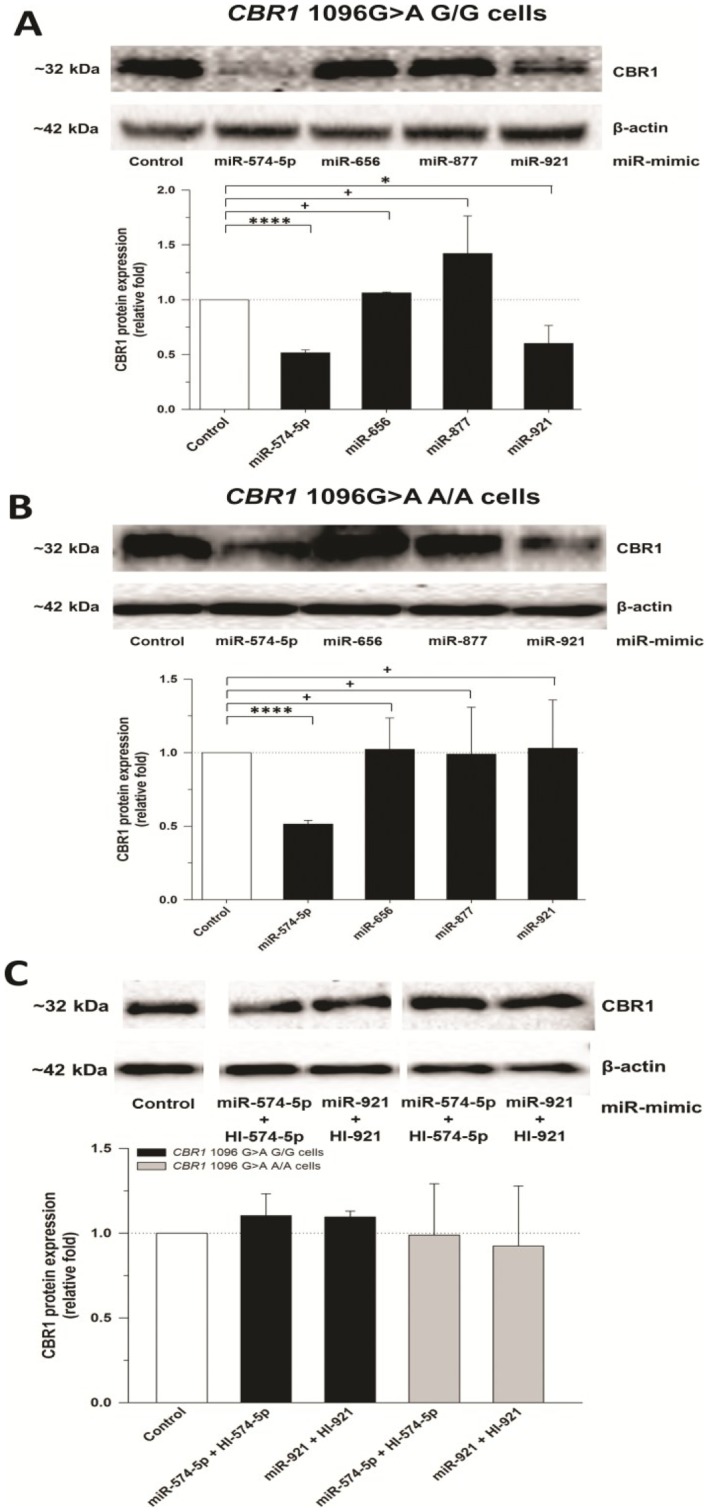
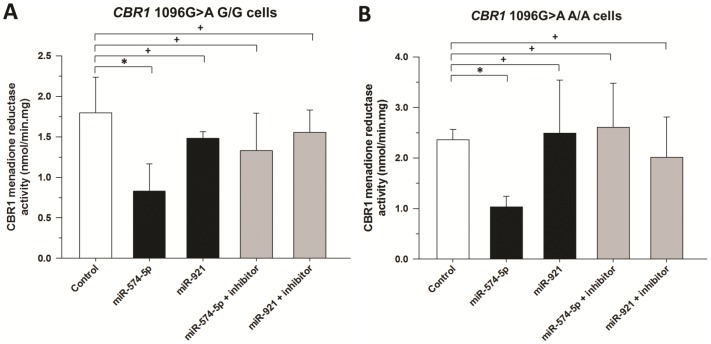
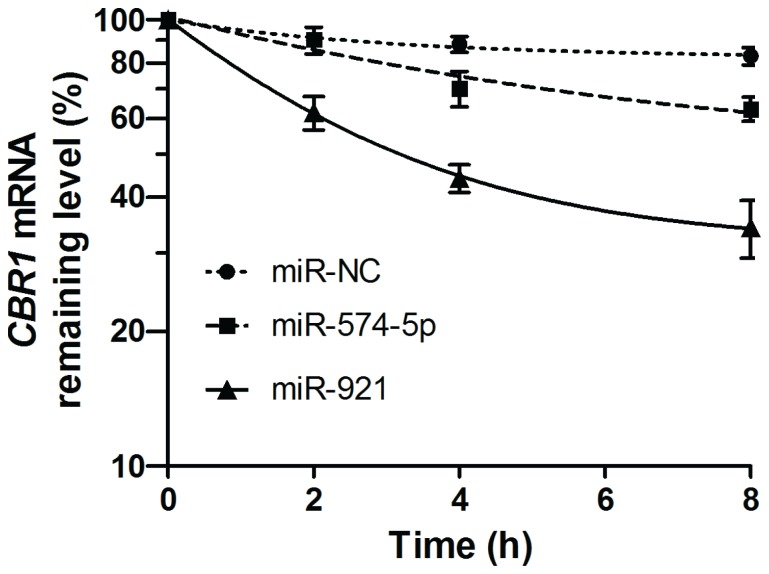
MicroRNAs (miRNAs) are small RNAs responsible for the post-transcriptional regulation of a variety of human genes. To date, their involvement in the regulation of CBR1 is unknown. This study reports for the first time the identification of microRNA-574-5p (hsa-miR-574-5p) and microRNA-921 (hsa-miR-921) as two miRNAs capable of interacting with the 3'-untranslated region (3'-UTR) of the CBR1 gene and downregulating CBR1 expression. Furthermore, we demonstrate that a common single-nucleotide polymorphism (SNP) in the CBR1 3'-UTR (rs9024, CBR1 1096G>A) differentially impacts the regulation of CBR1 by hsa-miR-574-5p and hsa-miR-921 dependent on genotype. First, four candidate miRNAs were selected based on bioinformatic analyses, and were tested in Chinese hamster ovary (CHO) cells transfected with CBR1 3'-UTR constructs harboring either the G or A allele for rs9024. We found that hsa-miR-574-5p and hsa-miR-921 significantly decreased luciferase activity in CHO cells transfected with the CBR1 3'-UTR construct carrying the major rs9024 G allele by 35% and 46%, respectively. The influence of these miRNAs was different in cells transfected with a CBR1 3'-UTR construct containing the minor rs9024 A allele in that only hsa-miR-574-5p had a demonstrable effect (i.e., 52% decrease in lucifersase activity). To further determine the functional effects of miRNA-mediated regulation of polymorphic CBR1, we assessed CBR1 protein expression and CBR1 enzymatic activity for the prototypical substrate menadione in human lymphoblastoid cell lines with distinct rs9024 genotypes. We found that hsa-miR-574-5p and hsa-miR-921 significantly decreased CBR1 protein (48% and 40%, respectively) and CBR1 menadione activity (54% and 18%, respectively) in lymphoblastoid cells homozygous for the major rs9024 G allele. In contrast, only hsa-miR-574-5p decreased CBR1 protein and CBR1 activity in cells homozygous for the minor rs9024 A allele, and did so by 49% and 56%, respectively. These results suggest that regulation of human CBR1 expression by hsa-miR-574-5p and hsa-miR-921 depends upon rs9024 genotype status.
微小 RNA(miRNAs)是负责多种人类基因转录后调控的小 RNA。迄今为止,它们在 CBR1 调控中的作用尚不清楚。本研究首次报道了 microRNA-574-5p(hsa-miR-574-5p)和 microRNA-921(hsa-miR-921)作为两种能够与 CBR1 基因 3'非翻译区(3'-UTR)相互作用并下调 CBR1 表达的 miRNA。此外,我们还证明了 CBR1 3'-UTR 中的一个常见单核苷酸多态性(SNP)(rs9024,CBR1 1096G>A)根据基因型,对 hsa-miR-574-5p 和 hsa-miR-921 对 CBR1 的调控有不同的影响。首先,基于生物信息学分析,选择了四个候选 miRNA,并在转染了携带 rs9024 等位基因 G 或 A 的 CBR1 3'-UTR 构建体的中国仓鼠卵巢(CHO)细胞中进行了测试。我们发现,hsa-miR-574-5p 和 hsa-miR-921 分别使携带主要 rs9024 G 等位基因的 CBR1 3'-UTR 构建体转染的 CHO 细胞中的荧光素酶活性显著降低了 35%和 46%。在转染含有次要 rs9024 A 等位基因的 CBR1 3'-UTR 构建体的细胞中,这些 miRNA 的影响不同,因为只有 hsa-miR-574-5p 具有明显的作用(即荧光素酶活性降低 52%)。为了进一步确定 miRNA 介导的多态性 CBR1 调节的功能影响,我们评估了在具有不同 rs9024 基因型的人类淋巴母细胞系中,针对典型底物亚硫酸氢钠甲萘醌的 CBR1 蛋白表达和 CBR1 酶活性。我们发现,hsa-miR-574-5p 和 hsa-miR-921 分别显著降低了 CBR1 蛋白(分别为 48%和 40%)和 CBR1 亚硫酸氢钠甲萘醌活性(分别为 54%和 18%)在纯合子携带主要 rs9024 G 等位基因的淋巴母细胞中。相比之下,只有 hsa-miR-574-5p 降低了 CBR1 蛋白和 CBR1 活性在纯合子携带次要 rs9024 A 等位基因的细胞中,分别降低了 49%和 56%。这些结果表明,hsa-miR-574-5p 和 hsa-miR-921 对人类 CBR1 表达的调节取决于 rs9024 基因型状态。