Krupovic Mart, Koonin Eugene V
Institut Pasteur, Unité Biologie Moléculaire du Gène chez les Extrêmophiles, Department of Microbiology, Paris 75015, France.
National Center for Biotechnology Information, National Library of Medicine, National Institutes of Health, Bethesda, MD 20894, USA.
Sci Rep. 2014 Jun 18;4:5347. doi: 10.1038/srep05347.
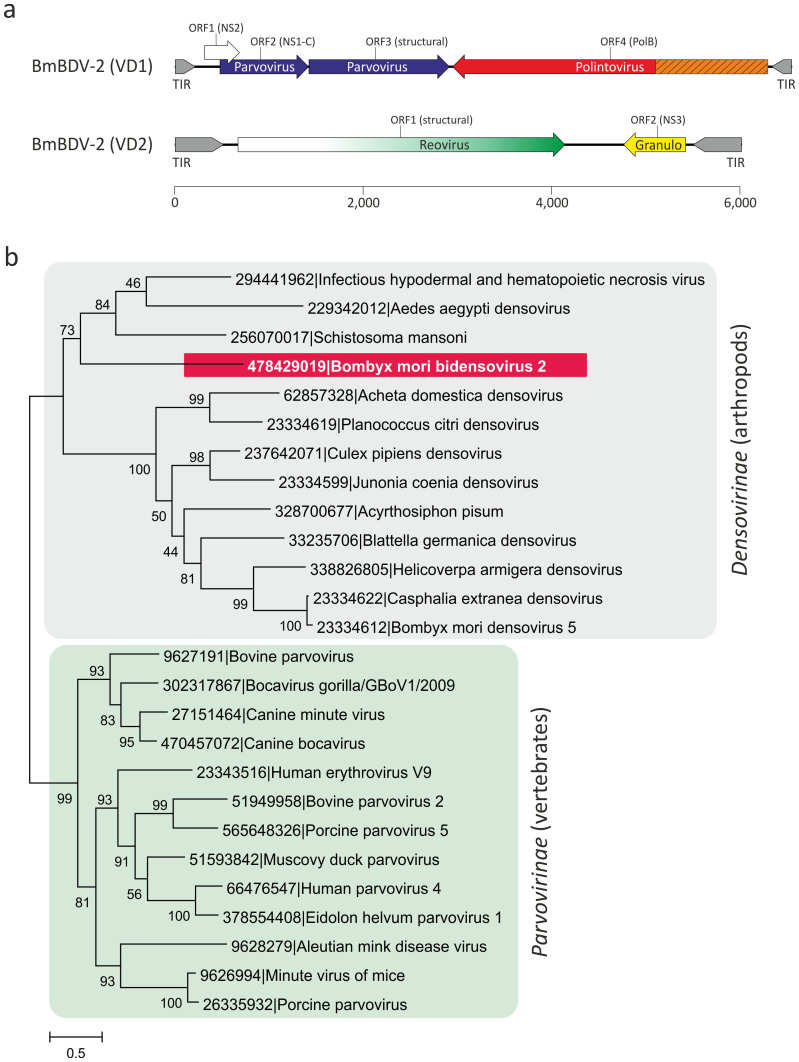
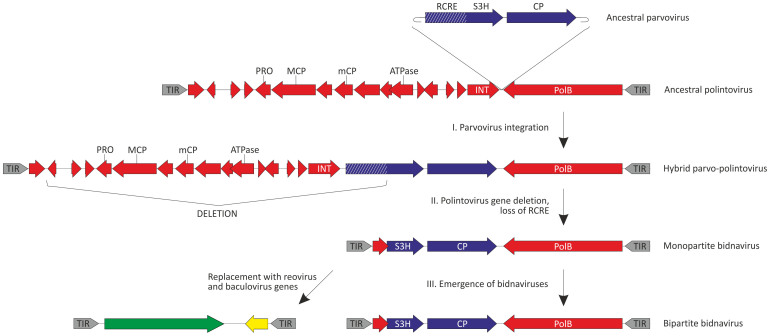
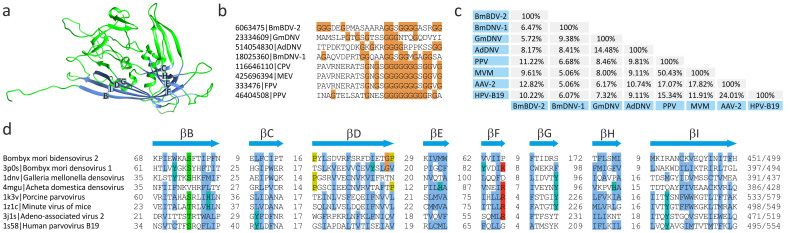
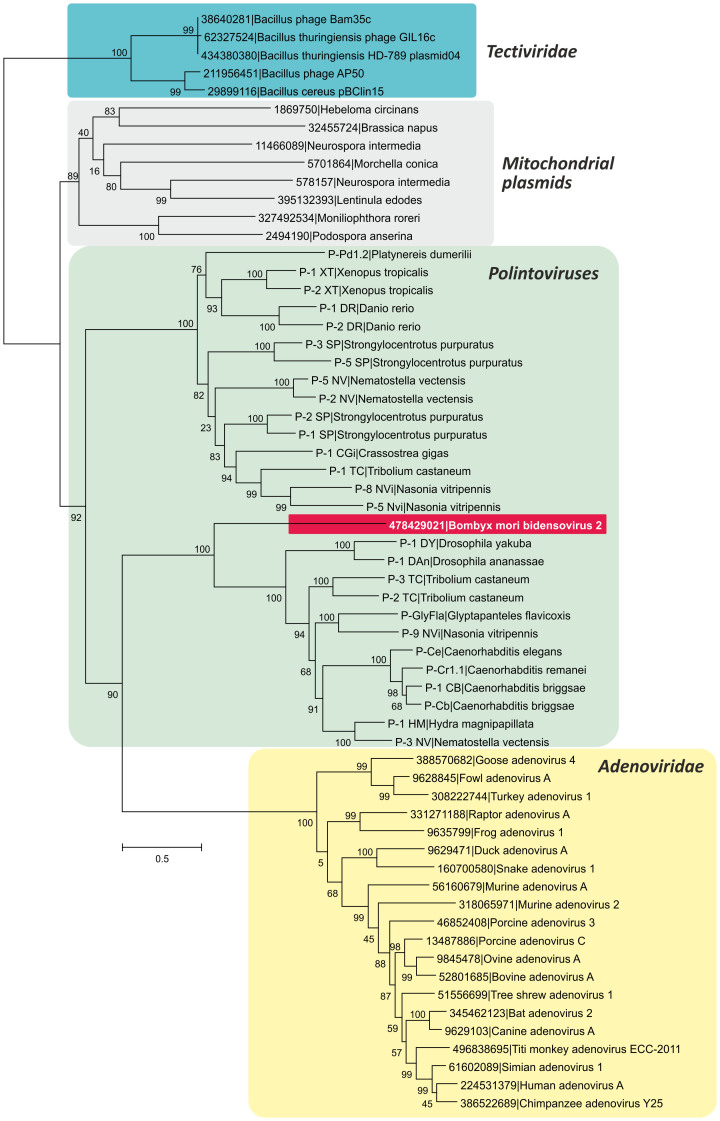
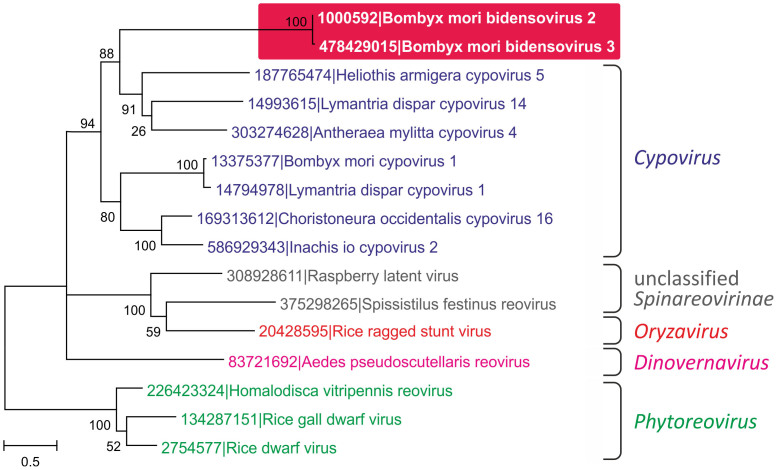
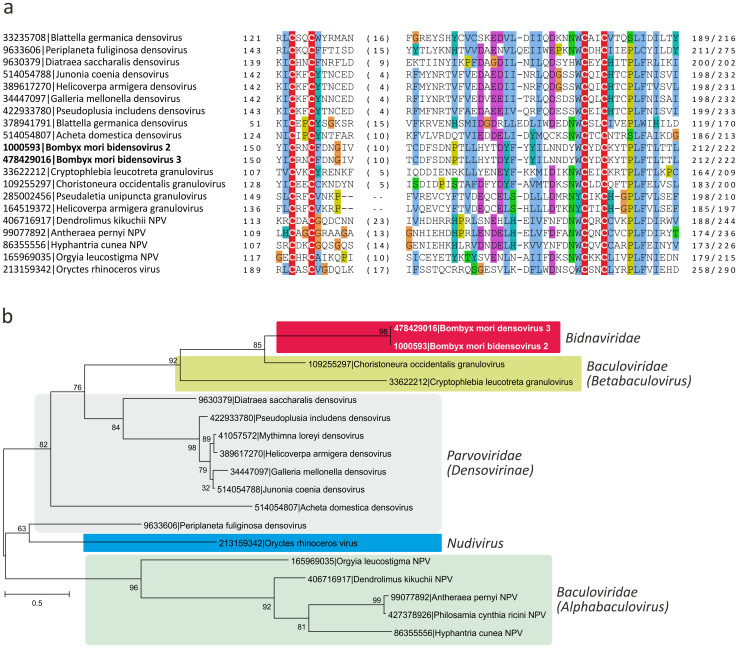
Single-stranded (ss)DNA viruses are extremely widespread, infect diverse hosts from all three domains of life and include important pathogens. Most ssDNA viruses possess small genomes that replicate by the rolling-circle-like mechanism initiated by a distinct virus-encoded endonuclease. However, viruses of the family Bidnaviridae, instead of the endonuclease, encode a protein-primed type B DNA polymerase (PolB) and hence break this pattern. We investigated the provenance of all bidnavirus genes and uncover an unexpected turbulent evolutionary history of these unique viruses. Our analysis strongly suggests that bidnaviruses evolved from a parvovirus ancestor from which they inherit a jelly-roll capsid protein and a superfamily 3 helicase. The radiation of bidnaviruses from parvoviruses was probably triggered by integration of the ancestral parvovirus genome into a large virus-derived DNA transposon of the Polinton (polintovirus) family resulting in the acquisition of the polintovirus PolB gene along with terminal inverted repeats. Bidnavirus genes for a receptor-binding protein and a potential novel antiviral defense modulator are derived from dsRNA viruses (Reoviridae) and dsDNA viruses (Baculoviridae), respectively. The unusual evolutionary history of bidnaviruses emphasizes the key role of horizontal gene transfer, sometimes between viruses with completely different genomes but occupying the same niche, in the emergence of new viral types.
单链(ss)DNA病毒极为普遍,感染来自生命三个域的各种宿主,且包括重要的病原体。大多数ssDNA病毒拥有小基因组,通过由一种独特的病毒编码内切核酸酶启动的滚环样机制进行复制。然而,双顺反子病毒科的病毒却编码一种蛋白引发型B DNA聚合酶(PolB)而非内切核酸酶,从而打破了这种模式。我们研究了所有双顺反子病毒基因的起源,并揭示了这些独特病毒出人意料的动荡进化史。我们的分析强烈表明,双顺反子病毒从细小病毒祖先进化而来,它们继承了一种果冻卷衣壳蛋白和一个超家族3解旋酶。双顺反子病毒从细小病毒的辐射可能是由祖先细小病毒基因组整合到Polinton(多聚病毒)家族的一个大型病毒衍生DNA转座子中引发的,导致获得了多聚病毒的PolB基因以及末端反向重复序列。双顺反子病毒的一个受体结合蛋白基因和一个潜在的新型抗病毒防御调节基因分别源自双链RNA病毒(呼肠孤病毒科)和双链DNA病毒(杆状病毒科)。双顺反子病毒不同寻常的进化史强调了水平基因转移的关键作用,有时是在具有完全不同基因组但占据相同生态位的病毒之间,在新病毒类型的出现中发挥作用。