Zhao Yuqi, Ji Shuang, Wang Jinkai, Huang Jingfei, Zheng Ping
State Key Laboratory of Genetic Resources and Evolution, Kunming Institute of Zoology, Chinese Academy of Sciences, 32 East Jiaochang Road, Kunming, Yunnan 650223, China.
State Key Laboratory of Genetic Resources and Evolution, Kunming Institute of Zoology, Chinese Academy of Sciences, 32 East Jiaochang Road, Kunming, Yunnan 650223, China Yunnan Key Laboratory of Animal Reproductive Biology, Kunming Institute of Zoology, Chinese Academy of Sciences, 32 East Jiaochang Road, Kunming, Yunnan 650223, China University of Chinese Academy of Sciences, Beijing, China.
DNA Res. 2014 Oct;21(5):541-54. doi: 10.1093/dnares/dsu019. Epub 2014 Jun 17.
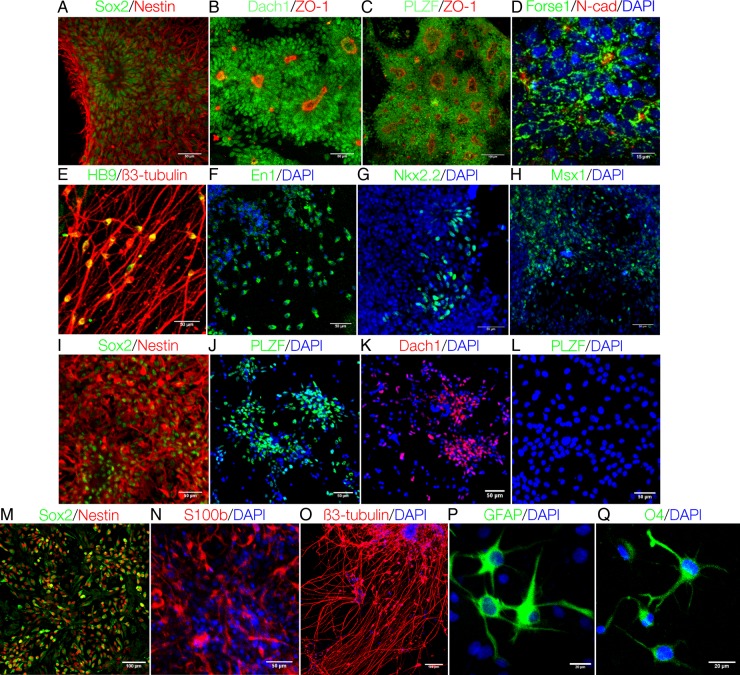
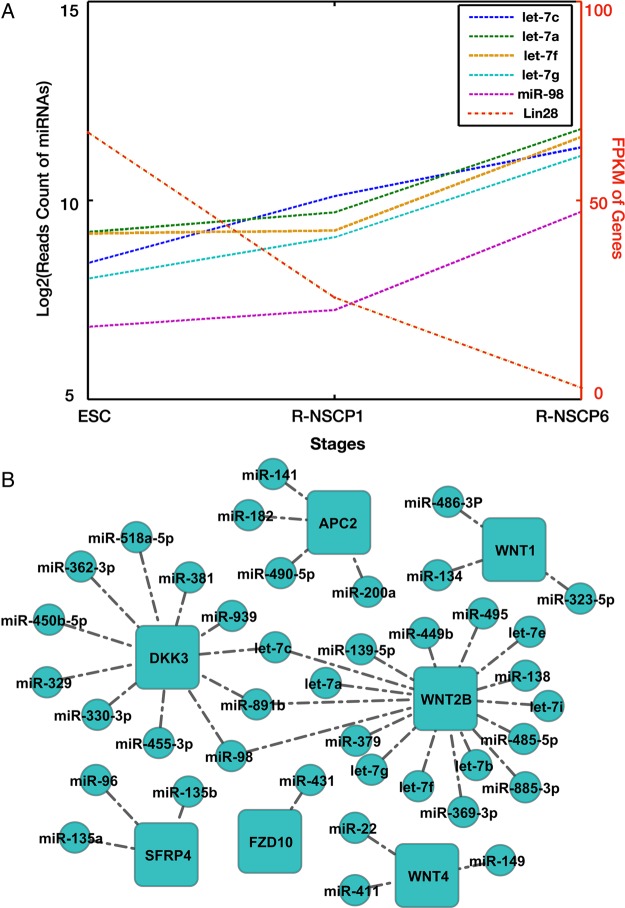
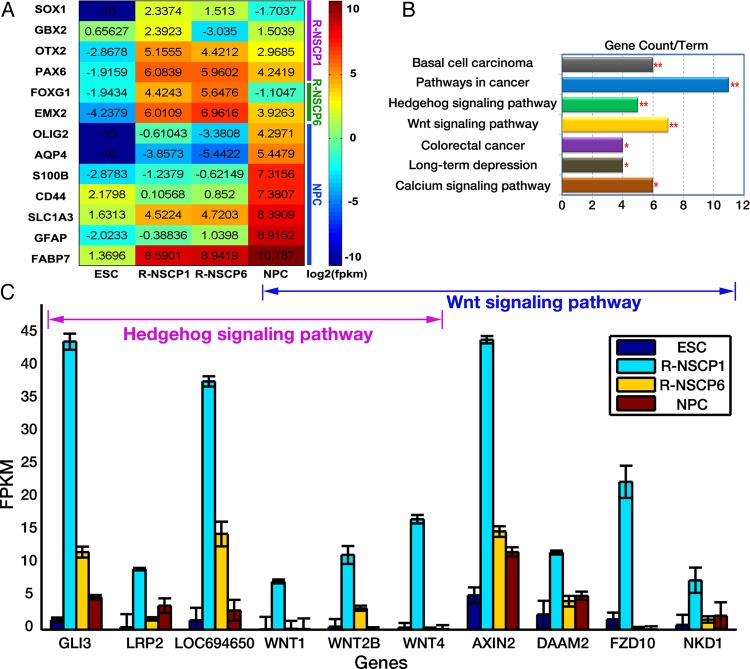
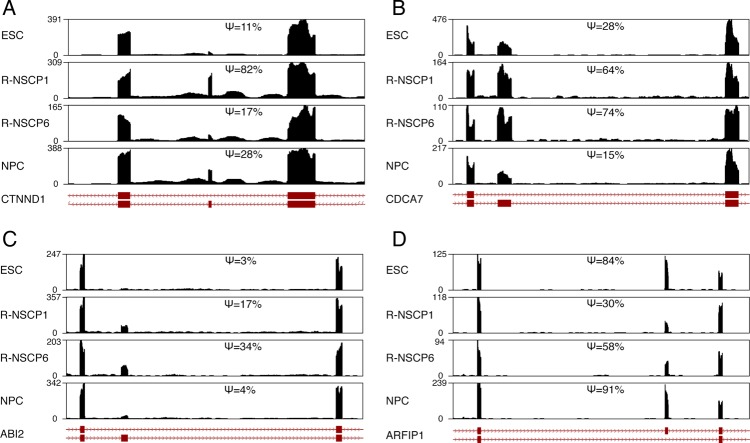
Rosette neural stem cells (R-NSCs) represent early stage of neural development and possess full neural differentiation and regionalization capacities. R-NSCs are considered as stem cells of neural lineage and have important implications in the study of neurogenesis and cell replacement therapy. However, the molecules regulating their functional properties remain largely unknown. Rhesus monkey is an ideal model to study human neural degenerative diseases and plays intermediate translational roles as therapeutic strategies evolved from rodent systems to human clinical applications. In this study, we derived R-NSCs from rhesus monkey embryonic stem cells (ESCs) and systematically investigated the unique expressions of mRNAs, microRNAs (miRNAs), and signalling pathways by genome-wide comparison of the mRNA and miRNA profilings of ESCs, R-NSCs at early (R-NSCP1) and late (R-NSCP6) passages, and neural progenitor cells. Apart from the R-NSCP1-specific protein-coding genes and miRNAs, we identified several pathways including Hedgehog and Wnt highly activated in R-NSCP1. The possible regulatory interactions among the miRNAs, protein-coding genes, and signalling pathways were proposed. Besides, many genes with alternative splicing switch were identified at R-NSCP1. These data provided valuable resource to understand the regulation of early neurogenesis and to better manipulate the R-NSCs for cell replacement therapy.
玫瑰花结神经干细胞(R-NSCs)代表神经发育的早期阶段,具有完全的神经分化和区域化能力。R-NSCs被认为是神经谱系的干细胞,在神经发生和细胞替代治疗的研究中具有重要意义。然而,调节其功能特性的分子在很大程度上仍然未知。恒河猴是研究人类神经退行性疾病的理想模型,在从啮齿动物系统到人类临床应用的治疗策略演变中发挥着中间转化作用。在本研究中,我们从恒河猴胚胎干细胞(ESCs)中获得了R-NSCs,并通过对ESCs、早期(R-NSCP1)和晚期(R-NSCP6)传代的R-NSCs以及神经祖细胞的mRNA和miRNA谱进行全基因组比较,系统地研究了mRNA、微小RNA(miRNAs)和信号通路的独特表达。除了R-NSCP1特异性的蛋白质编码基因和miRNAs外,我们还鉴定了包括Hedgehog和Wnt在内的几种在R-NSCP1中高度激活的信号通路。提出了miRNAs、蛋白质编码基因和信号通路之间可能的调控相互作用。此外,在R-NSCP1中鉴定出许多具有可变剪接开关的基因。这些数据为理解早期神经发生的调控以及更好地操纵R-NSCs进行细胞替代治疗提供了有价值的资源。