García-Rodas Rocío, Cordero Radames J B, Trevijano-Contador Nuria, Janbon Guilhem, Moyrand Frédérique, Casadevall Arturo, Zaragoza Oscar
Mycology Reference Laboratory, National Centre for Microbiology, Instituto de Salud Carlos III, Majadahonda, Madrid, Spain.
Department of Biochemistry, Federal University of Rio de Janeiro, Rio de Janeiro, Brazil.
mBio. 2014 Jun 17;5(3):e00945-14. doi: 10.1128/mBio.00945-14.
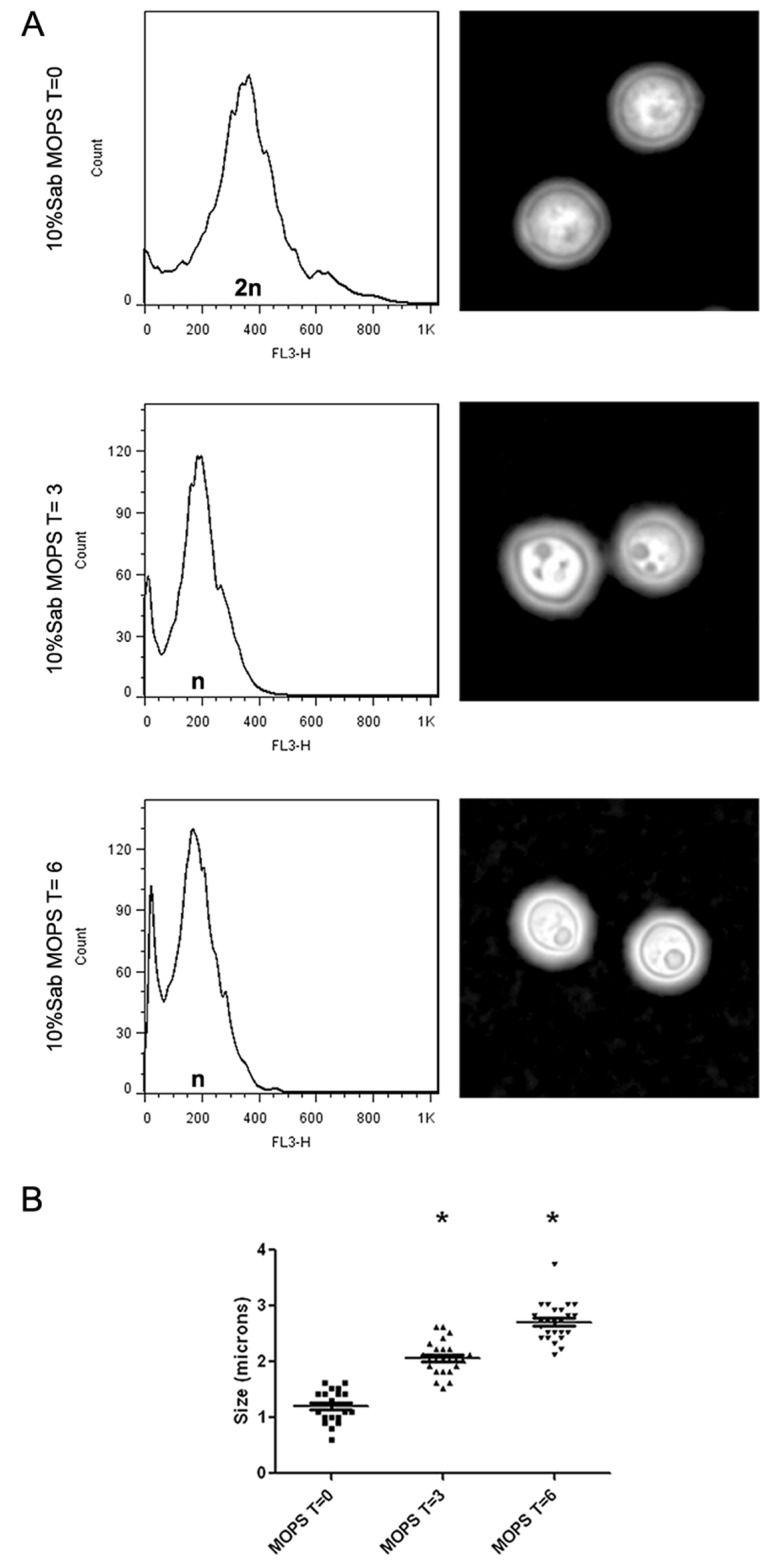
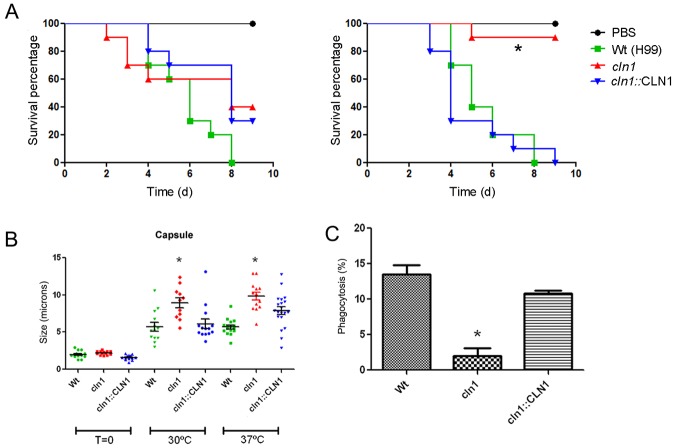
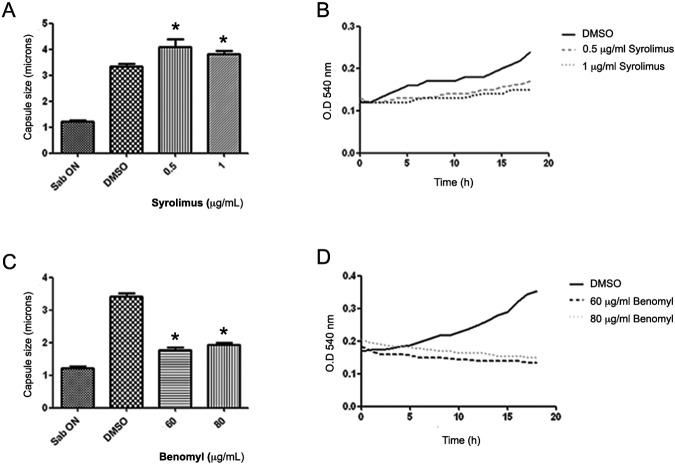
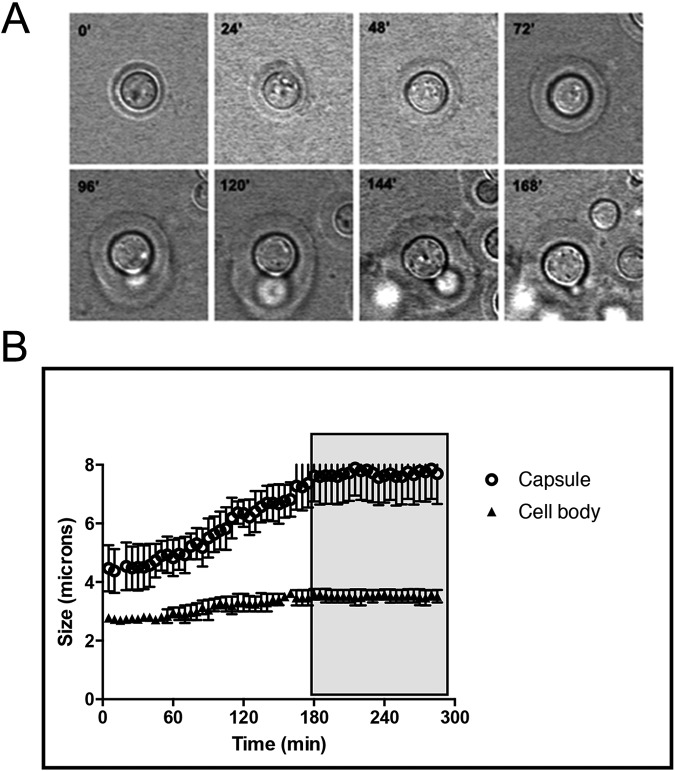
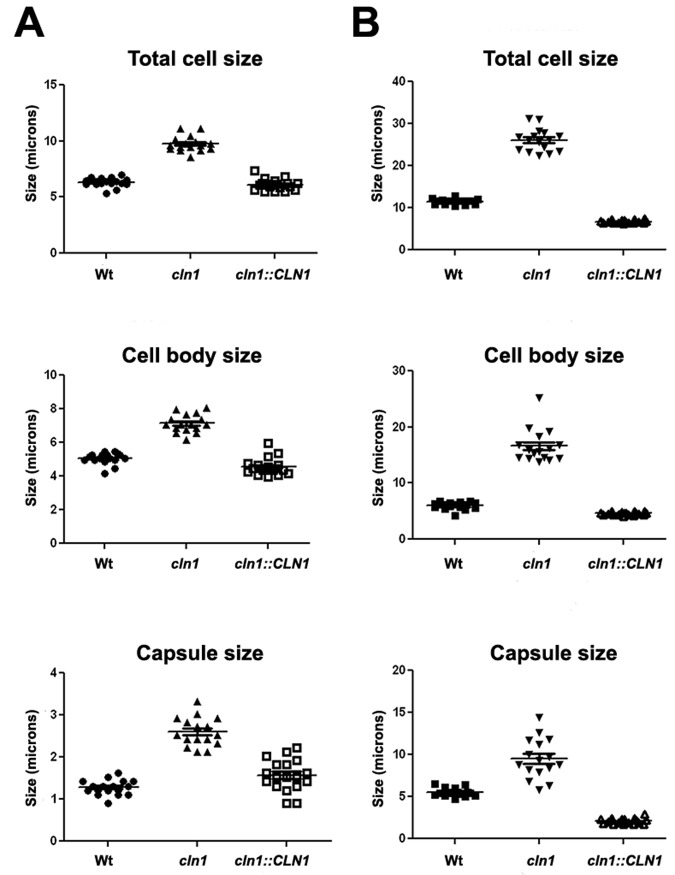
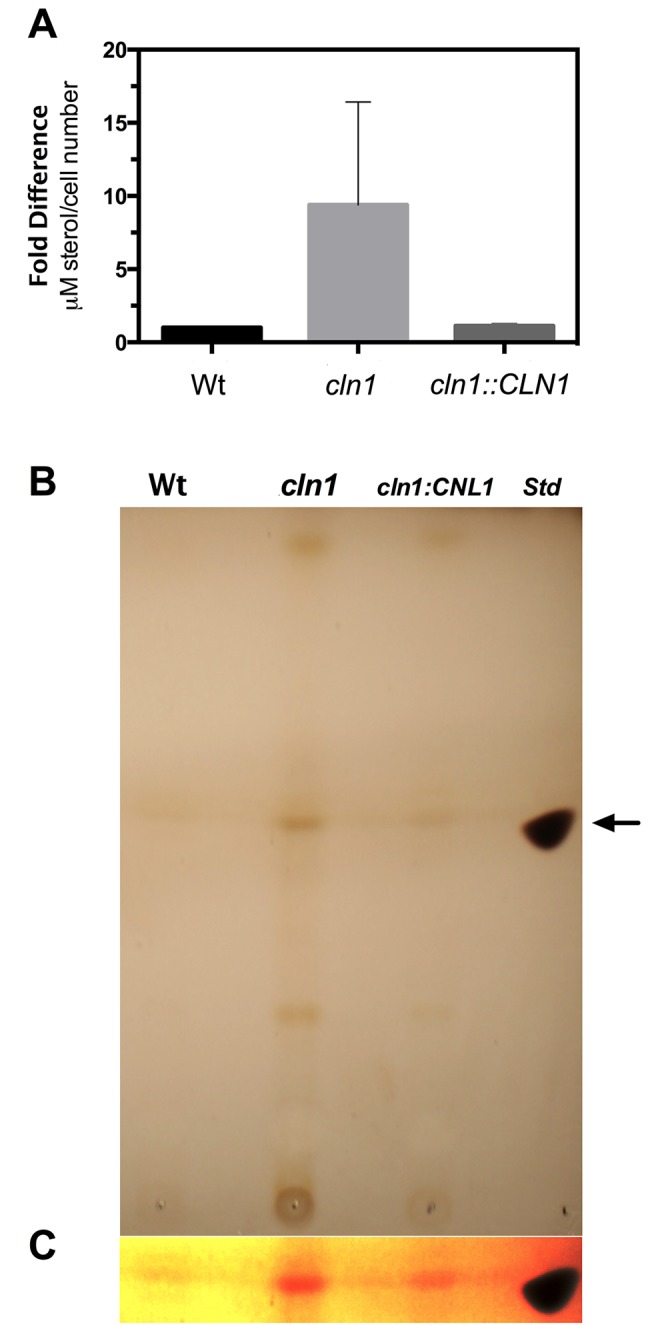
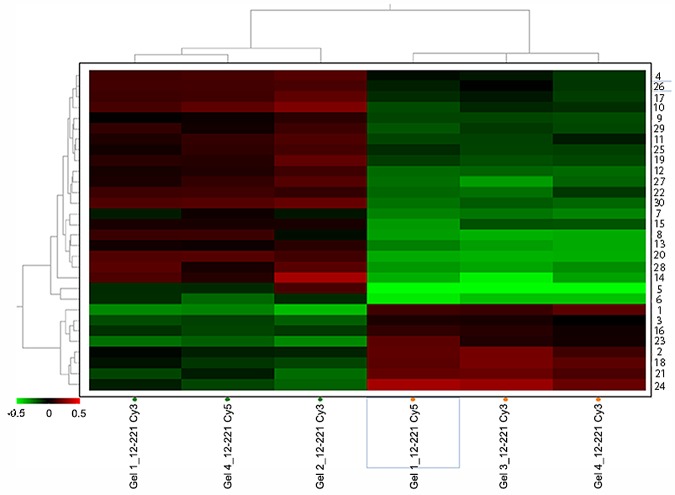
The fungal pathogen Cryptococcus neoformans has several virulence factors, among which the most important is a polysaccharide capsule. The size of the capsule is variable and can increase significantly during infection. In this work, we investigated the relationship between capsular enlargement and the cell cycle. Capsule growth occurred primarily during the G1 phase. Real-time visualization of capsule growth demonstrated that this process occurred before the appearance of the bud and that capsule growth arrested during budding. Benomyl, which arrests the cells in G2/M, inhibited capsule growth, while sirolimus (rapamycin) addition, which induces G1 arrest, resulted in cells with larger capsule. Furthermore, we have characterized a mutant strain that lacks a putative G1/S cyclin. This mutant showed an increased capacity to enlarge the capsule, both in vivo (using Galleria mellonella as the host model) and in vitro. In the absence of Cln1, there was a significant increase in the production of extracellular vesicles. Proteomic assays suggest that in the cln1 mutant strain, there is an upregulation of the glyoxylate acid cycle. Besides, this cyclin mutant is avirulent at 37°C, which correlates with growth defects at this temperature in rich medium. In addition, the cln1 mutant showed lower intracellular replication rates in murine macrophages. We conclude that cell cycle regulatory elements are involved in the modulation of the expression of the main virulence factor in C. neoformans.
Cryptococcus neoformans is a pathogenic fungus that has significant incidence worldwide. Its main virulence factor is a polysaccharide capsule that can increase in size during infection. In this work, we demonstrate that this process occurs in a specific phase of the cell cycle, in particular, in G1. In agreement, mutants that have an abnormal longer G1 phase show larger capsule sizes. We believe that our findings are relevant because they provide a link between capsule growth, cell cycle progression, and virulence in C. neoformans that reveals new aspects about the pathogenicity of this fungus. Moreover, our findings indicate that cell cycle elements could be used as antifungal targets in C. neoformans by affecting both the growth of the cells and the expression of the main virulence factor of this pathogenic yeast.
真菌病原体新生隐球菌具有多种毒力因子,其中最重要的是多糖荚膜。荚膜的大小可变,在感染过程中可显著增大。在这项研究中,我们研究了荚膜增大与细胞周期之间的关系。荚膜生长主要发生在G1期。荚膜生长的实时可视化显示,这个过程发生在芽出现之前,并且在出芽过程中荚膜生长停止。使细胞停滞在G2/M期的苯菌灵抑制了荚膜生长,而添加诱导G1期停滞的西罗莫司(雷帕霉素)导致细胞具有更大的荚膜。此外,我们鉴定了一种缺乏假定的G1/S细胞周期蛋白的突变菌株。该突变体在体内(以大蜡螟为宿主模型)和体外都表现出增大荚膜的能力增强。在缺乏Cln1的情况下,细胞外囊泡的产生显著增加。蛋白质组学分析表明,在cln1突变菌株中,乙醛酸循环上调。此外,这种细胞周期蛋白突变体在37°C时无毒力,这与在该温度下丰富培养基中的生长缺陷相关。此外,cln1突变体在小鼠巨噬细胞中的细胞内复制率较低。我们得出结论,细胞周期调控元件参与了新生隐球菌主要毒力因子表达的调节。
新生隐球菌是一种致病性真菌,在全球范围内发病率很高。其主要毒力因子是多糖荚膜,在感染过程中其大小会增加。在这项研究中,我们证明这个过程发生在细胞周期的特定阶段,特别是在G1期。一致的是,具有异常长G1期的突变体显示出更大的荚膜尺寸。我们认为我们的发现是相关的,因为它们提供了新生隐球菌荚膜生长、细胞周期进程和毒力之间的联系,揭示了这种真菌致病性的新方面。此外,我们的发现表明,细胞周期元件可通过影响细胞生长和这种致病性酵母主要毒力因子的表达,用作新生隐球菌的抗真菌靶点。