Zhao Jie, Ming Yingzi, Wan Qiquan, Ye Shaojun, Xie Song, Zhu Yi, Wang Yanfeng, Zhong Zibiao, Li Ling, Ye Qifa
Center of Transplant Medicine Engineering and Technology of the Ministry of Health of The People's Republic of China, The Third Xiangya Hospital, Central South University, Changsha, Hunan 410013, P.R. China.
Institute of Hepatobiliary Disease, Transplant Center, Zhongnan Hospital, Wuhan University, Wuhan, Hubei 430071, P.R. China.
Exp Ther Med. 2014 May;7(5):1388-1392. doi: 10.3892/etm.2014.1569. Epub 2014 Feb 21.
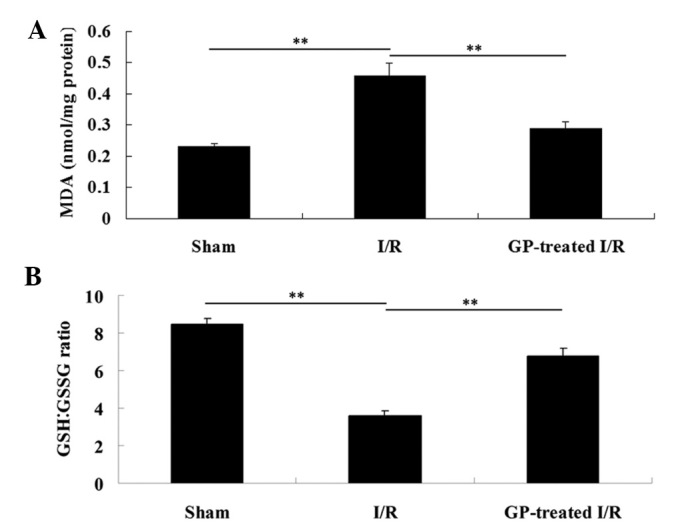
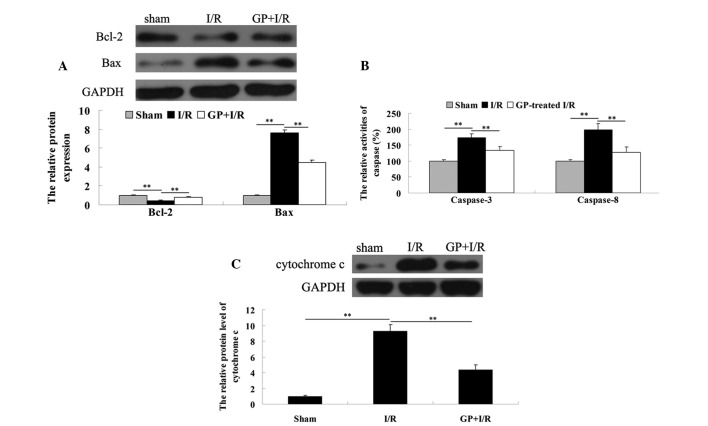
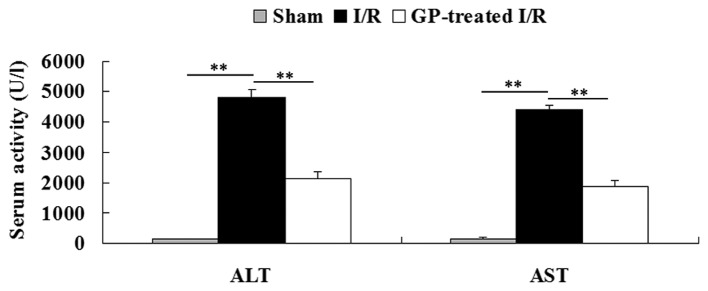
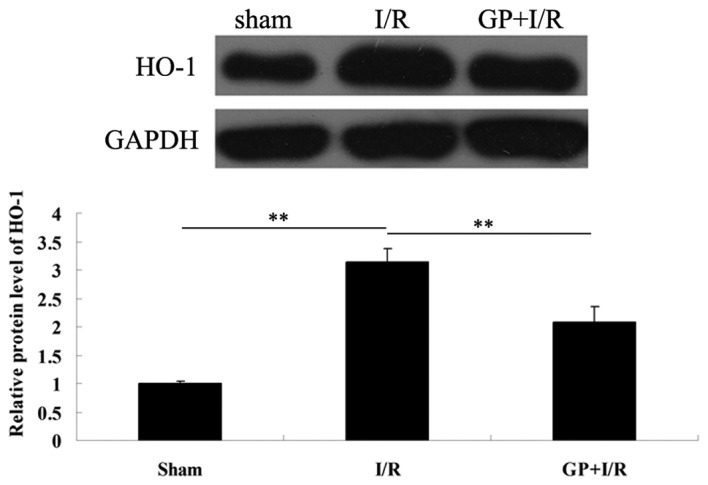
is a traditional Chinese medicine that has previously been used for the treatment of chronic inflammation, hyperlipidemia and liver disease. Gypenoside (GP), the predominant component of , exhibits a therapeutic effect on chronic hepatic injury, fibrosis and fatty liver disease via its anti-inflammatory and anti-oxidant activity. However, the effect of GP on ischemia/reperfusion (I/R)-induced hepatic injury has, to the best of our knowledge, not previously been investigated. In the present study, a hepatic I/R-injury model was successfully established using C57BL/6 mice. In the treatment group, 50 mg/kg GP was administered orally 1 h prior to ischemia. Following hepatic I/R, the levels of hepatic lipid peroxidation and serum alanine aminotransferase increased, while the ratio of hepatic glutathione (GSH):oxidized GSH was reduced, which was effectively attenuated by pretreatment with GP. Furthermore, an increased protein expression of heme oxygenase-1 in the liver tissues of the I/R mice was attenuated by the administration of GP. In addition, the present study indicated that treatment with GP suppressed the I/R-induced increase in the pro-apoptotic protein levels of Bax and cytochrome and the activity of caspase-3/8, as well as the I/R-induced decrease in the levels of anti-apoptotic protein Bcl-2. In conclusion, the present study indicated that GP effectively protected against I/R-induced hepatic injury via its anti-oxidative and anti-apoptotic bioactivity.
是一种传统中药,此前已用于治疗慢性炎症、高脂血症和肝病。绞股蓝总皂苷(GP)是其主要成分,通过其抗炎和抗氧化活性对慢性肝损伤、肝纤维化和脂肪肝疾病具有治疗作用。然而,据我们所知,GP对缺血/再灌注(I/R)诱导的肝损伤的影响此前尚未被研究。在本研究中,使用C57BL/6小鼠成功建立了肝I/R损伤模型。在治疗组中,在缺血前1小时口服给予50mg/kg GP。肝I/R后,肝脂质过氧化水平和血清丙氨酸转氨酶升高,而肝谷胱甘肽(GSH)与氧化型GSH的比值降低,GP预处理可有效减轻这种情况。此外,给予GP可减轻I/R小鼠肝组织中血红素加氧酶-1蛋白表达的增加。此外,本研究表明,GP治疗可抑制I/R诱导的促凋亡蛋白Bax和细胞色素水平的升高以及caspase-3/8的活性,以及I/R诱导的抗凋亡蛋白Bcl-2水平的降低。总之,本研究表明,GP通过其抗氧化和抗凋亡生物活性有效保护免受I/R诱导的肝损伤。