Qin Xiaoyan, Bochsler Tiana M, Aizpurua Alaitz, Cheong Allen M Y, Koutstaal Wilma, Legge Gordon E
Department of Psychology, University of Minnesota, Minneapolis, Minnesota, United States of America.
Faculty of Psychology, University of the Basque Country, Donostia-San Sebastián, Spain.
PLoS One. 2014 Jun 18;9(6):e99051. doi: 10.1371/journal.pone.0099051. eCollection 2014.
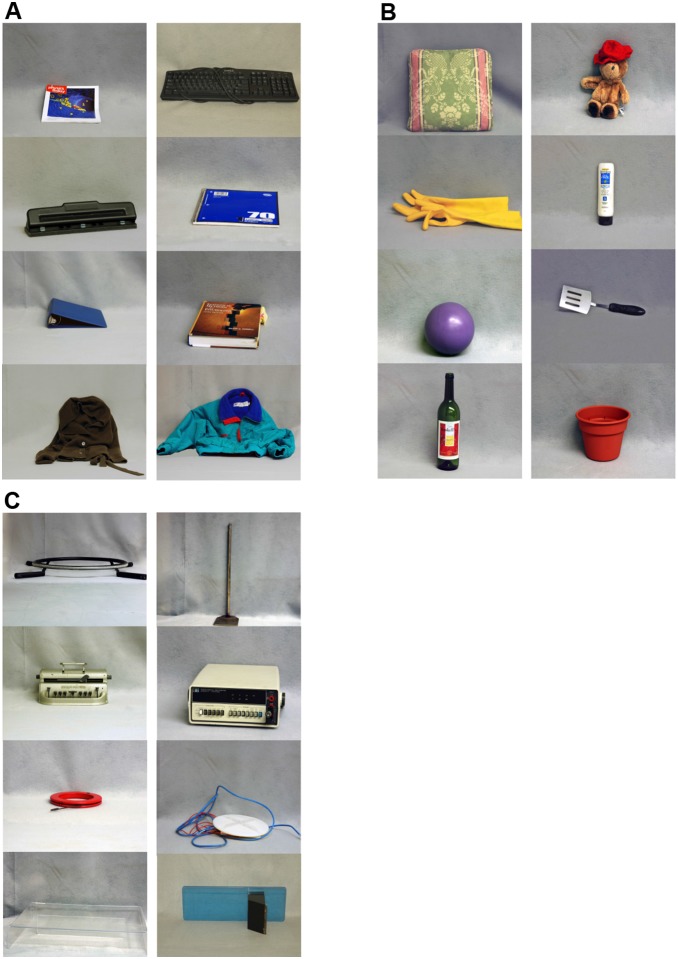
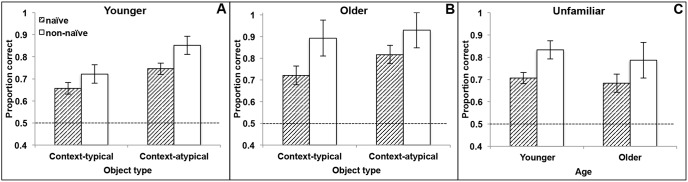
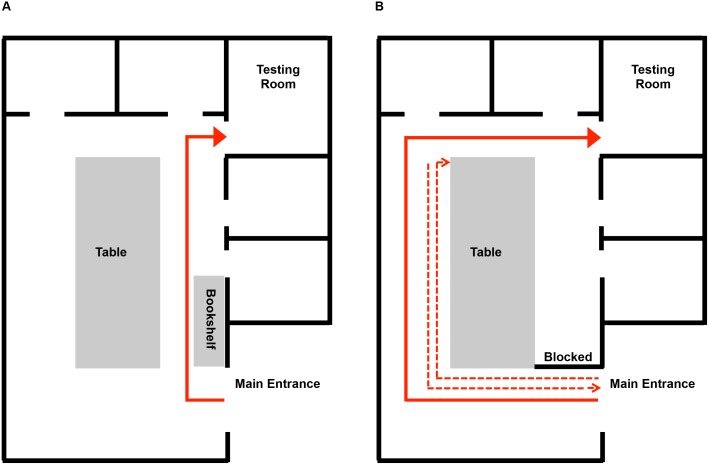
Effects of context on the perception of, and incidental memory for, real-world objects have predominantly been investigated in younger individuals, under conditions involving a single static viewpoint. We examined the effects of prior object context and object familiarity on both older and younger adults' incidental memory for real objects encountered while they traversed a conference room. Recognition memory for context-typical and context-atypical objects was compared with a third group of unfamiliar objects that were not readily named and that had no strongly associated context. Both older and younger adults demonstrated a typicality effect, showing significantly lower 2-alternative-forced-choice recognition of context-typical than context-atypical objects; for these objects, the recognition of older adults either significantly exceeded, or numerically surpassed, that of younger adults. Testing-awareness elevated recognition but did not interact with age or with object type. Older adults showed significantly higher recognition for context-atypical objects than for unfamiliar objects that had no prior strongly associated context. The observation of a typicality effect in both age groups is consistent with preserved semantic schemata processing in aging. The incidental recognition advantage of older over younger adults for the context-typical and context-atypical objects may reflect aging-related differences in goal-related processing, with older adults under comparatively more novel circumstances being more likely to direct their attention to the external environment, or age-related differences in top-down effortful distraction regulation, with older individuals' attention more readily captured by salient objects in the environment. Older adults' reduced recognition of unfamiliar objects compared to context-atypical objects may reflect possible age differences in contextually driven expectancy violations. The latter finding underscores the theoretical and methodological value of including a third type of objects--that are comparatively neutral with respect to their contextual associations--to help differentiate between contextual integration effects (for schema-consistent objects) and expectancy violations (for schema-inconsistent objects).
情境对现实世界物体感知及附带记忆的影响,主要是在年轻人中,于单一静态视角条件下进行研究的。我们考察了先前物体情境和物体熟悉度对老年人和年轻人在穿越会议室时遇到的真实物体附带记忆的影响。将情境典型和情境非典型物体的识别记忆与第三组不常见且不易命名、无强关联情境的物体进行比较。老年人和年轻人都表现出典型性效应,即情境典型物体的二选一强制选择识别率显著低于情境非典型物体;对于这些物体,老年人的识别率要么显著超过年轻人,要么在数值上高于年轻人。测试意识提高了识别率,但未与年龄或物体类型产生交互作用。老年人对情境非典型物体的识别率显著高于无先前强关联情境的不常见物体。两个年龄组中典型性效应的观察结果与衰老过程中语义图式加工的保留一致。老年人在情境典型和情境非典型物体上比年轻人具有附带识别优势,这可能反映了与年龄相关的目标相关加工差异,即在相对更新颖的情况下,老年人更有可能将注意力导向外部环境,或者反映了自上而下的努力分心调节方面的年龄差异,即老年人的注意力更容易被环境中的显著物体吸引。与情境非典型物体相比,老年人对不常见物体的识别率降低,这可能反映了情境驱动的预期违反方面可能存在的年龄差异。后一发现强调了纳入第三种类型物体(即其情境关联相对中性)的理论和方法价值,以帮助区分情境整合效应(针对图式一致物体)和预期违反(针对图式不一致物体)。