Shindo Yoshitaro, Hazama Shoichi, Maeda Yoshinari, Matsui Hiroto, Iida Michihisa, Suzuki Nobuaki, Yoshimura Kiyoshi, Ueno Tomio, Yoshino Shigefumi, Sakai Kohei, Suehiro Yutaka, Yamasaki Takahiro, Hinoda Yuji, Oka Masaaki
Department of Digestive Surgery and Surgical Oncology (Department of Surgery II), Yamaguchi University Graduate School of Medicine, 1-1-1 Minami-kogushi, Ube, Yamaguchi 755-8505, Japan.
J Transl Med. 2014 Jun 19;12:175. doi: 10.1186/1479-5876-12-175.
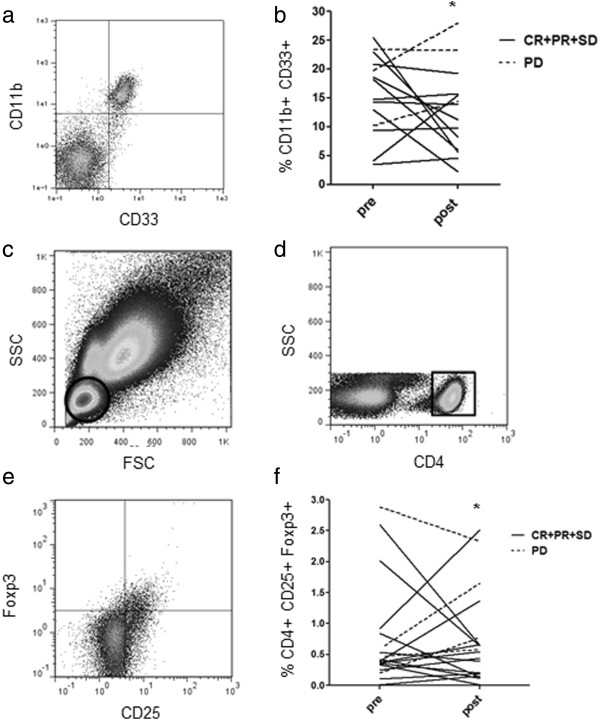
We previously reported the clinical efficacy of adoptive immunotherapy (AIT) with dendritic cells (DCs) pulsed with mucin 1 (MUC1) peptide and cytotoxic T lymphocytes (CTLs). We also reported that gemcitabine (GEM) enhances anti-tumor immunity by suppressing regulatory T cells. Therefore, in the present study, we performed combination therapy with AIT and GEM for patients with unresectable or recurrent pancreatic cancer.
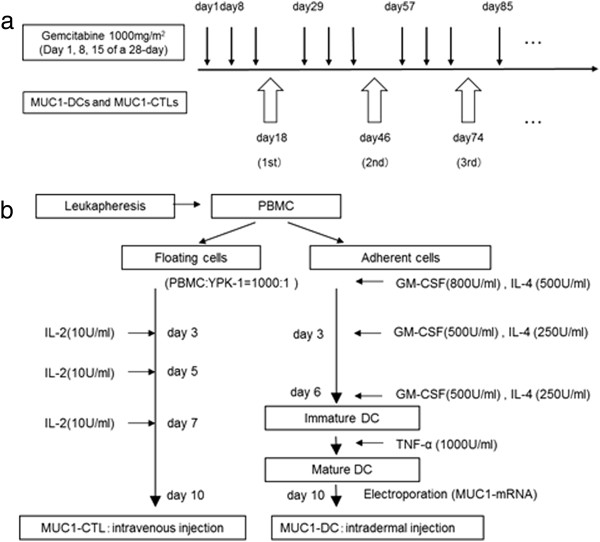
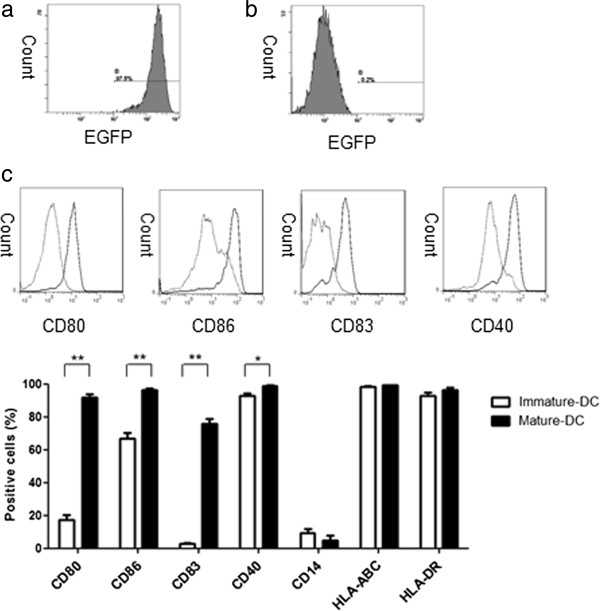
Forty-two patients with unresectable or recurrent pancreatic cancer were treated. DCs were generated by culture with granulocyte macrophage colony-stimulating factor and interleukin-4 and then exposed to tumor necrosis factor-α. Mature DCs were transfected with MUC1-mRNA by electroporation (MUC1-DCs). MUC1-CTLs were induced by co-culture with YPK-1, a human pancreatic cancer cell line, and then with interleukin-2. Patients were treated with GEM, while MUC1-DCs were intradermally injected, and MUC1-CTLs were intravenously administered.
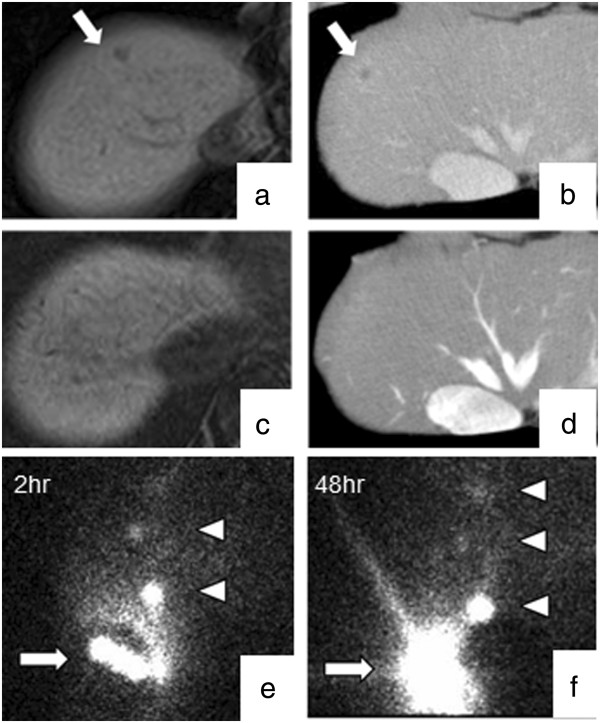
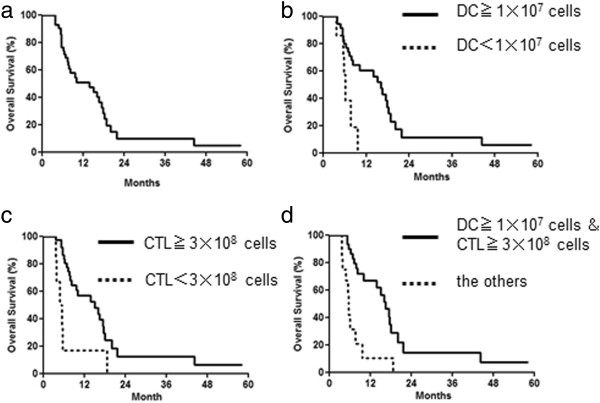
Median survival time (MST) was 13.9 months, and the 1-year survival rate was 51.1%. Of 42 patients, one patient had complete response (2.4%), three patients had partial response (7.1%) and 22 patients had stable disease (52.4%). The disease control ratio was 61.9%. The MST and 1-year survival rate of 35 patients who received more than 1 × 10(7) MUC1-DCs per injection was 16.1 months and 60.3%, respectively. Liver metastasis occurred in only 5 patients among 35 patients without liver metastasis before treatment. There were no severe toxicities associated with AIT.
AIT with MUC1-DCs and MUC1-CTLs plus GEM may be a feasible and effective treatment for pancreatic cancer.
我们之前报道了用黏蛋白1(MUC1)肽脉冲处理的树突状细胞(DCs)和细胞毒性T淋巴细胞(CTLs)进行过继性免疫治疗(AIT)的临床疗效。我们还报道了吉西他滨(GEM)通过抑制调节性T细胞来增强抗肿瘤免疫力。因此,在本研究中,我们对不可切除或复发性胰腺癌患者进行了AIT与GEM的联合治疗。
42例不可切除或复发性胰腺癌患者接受了治疗。DCs通过与粒细胞巨噬细胞集落刺激因子和白细胞介素-4培养产生,然后暴露于肿瘤坏死因子-α。成熟的DCs通过电穿孔用MUC1-mRNA转染(MUC1-DCs)。MUC1-CTLs通过与人类胰腺癌细胞系YPK-1共培养,然后与白细胞介素-2共培养诱导产生。患者接受GEM治疗,同时皮内注射MUC1-DCs,静脉注射MUC1-CTLs。
中位生存时间(MST)为13.9个月,1年生存率为51.1%。42例患者中,1例完全缓解(2.4%),3例部分缓解(7.1%),22例病情稳定(52.4%)。疾病控制率为61.9%。每次注射接受超过1×10(7)个MUC1-DCs的35例患者的MST和1年生存率分别为16.1个月和60.3%。在治疗前无肝转移的35例患者中,仅5例发生肝转移。没有与AIT相关的严重毒性反应。
用MUC1-DCs和MUC1-CTLs联合GEM进行AIT可能是一种治疗胰腺癌的可行且有效的方法。