Bhattacharyya Sudeepa, Pence Lisa, Beger Richard, Chaudhuri Shubhra, McCullough Sandra, Yan Ke, Simpson Pippa, Hennings Leah, Hinson Jack, James Laura
Departments of Pediatrics, University of Arkansas for Medical Sciences, Little Rock, AR 72202, USA.
Division of Systems Biology, National Center for Toxicological Research, Jefferson, AR 72079, USA.
Metabolites. 2013 Aug 2;3(3):606-22. doi: 10.3390/metabo3030606.
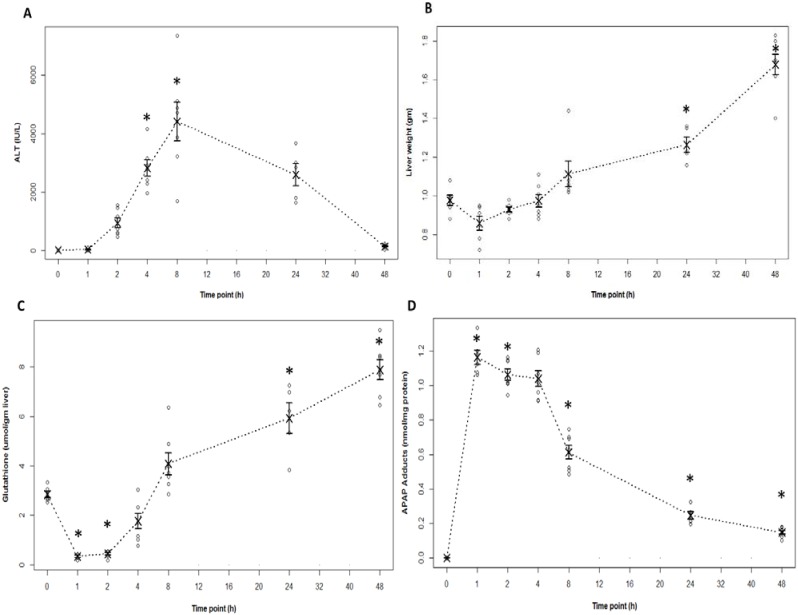
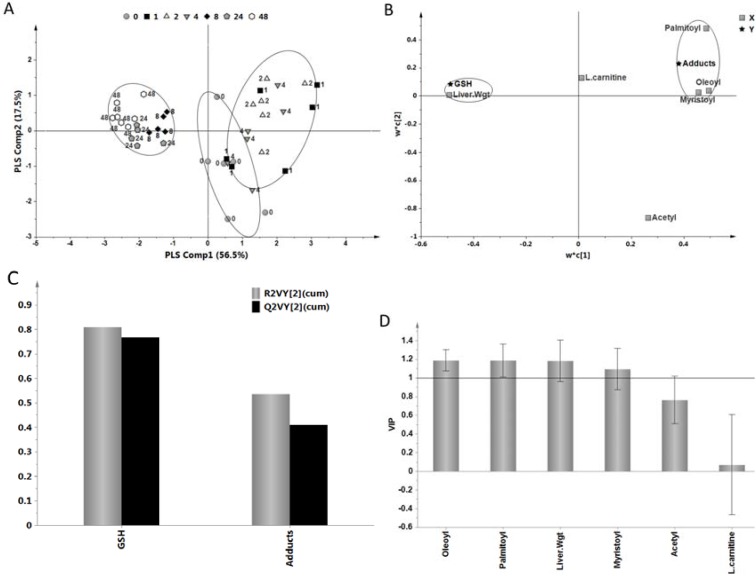
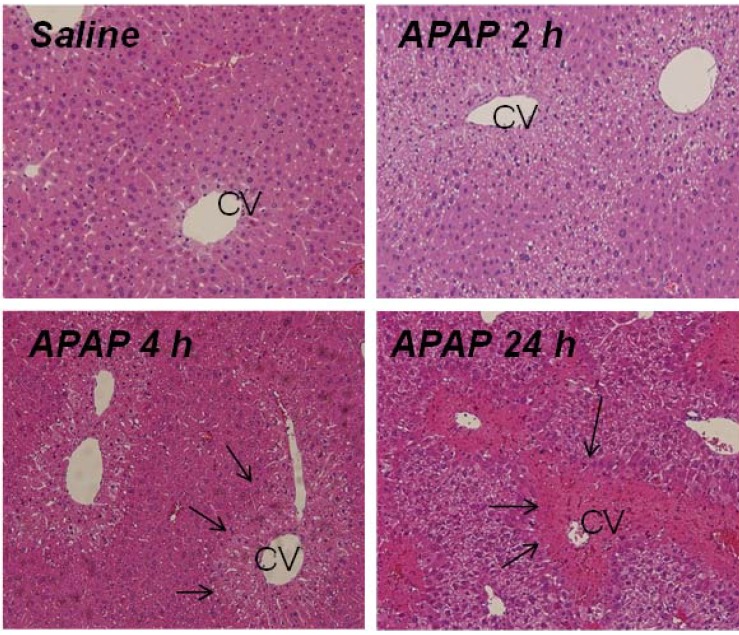
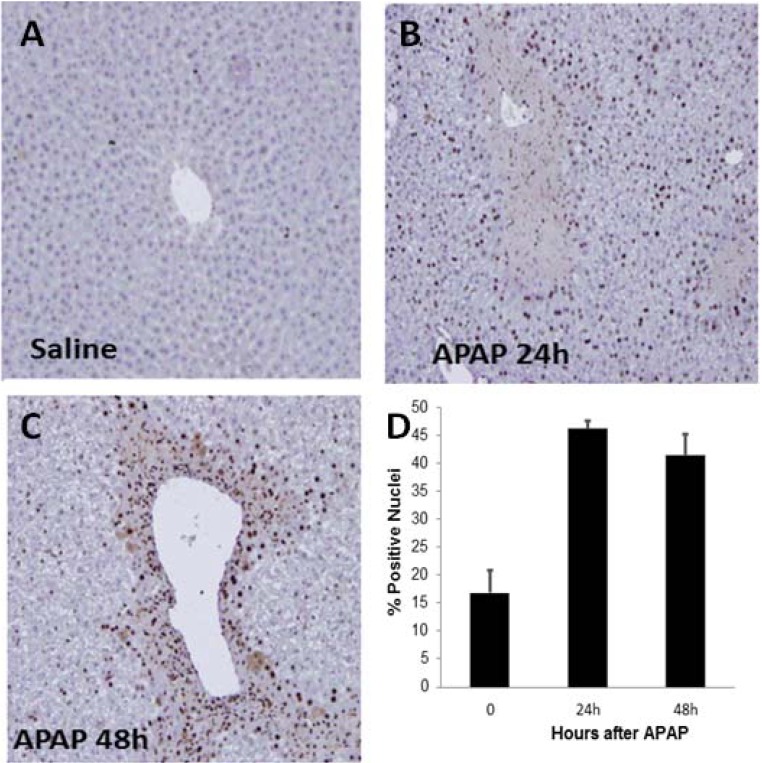
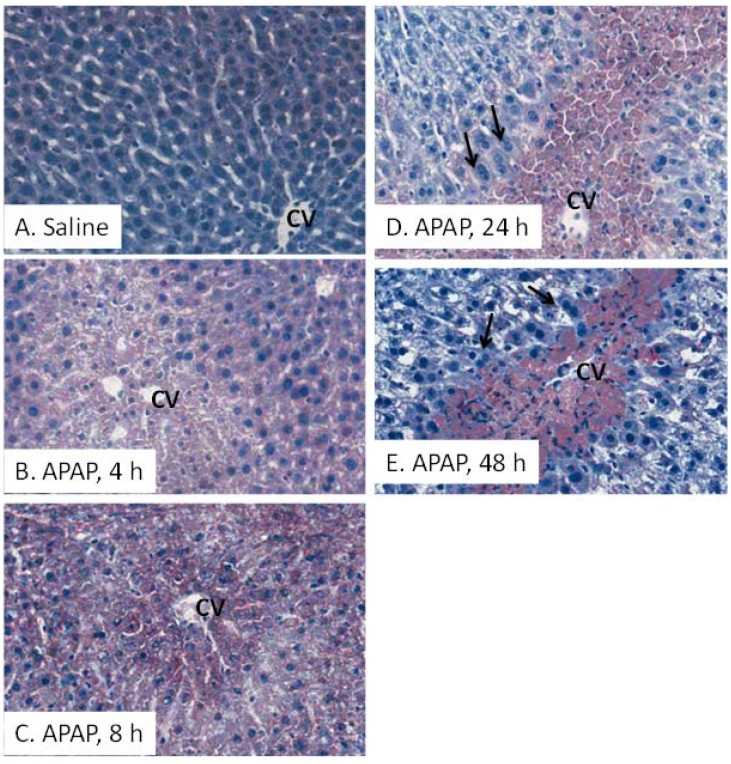
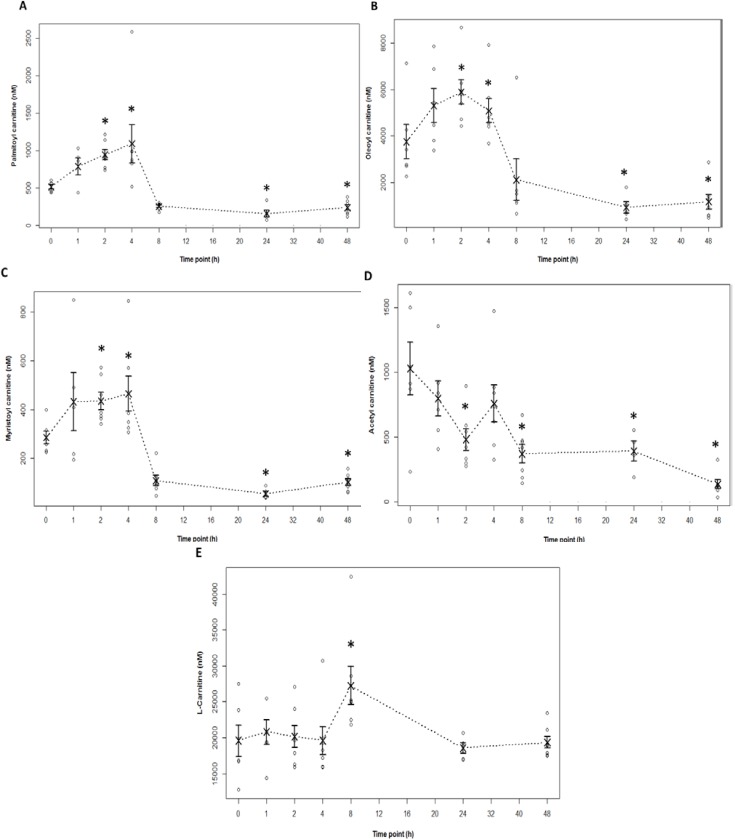
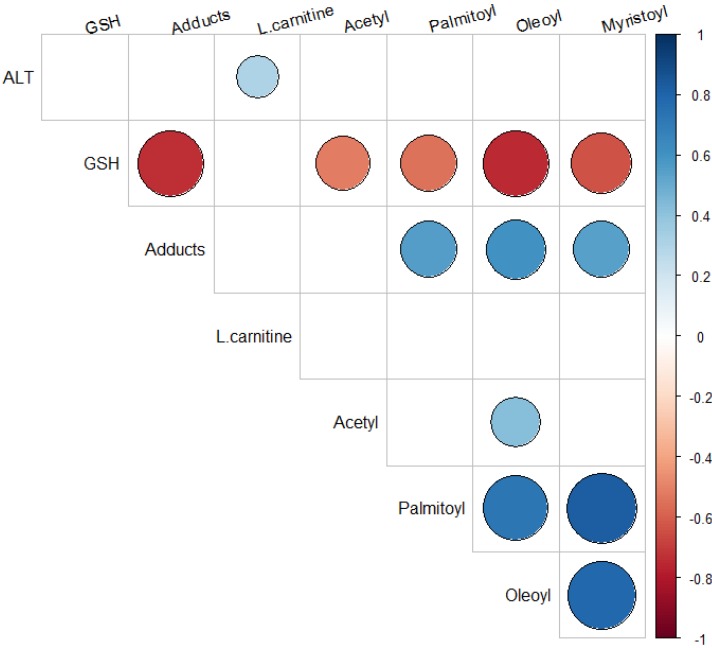
High doses of acetaminophen (APAP) result in hepatotoxicity that involves metabolic activation of the parent compound, covalent binding of the reactive intermediate N-acetyl-p-benzoquinone imine (NAPQI) to liver proteins, and depletion of hepatic glutathione. Impaired fatty acid β-oxidation has been implicated in previous studies of APAP-induced hepatotoxicity. To better understand relationships between toxicity and fatty acid β-oxidation in the liver in APAP toxicity, metabolomic assays for long chain acylcarnitines were examined in relationship to established markers of liver toxicity, oxidative metabolism, and liver regeneration in a time course study in mice. Male B6C3F1 mice were treated with APAP (200 mg/kg IP) or saline and sacrificed at 1, 2, 4, 8, 24 or 48 h after APAP. At 1 h, hepatic glutathione was depleted and APAP protein adducts were markedly increased. Alanine aminotransferase (ALT) levels were elevated at 4 and 8 h, while proliferating cell nuclear antigen (PCNA) expression, indicative of hepatocyte regeneration, was apparent at 24 h and 48 h. Elevations of palmitoyl, oleoyl and myristoyl carnitine were apparent by 2-4 h, concurrent with the onset of Oil Red O staining in liver sections. By 8 h, acylcarnitine levels were below baseline levels and remained low at 24 and 48 h. A partial least squares (PLS) model suggested a direct association of acylcarnitine accumulation in serum to APAP protein adduct and hepatic glutathione levels in mice. Overall, the kinetics of serum acylcarnitines in APAP toxicity in mice followed a biphasic pattern involving early elevation after the metabolism phases of toxicity and later depletion of acylcarnitines.
高剂量对乙酰氨基酚(APAP)会导致肝毒性,这涉及母体化合物的代谢活化、活性中间体N-乙酰对苯醌亚胺(NAPQI)与肝脏蛋白质的共价结合以及肝脏谷胱甘肽的消耗。脂肪酸β-氧化受损在先前关于APAP诱导的肝毒性研究中已有涉及。为了更好地理解APAP毒性中肝脏毒性与脂肪酸β-氧化之间的关系,在一项小鼠时间进程研究中,检测了长链酰基肉碱的代谢组学分析与既定的肝脏毒性、氧化代谢和肝脏再生标志物之间的关系。雄性B6C3F1小鼠接受APAP(200mg/kg腹腔注射)或生理盐水处理,并在注射APAP后1、2、4、8、24或48小时处死。1小时时,肝脏谷胱甘肽被消耗,APAP蛋白加合物显著增加。4小时和8小时时丙氨酸氨基转移酶(ALT)水平升高,而增殖细胞核抗原(PCNA)表达(指示肝细胞再生)在24小时和48小时时明显。棕榈酰、油酰和肉豆蔻酰肉碱在2 - 4小时时明显升高,同时肝脏切片中出现油红O染色。到8小时时,酰基肉碱水平低于基线水平,并在2