
通过对聚乙二醇修饰的、β-葡萄糖苷酶偶联的氧化铁纳米颗粒进行磁靶向,增强酶疗法对9L胶质瘤肿瘤的选择性递送。
Enhanced and selective delivery of enzyme therapy to 9L-glioma tumor via magnetic targeting of PEG-modified, β-glucosidase-conjugated iron oxide nanoparticles.
作者信息
Zhou Jie, Zhang Jian, Gao Wenxi
机构信息
Department of Urology, Hubei Hospital of Traditional Chinese Medicine, Hubei University of Chinese Medicine, Wuhan, People's Republic of China.
Department of Pharmaceutical Sciences, College of Pharmacy, University of Michigan, Ann Arbor, MI, USA.
出版信息
Int J Nanomedicine. 2014 Jun 10;9:2905-17. doi: 10.2147/IJN.S59556. eCollection 2014.
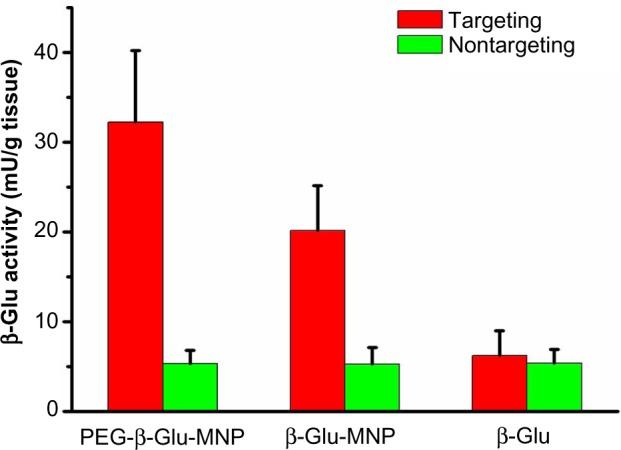
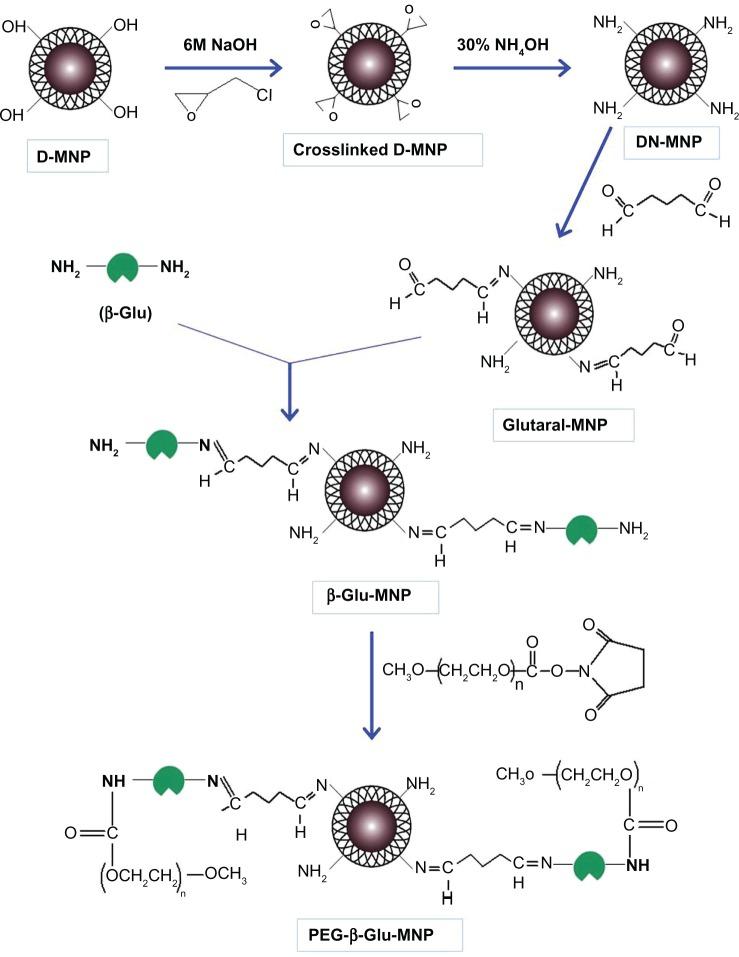
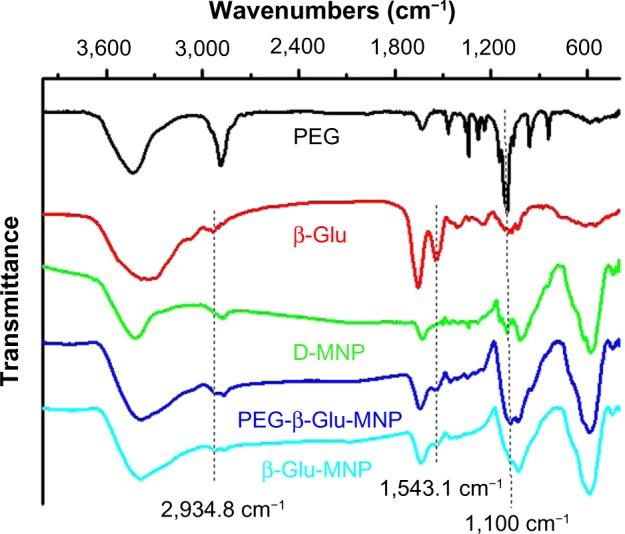
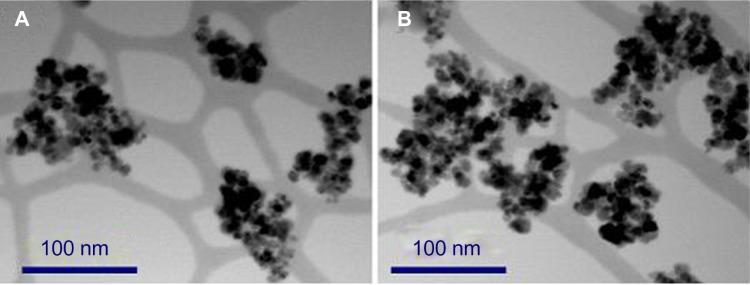
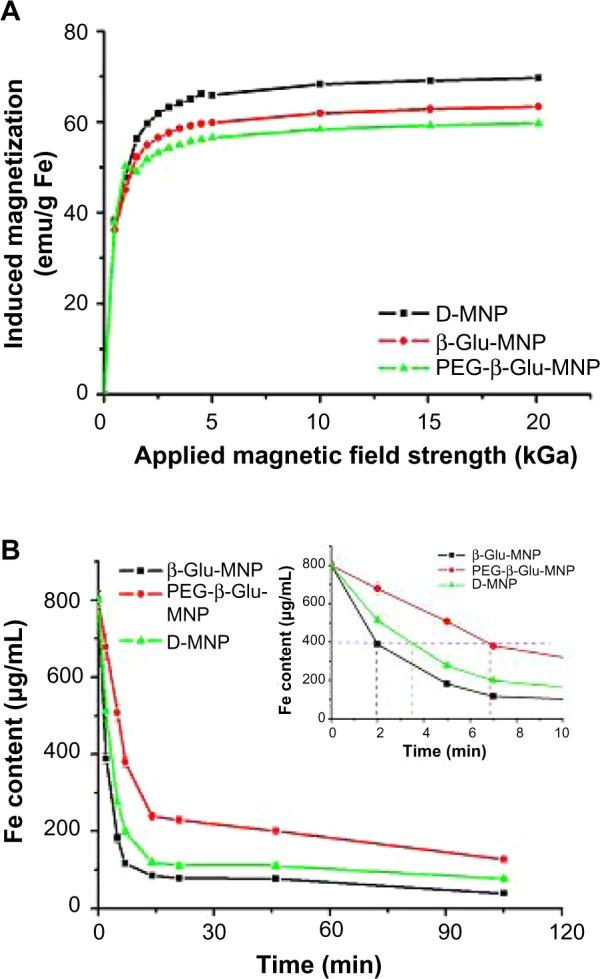
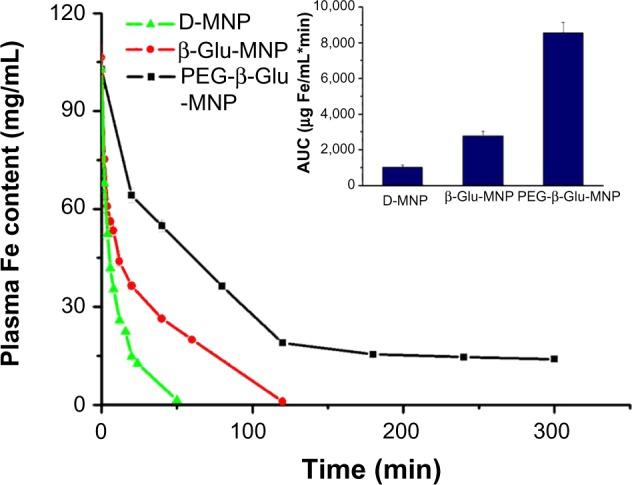
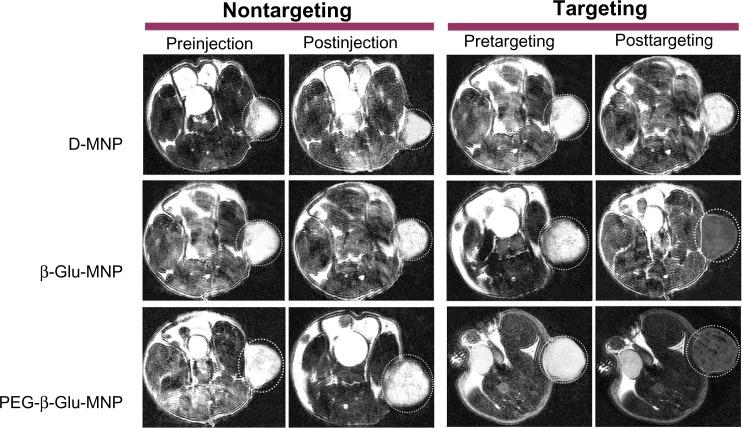
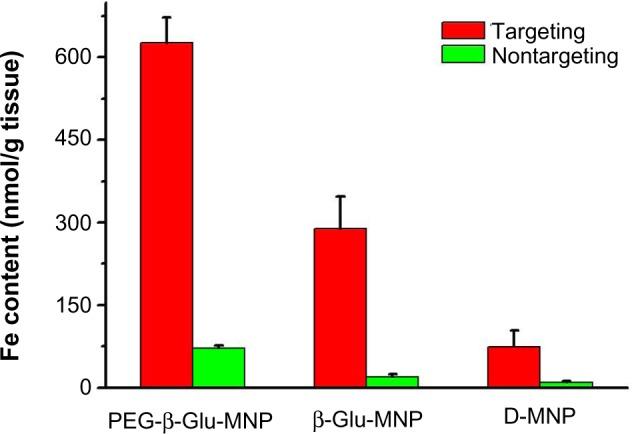
The stability of enzyme-conjugated magnetic iron oxide nanoparticles in plasma is of great importance for in vivo delivery of the conjugated enzyme. In this study, β-glucosidase was conjugated on aminated magnetic iron oxide nanoparticles using the glutaraldehyde method (β-Glu-MNP), and further PEGylated via N-hydroxysuccinimide chemistry. The PEG-modified, β-glucosidase-immobilized magnetic iron oxide nanoparticles (PEG-β-Glu-MNPs) were characterized by hydrodynamic diameter distribution, zeta potential, Fourier transform infrared spectroscopy, transmission electron microscopy, and a superconducting quantum interference device. The results showed that the multidomain structure and magnetization properties of these nanoparticles were conserved well throughout the synthesis steps, with an expected diameter increase and zeta potential shifts. The Michaelis constant was calculated to evaluate the activity of conjugated β-glucosidase on the magnetic iron oxide nanoparticles, indicating 73.0% and 65.4% of enzyme activity remaining for β-Glu-MNP and PEG-β-Glu-MNP, respectively. Both magnetophoretic mobility analysis and pharmacokinetics showed improved in vitro/in vivo stability of PEG-β-Glu-MNP compared with β-Glu-MNP. In vivo magnetic targeting of PEG-β-Glu-MNP was confirmed by magnetic resonance imaging and electron spin resonance analysis in a mouse model of subcutaneous 9L-glioma. Satisfactory accumulation of PEG-β-Glu-MNP in tumor tissue was successfully achieved, with an iron content of 627±45 nmol Fe/g tissue and β-glucosidase activity of 32.2±8.0 mU/g tissue.
酶偶联磁性氧化铁纳米颗粒在血浆中的稳定性对于偶联酶的体内递送至关重要。在本研究中,使用戊二醛法将β-葡萄糖苷酶偶联在胺化磁性氧化铁纳米颗粒上(β-Glu-MNP),并通过N-羟基琥珀酰亚胺化学方法进一步聚乙二醇化。通过流体动力学直径分布、zeta电位、傅里叶变换红外光谱、透射电子显微镜和超导量子干涉装置对聚乙二醇修饰的、固定有β-葡萄糖苷酶的磁性氧化铁纳米颗粒(PEG-β-Glu-MNPs)进行了表征。结果表明,这些纳米颗粒的多域结构和磁化特性在整个合成步骤中得到了很好的保留,直径有预期的增加,zeta电位也发生了变化。计算米氏常数以评估偶联在磁性氧化铁纳米颗粒上的β-葡萄糖苷酶的活性,结果表明β-Glu-MNP和PEG-β-Glu-MNP分别保留了73.0%和65.4%的酶活性。磁泳迁移率分析和药代动力学均表明,与β-Glu-MNP相比,PEG-β-Glu-MNP在体外/体内的稳定性有所提高。在皮下9L胶质瘤小鼠模型中,通过磁共振成像和电子自旋共振分析证实了PEG-β-Glu-MNP的体内磁靶向性。成功实现了PEG-β-Glu-MNP在肿瘤组织中的满意蓄积,铁含量为627±45 nmol Fe/g组织,β-葡萄糖苷酶活性为32.2±8.0 mU/g组织。

 Zotero 插件