• 文献检索
  • 文档翻译
  • 深度研究
  • 学术资讯
  • Suppr Zotero 插件Zotero 插件
  • 邀请有礼
  • 套餐&价格
  • 历史记录
应用&插件
Suppr Zotero 插件Zotero 插件浏览器插件Mac 客户端Windows 客户端微信小程序
定价
高级版会员购买积分包购买API积分包
服务
文献检索文档翻译深度研究API 文档MCP 服务
关于我们
关于 Suppr公司介绍联系我们用户协议隐私条款
关注我们

Suppr 超能文献

核心技术专利:CN118964589B侵权必究
粤ICP备2023148730 号-1Suppr @ 2026

文献检索

告别复杂PubMed语法,用中文像聊天一样搜索,搜遍4000万医学文献。AI智能推荐,让科研检索更轻松。

立即免费搜索

文件翻译

保留排版,准确专业,支持PDF/Word/PPT等文件格式,支持 12+语言互译。

免费翻译文档

深度研究

AI帮你快速写综述,25分钟生成高质量综述,智能提取关键信息,辅助科研写作。

立即免费体验

心身医学研究的一个新领域:慢性疼痛管理中的反安慰剂现象。

An emerging dimension in psychosomatic research: the nocebo phenomenon in the management of chronic pain.

作者信息

Ciaramella A, Paroli M, Poli P

机构信息

Pain Therapy Unit, Department of Oncology, Azienda Ospedaliero-Universitaria Pisana, Via Roma 67, Pisa 56127, Italy.

出版信息

ISRN Neurosci. 2013 Feb 12;2013:574526. doi: 10.1155/2013/574526. eCollection 2013.

DOI:10.1155/2013/574526
PMID:24959562
原文链接:https://pmc.ncbi.nlm.nih.gov/articles/PMC4045547/
Abstract

Introduction. The nocebo effect consists in delivering verbal suggestions of negative outcomes so that the subject expects clinical worsening. Several studies indicate that negative verbal suggestions may result in the amplification of pain. Amplification style is one of the most important dimensions in psychosomatic research. Methods. One group of pain therapy unit patients was evaluated at baseline and again after 6 months from the beginning of the pain treatment. Results. Only 43% of 86 chronic pain patients respond positively to the expectation of sham pain. This group shows at baseline higher pain intensity (t value: 2.72, P = 0.007) and lower cold pain threshold (t value: 2.18, P = 0.03) than the group of subjects with any response to sham pain stimulus. Somatoform dimensions influence positively the strength of nocebo response in those predisposed to it. Conclusion. Our study shows that the power of the nocebo phenomenon seems to be a dimension belonging to the investigation in psychosomatic. In contrast to what one might expect, the presence of the nocebo phenomenon affects positively pain relief and the outcome of pain treatment. In a clinical setting, and the meaning of nocebo response does not seem to be different from placebo response.

摘要

引言。反安慰剂效应在于给出负面结果的言语暗示,从而使受试者预期临床症状会恶化。多项研究表明,负面言语暗示可能会导致疼痛加剧。放大方式是身心研究中最重要的维度之一。方法。一组疼痛治疗单元的患者在基线时接受评估,并在疼痛治疗开始6个月后再次接受评估。结果。86名慢性疼痛患者中只有43%对假痛预期有积极反应。与对假痛刺激有任何反应的受试者组相比,该组在基线时疼痛强度更高(t值:2.72,P = 0.007),冷痛阈值更低(t值:2.18,P = 0.03)。躯体形式维度对易患反安慰剂反应者的反安慰剂反应强度有积极影响。结论。我们的研究表明,反安慰剂现象的影响力似乎是身心研究范畴内的一个维度。与人们可能预期的情况相反,反安慰剂现象的存在对疼痛缓解和疼痛治疗结果有积极影响。在临床环境中,反安慰剂反应的意义似乎与安慰剂反应并无不同。
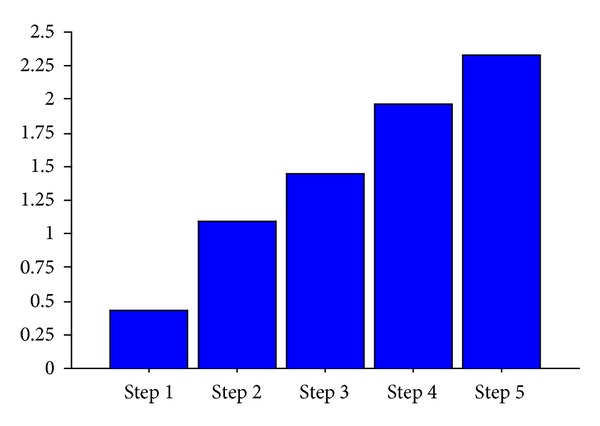
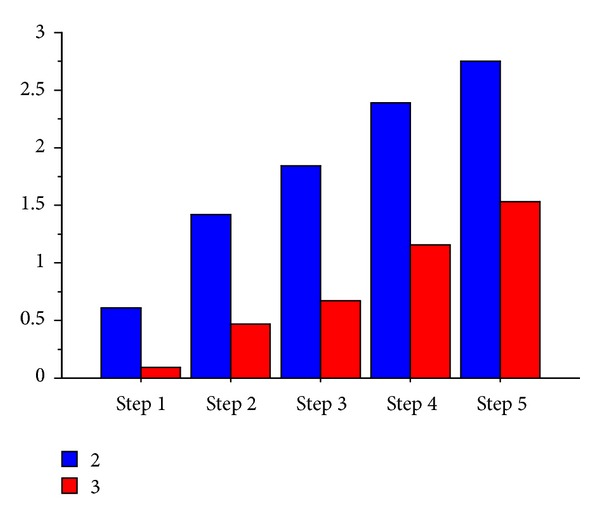
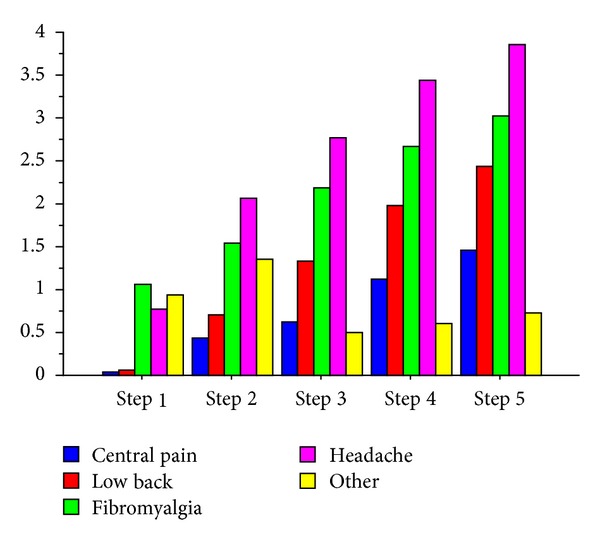
https://cdn.ncbi.nlm.nih.gov/pmc/blobs/a4f7/4045547/d206f3fe91ec/ISRN.NEUROSCIENCE2013-574526.003.jpg
https://cdn.ncbi.nlm.nih.gov/pmc/blobs/a4f7/4045547/692e6a6b3980/ISRN.NEUROSCIENCE2013-574526.001.jpg
https://cdn.ncbi.nlm.nih.gov/pmc/blobs/a4f7/4045547/164a8bd4dccb/ISRN.NEUROSCIENCE2013-574526.002.jpg
https://cdn.ncbi.nlm.nih.gov/pmc/blobs/a4f7/4045547/d206f3fe91ec/ISRN.NEUROSCIENCE2013-574526.003.jpg
https://cdn.ncbi.nlm.nih.gov/pmc/blobs/a4f7/4045547/692e6a6b3980/ISRN.NEUROSCIENCE2013-574526.001.jpg
https://cdn.ncbi.nlm.nih.gov/pmc/blobs/a4f7/4045547/164a8bd4dccb/ISRN.NEUROSCIENCE2013-574526.002.jpg
https://cdn.ncbi.nlm.nih.gov/pmc/blobs/a4f7/4045547/d206f3fe91ec/ISRN.NEUROSCIENCE2013-574526.003.jpg

相似文献

1
An emerging dimension in psychosomatic research: the nocebo phenomenon in the management of chronic pain.心身医学研究的一个新领域:慢性疼痛管理中的反安慰剂现象。
ISRN Neurosci. 2013 Feb 12;2013:574526. doi: 10.1155/2013/574526. eCollection 2013.
2
The role of learning in nocebo and placebo effects.学习在反安慰剂效应和安慰剂效应中的作用。
Pain. 2008 May;136(1-2):211-8. doi: 10.1016/j.pain.2008.02.006. Epub 2008 Mar 26.
3
When words are painful: unraveling the mechanisms of the nocebo effect.当言语带来痛苦时:解析反安慰剂效应的机制
Neuroscience. 2007 Jun 29;147(2):260-71. doi: 10.1016/j.neuroscience.2007.02.020. Epub 2007 Mar 26.
4
Induction of nocebo and placebo effects on itch and pain by verbal suggestions.言语暗示诱导瘙痒和疼痛的非安慰剂和安慰剂效应。
Pain. 2011 Jul;152(7):1486-1494. doi: 10.1016/j.pain.2011.01.043. Epub 2011 Feb 24.
5
Nocebo Effects on Muscular Performance - An Experimental Study About Clinical Situations.安慰剂效应与肌肉表现——关于临床情况的实验研究
Front Pharmacol. 2019 Mar 11;10:219. doi: 10.3389/fphar.2019.00219. eCollection 2019.
6
Can a Brief Relaxation Exercise Modulate Placebo or Nocebo Effects in a Visceral Pain Model?简短的放松练习能否调节内脏痛模型中的安慰剂或反安慰剂效应?
Front Psychiatry. 2019 Mar 21;10:144. doi: 10.3389/fpsyt.2019.00144. eCollection 2019.
7
Clinical relevance of contextual factors as triggers of placebo and nocebo effects in musculoskeletal pain.情境因素作为肌肉骨骼疼痛中安慰剂和反安慰剂效应触发因素的临床相关性
BMC Musculoskelet Disord. 2018 Jan 22;19(1):27. doi: 10.1186/s12891-018-1943-8.
8
Placebo and nocebo effects in itch and pain.安慰剂和反安慰剂效应在瘙痒和疼痛中的作用。
Handb Exp Pharmacol. 2014;225:205-14. doi: 10.1007/978-3-662-44519-8_12.
9
Nocebo effects in visceral pain: concept and design of the experimental randomized-controlled pain study 'NoVis'.内脏痛中的反安慰剂效应:实验性随机对照疼痛研究“NoVis”的概念与设计
Front Psychiatry. 2023 Oct 13;14:1270189. doi: 10.3389/fpsyt.2023.1270189. eCollection 2023.
10
Can insights from placebo and nocebo mechanisms studies improve the randomized controlled trial?安慰剂和反安慰剂机制研究的启示能否改善随机对照试验?
Scand J Pain. 2020 Jul 28;20(3):451-467. doi: 10.1515/sjpain-2019-0183.

引用本文的文献

1
Trait responsiveness to verbal suggestions predicts nocebo responding: A meta-analysis.对言语暗示的特质反应性可预测反安慰剂反应:一项荟萃分析。
Br J Health Psychol. 2025 Feb;30(1):e12774. doi: 10.1111/bjhp.12774.
2
Role of Psychosomatic Symptoms in COVID-19 Vaccine Hesitancy.心身症状在新冠疫苗犹豫中的作用。
Vaccines (Basel). 2023 Apr 30;11(5):922. doi: 10.3390/vaccines11050922.
3
Nocebo effect in randomized clinical trials of antidepressants in children and adolescents: systematic review and meta-analysis.儿童和青少年抗抑郁药随机临床试验中的反安慰剂效应:系统评价与荟萃分析。

本文引用的文献

1
The epidemiology of multiple somatic symptoms.多种躯体症状的流行病学。
J Psychosom Res. 2012 Apr;72(4):311-7. doi: 10.1016/j.jpsychores.2012.01.009. Epub 2012 Feb 2.
2
Harnessing the placebo effect: the need for translational research.利用安慰剂效应:转化研究的必要性。
Philos Trans R Soc Lond B Biol Sci. 2011 Jun 27;366(1572):1922-30. doi: 10.1098/rstb.2010.0399.
3
Placebo and nocebo in interventional pain management: a friend or a foe--or simply foes?安慰剂和反安慰剂效应对介入性疼痛管理的影响:朋友还是敌人——或者只是敌人?
Front Behav Neurosci. 2014 Nov 3;8:375. doi: 10.3389/fnbeh.2014.00375. eCollection 2014.
4
Qualitative study of Nocebo Phenomenon (NP) involved in doctor-patient communication.关于医患沟通中“反安慰剂现象”(NP)的定性研究。
Int J Health Policy Manag. 2014 Jun 2;3(1):23-7. doi: 10.15171/ijhpm.2014.54. eCollection 2014 Jun.
Pain Physician. 2011 Mar-Apr;14(2):E157-75.
4
Psychometric properties of the Italian version of the SCL-90-R: a study on a large community sample.SCL-90-R 意大利版的心理计量特性:一项大型社区样本研究。
Eur Psychiatry. 2012 Nov;27(8):591-7. doi: 10.1016/j.eurpsy.2010.12.006. Epub 2011 Feb 21.
5
The role of learning in nocebo and placebo effects.学习在反安慰剂效应和安慰剂效应中的作用。
Pain. 2008 May;136(1-2):211-8. doi: 10.1016/j.pain.2008.02.006. Epub 2008 Mar 26.
6
Psychological factors affecting medical condition: a new proposal for DSM-V.影响医疗状况的心理因素:《精神疾病诊断与统计手册》第五版的一项新提议。
Psychosomatics. 2007 Mar-Apr;48(2):103-11. doi: 10.1176/appi.psy.48.2.103.
7
Isolating the modulatory effect of expectation on pain transmission: a functional magnetic resonance imaging study.分离期望对疼痛传递的调节作用:一项功能磁共振成像研究。
J Neurosci. 2006 Apr 19;26(16):4437-43. doi: 10.1523/JNEUROSCI.4463-05.2006.
8
Sham device v inert pill: randomised controlled trial of two placebo treatments.假装置与惰性药丸:两种安慰剂治疗的随机对照试验
BMJ. 2006 Feb 18;332(7538):391-7. doi: 10.1136/bmj.38726.603310.55. Epub 2006 Feb 1.
9
The subjective experience of pain: where expectations become reality.疼痛的主观体验:期望成为现实之处。
Proc Natl Acad Sci U S A. 2005 Sep 6;102(36):12950-5. doi: 10.1073/pnas.0408576102.
10
Cortical correlates of false expectations during pain intensity judgments--a possible manifestation of placebo/nocebo cognitions.疼痛强度判断期间错误期望的皮质相关性——安慰剂/反安慰剂认知的一种可能表现
Brain Behav Immun. 2005 Jul;19(4):283-95. doi: 10.1016/j.bbi.2005.03.010.