Fenlon Deborah, Powers Cassandra, Simmonds Peter, Clough Joanne, Addington-Hall Julia
University of Southampton, Faculty of Health Sciences, Southampton SO17 1BJ, UK.
BMC Cancer. 2014 Jun 25;14:467. doi: 10.1186/1471-2407-14-467.
Breast cancer affects one in eight UK women during their lifetime: many of these women now receive adjuvant chemotherapy and hormone therapy. Joint and muscle pains, aches, and stiffness are common but the natural history, aetiology and impact of these symptoms are unknown. A cohort study of newly diagnosed women with primary breast cancer was established to explore this. In this paper we present study methods and sample characteristics, describe participants' experience of musculoskeletal pain at baseline interview, and explore its impact on quality of life.
Women with non-metastatic breast cancer were recruited following primary surgery into a multi-centre cohort study. They received questionnaires by post five times (baseline, 3, 6 , 9 and 12 months) to investigate prevalence, severity, location and correlates of musculoskeletal pain, and impact on quality-of-life. Pain was measured by the Nordic musculoskeletal questionnaire, the Brief Pain Inventory, and MSK-specific questions, and quality of life by the SF-36 and FACIT scales.
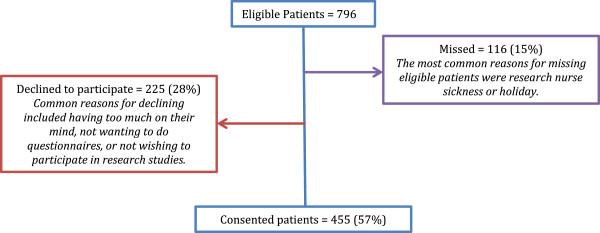
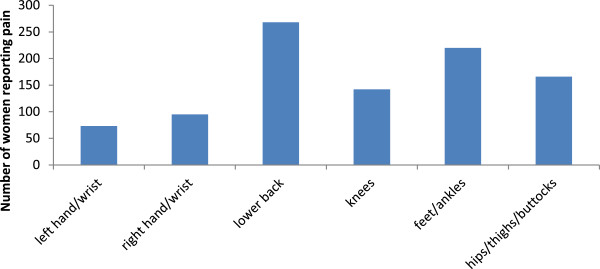
543 women (mean age 57 years, range 28-87, 64% postmenopausal) were recruited following surgery for primary breast cancer from breast cancer clinics in eight hospitals. Fifteen per cent of the eligible cohort was missed; 28% declined to participate. Joint or muscle aches, pains or stiffness were reported by 69% women with 28% specifically reporting joint pain/aches/stiffness. Quality of life, as measured by the FACT-B and adjusted for age, depression, surgery and analgesic use, is significantly worse in all domains in those with musculoskeletal problems than those without.
Our findings highlights the importance of a better understanding of these symptoms and their impact on the lives of women with primary breast cancer so that healthcare professionals are better equipped to support patients and to provide accurate information to inform treatment decisions. Further papers from this study will address these issues.
在英国,八分之一的女性一生中会患乳腺癌:如今,许多此类女性会接受辅助化疗和激素治疗。关节和肌肉疼痛、酸痛及僵硬很常见,但这些症状的自然病史、病因及影响尚不清楚。为此开展了一项针对新诊断的原发性乳腺癌女性的队列研究。在本文中,我们介绍研究方法和样本特征,描述参与者在基线访谈时的肌肉骨骼疼痛经历,并探讨其对生活质量的影响。
非转移性乳腺癌女性在接受初次手术后被纳入一项多中心队列研究。她们通过邮寄方式收到五份问卷(基线、3个月、6个月、9个月和12个月),以调查肌肉骨骼疼痛的患病率、严重程度、部位及相关因素,以及对生活质量的影响。疼痛通过北欧肌肉骨骼问卷、简明疼痛量表和特定于肌肉骨骼的问题进行测量,生活质量通过SF-36量表和FACIT量表进行测量。
从八家医院的乳腺癌诊所招募了543名女性(平均年龄57岁,范围28 - 87岁,64%为绝经后女性),她们因原发性乳腺癌接受了手术。符合条件的队列中有15%未被纳入;28%拒绝参与。69%的女性报告有关节或肌肉疼痛、酸痛或僵硬,其中28%特别报告有关节疼痛/酸痛/僵硬。通过FACT-B测量并根据年龄、抑郁、手术和镇痛药物使用情况进行调整后,有肌肉骨骼问题的女性在所有领域的生活质量均显著低于无此类问题的女性。
我们的研究结果凸显了更好地了解这些症状及其对原发性乳腺癌女性生活的影响的重要性,以便医疗保健专业人员能更好地为患者提供支持,并提供准确信息以指导治疗决策。本研究的后续论文将探讨这些问题。