AWI: Alfred Wegener Institute, Helmholtz Centre for Polar and Marine Research, Am Handelshafen 12, 27570 Bremerhaven, Germany.
BMC Bioinformatics. 2014 Jun 25;15:218. doi: 10.1186/1471-2105-15-218.
Light microscopic analysis of diatom frustules is widely used both in basic and applied research, notably taxonomy, morphometrics, water quality monitoring and paleo-environmental studies. In these applications, usually large numbers of frustules need to be identified and/or measured. Although there is a need for automation in these applications, and image processing and analysis methods supporting these tasks have previously been developed, they did not become widespread in diatom analysis. While methodological reports for a wide variety of methods for image segmentation, diatom identification and feature extraction are available, no single implementation combining a subset of these into a readily applicable workflow accessible to diatomists exists.
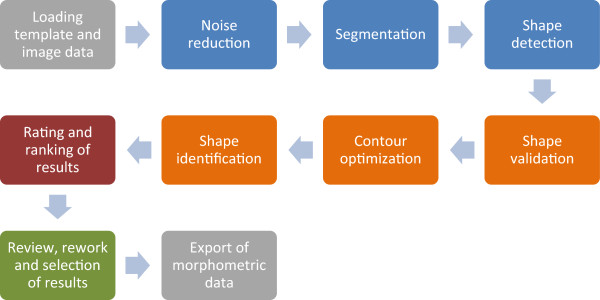
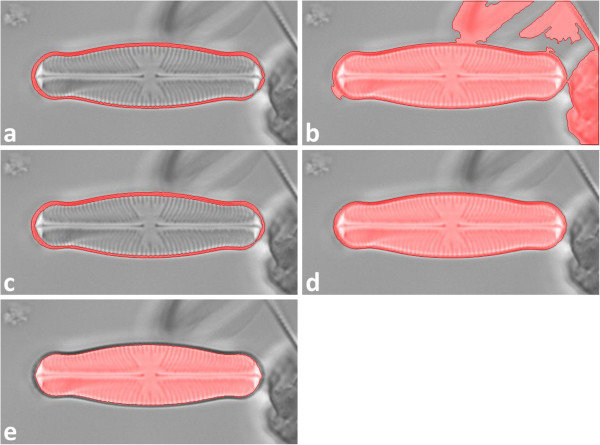
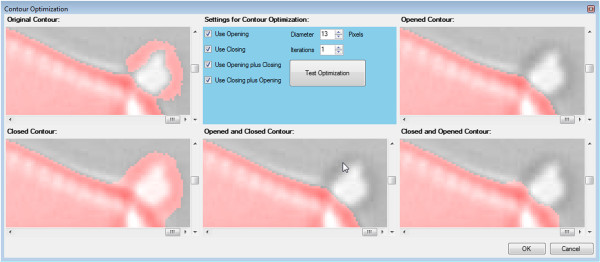
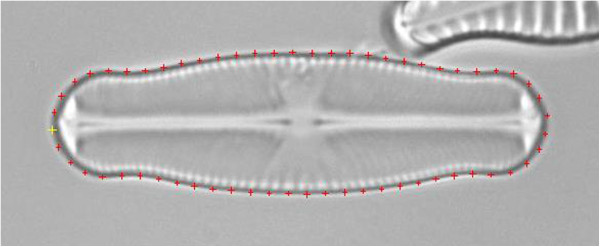
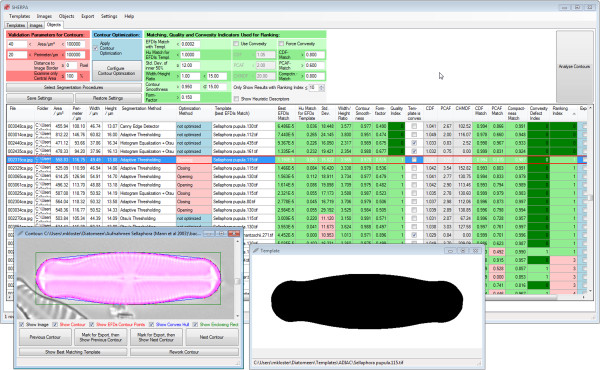
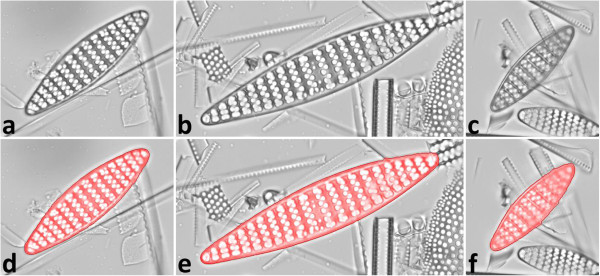
The newly developed tool SHERPA offers a versatile image processing workflow focused on the identification and measurement of object outlines, handling all steps from image segmentation over object identification to feature extraction, and providing interactive functions for reviewing and revising results. Special attention was given to ease of use, applicability to a broad range of data and problems, and supporting high throughput analyses with minimal manual intervention.
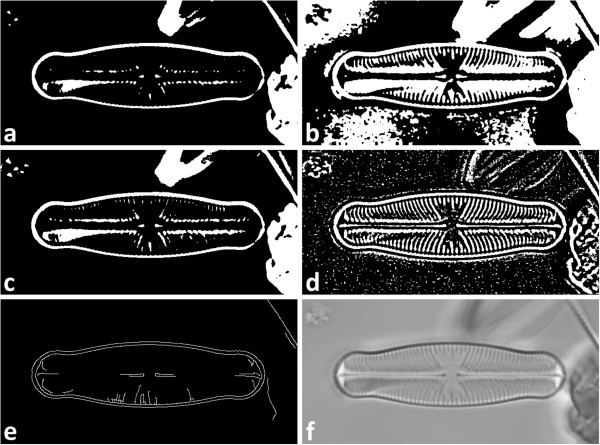
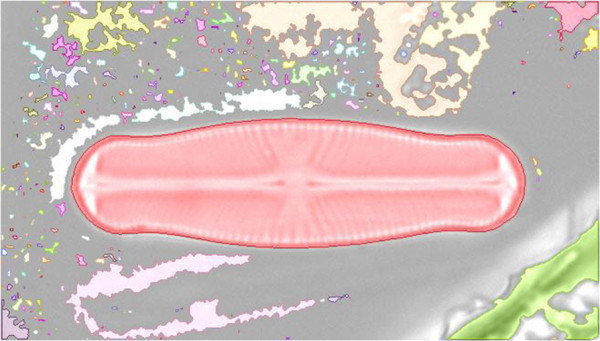
Tested with several diatom datasets from different sources and of various compositions, SHERPA proved its ability to successfully analyze large amounts of diatom micrographs depicting a broad range of species. SHERPA is unique in combining the following features: application of multiple segmentation methods and selection of the one giving the best result for each individual object; identification of shapes of interest based on outline matching against a template library; quality scoring and ranking of resulting outlines supporting quick quality checking; extraction of a wide range of outline shape descriptors widely used in diatom studies and elsewhere; minimizing the need for, but enabling manual quality control and corrections. Although primarily developed for analyzing images of diatom valves originating from automated microscopy, SHERPA can also be useful for other object detection, segmentation and outline-based identification problems.
基于对硅藻类化石壳的微观分析,在基础和应用研究领域都有着广泛的应用,尤其在分类学、形态计量学、水质监测和古环境研究等方面。在这些应用中,通常需要识别和/或测量大量的化石壳。尽管这些应用需要自动化,并且已经开发了支持这些任务的图像处理和分析方法,但它们在硅藻类化石分析中并没有得到广泛应用。虽然有各种用于图像分割、硅藻类鉴定和特征提取的方法的方法报告,但没有一个单一的实现方案将这些方法中的一部分组合成一个易于应用的、可供硅藻类化石学家使用的工作流程。
新开发的工具 SHERPA 提供了一个通用的图像处理工作流程,重点是识别和测量物体轮廓,处理从图像分割到物体识别再到特征提取的所有步骤,并提供交互功能,用于检查和修改结果。特别注意易用性、适用于广泛的数据和问题,以及支持最小人工干预的高通量分析。
通过对来自不同来源和不同组成的几个硅藻类数据集进行测试,SHERPA 证明了它能够成功地分析大量描绘广泛物种的硅藻类显微照片。SHERPA 的独特之处在于结合了以下功能:应用多种分割方法,并为每个单独的物体选择最佳的分割结果;基于与模板库的轮廓匹配来识别感兴趣的形状;对结果轮廓进行质量评分和排名,支持快速质量检查;提取广泛用于硅藻类研究和其他领域的轮廓形状描述符;最大限度地减少手动质量控制和修正的需求,但同时也允许进行。虽然 SHERPA 主要是为分析来自自动化显微镜的硅藻类化石壳图像而开发的,但它也可用于其他物体检测、分割和基于轮廓的识别问题。