Laboratory of Psychological Medicine and Addictology, ULB Neuroscience Institute (UNI), Université Libre de Bruxelles (ULB), Brussels, Belgium.
Neuropsychiatr Dis Treat. 2014 Jun 9;10:1025-37. doi: 10.2147/NDT.S61475. eCollection 2014.
Alcohol dependence is a chronic relapsing disease. The impairment of response inhibition and alcohol-cue reactivity are the main cognitive mechanisms that trigger relapse. Despite the interaction suggested between the two processes, they have long been investigated as two different lines of research. The present study aimed to investigate the interaction between response inhibition and alcohol-cue reactivity and their potential link with relapse.
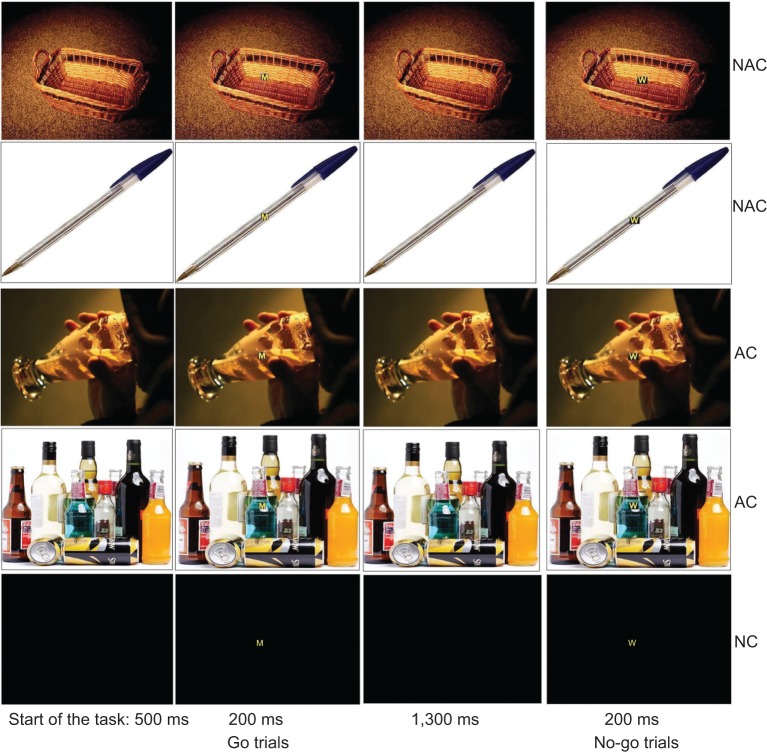
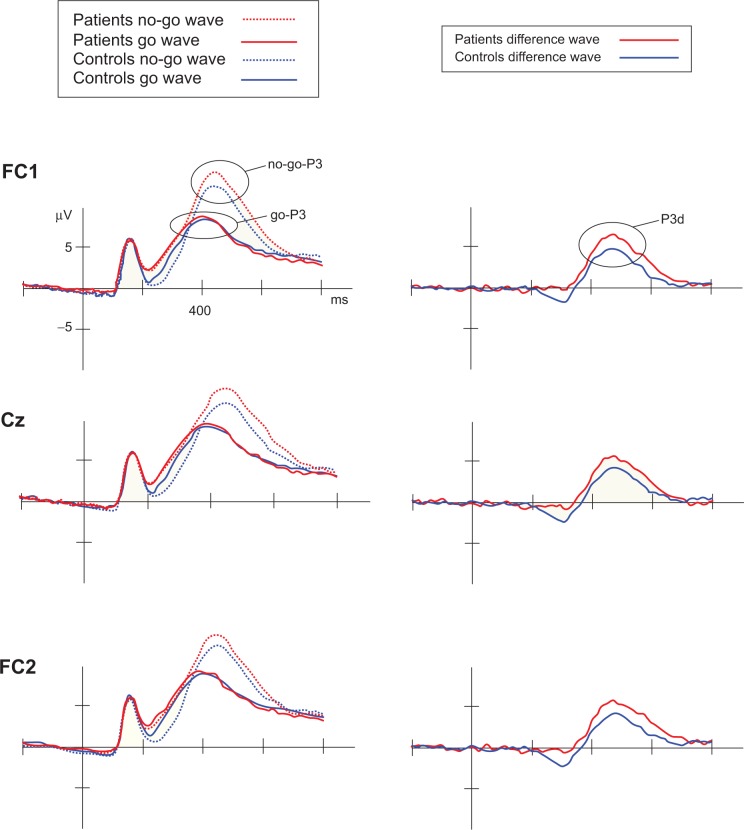
Event-related potentials were recorded during a variant of a "go/no-go" task. Frequent and rare stimuli (to be inhibited) were superimposed on neutral, nonalcohol-related, and alcohol-related contexts. The task was administered following a 3-week detoxification course. Relapse outcome was measured after 3 months, using self-reported abstinence. There were 27 controls (seven females) and 27 patients (seven females), among whom 13 relapsed during the 3-month follow-up period. The no-go N2, no-go P3, and the "difference" wave (P3d) were examined with the aim of linking neural correlates of response inhibition on alcohol-related contexts to the observed relapse rate.
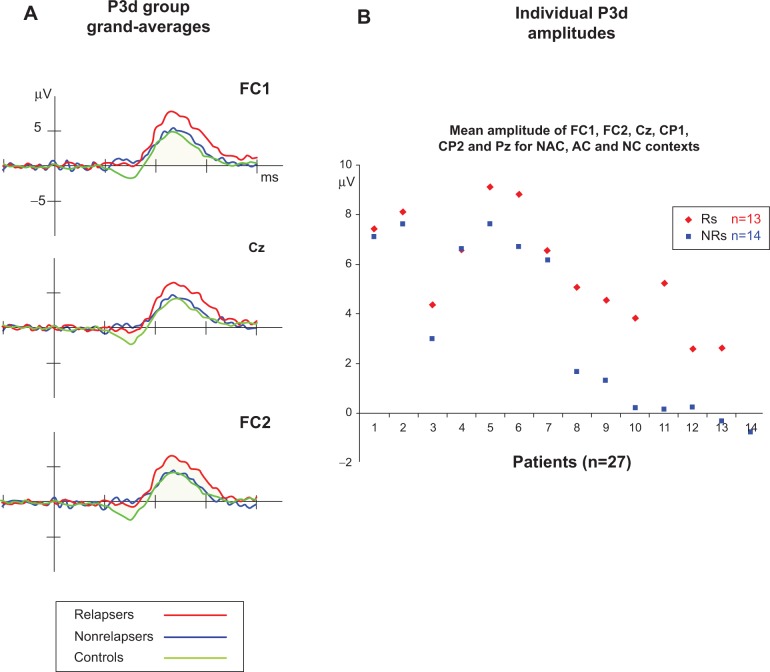
Results showed that 1) at the behavioral level, alcohol-dependent patients made significantly more commission errors than controls (P<0.001), independently of context; 2) through the subtraction no-go P3 minus go P3, this inhibition deficit was neurophysiologically indexed in patients with greater P3d amplitudes (P=0.034); and 3) within the patient group, increased P3d amplitude enabled us to differentiate between future relapsers and nonrelapsers (P=0.026).
Our findings suggest that recently detoxified alcoholics are characterized by poorer response-inhibition skills that demand greater neural resources. We propose that event-related potentials can be used in conjunction with behavioral data to predict relapse; this would identify patients that need a higher level of neural resources when suppressing a response is requested.
酒精依赖是一种慢性复发性疾病。反应抑制和酒精线索反应性的损害是引发复发的主要认知机制。尽管这两个过程之间存在相互作用,但它们长期以来一直被作为两个不同的研究方向进行研究。本研究旨在探讨反应抑制和酒精线索反应性之间的相互作用及其与复发的潜在联系。
在一种“go/no-go”任务的变体中记录事件相关电位。频繁和罕见的刺激(需要抑制)叠加在中性、非酒精相关和酒精相关的背景下。任务在 3 周的戒毒疗程后进行。使用自我报告的戒断来衡量 3 个月后的复发结果。有 27 名对照者(7 名女性)和 27 名患者(7 名女性),其中 13 名在 3 个月的随访期间复发。检查了 no-go N2、no-go P3 和“差异”波(P3d),旨在将反应抑制在酒精相关背景下的神经相关物与观察到的复发率联系起来。
结果表明,1)在行为水平上,酒精依赖患者比对照组犯了更多的错误(P<0.001),而与背景无关;2)通过减去 no-go P3 减去 go P3,这种抑制缺陷在患者中神经生理学上被索引为更大的 P3d 振幅(P=0.034);3)在患者组中,增加 P3d 振幅使我们能够区分未来的复发者和非复发者(P=0.026)。
我们的研究结果表明,最近戒毒的酗酒者表现出较差的反应抑制技能,需要更多的神经资源。我们提出,事件相关电位可以与行为数据一起用于预测复发;这将识别出需要更高水平的神经资源来抑制反应的患者。