Department of Obstetrics and Gynecology, Shiga University of Medical Science, Seta-Tsukinowa-cho, Otsu, Shiga 520-2192, Japan.
Cancer Cell Int. 2014 Jun 16;14:53. doi: 10.1186/1475-2867-14-53. eCollection 2014.
Effective therapies for early endometrial cancer usually involve surgical excision and consequent infertility Therefore, new treatment approaches that preserve fertility should be developed. Metformin, a well-tolerated anti-diabetic drug, can inhibit cancer cell growth. However, the mechanism of metformin action is not well understood. Here we investigate the roles of autophagy and apoptosis in the anti-cancer effects of metformin on endometrial cancer cells.
Ishikawa endometrial cancer cells were treated with metformin. WST-8 assays, colony formation assays, flow cytometry, caspase luminescence measurement, immunofluorescence, and western blots were used to assess the effects of metformin on cell viability, proliferation, cell cycle progression, apoptosis, and autophagy.
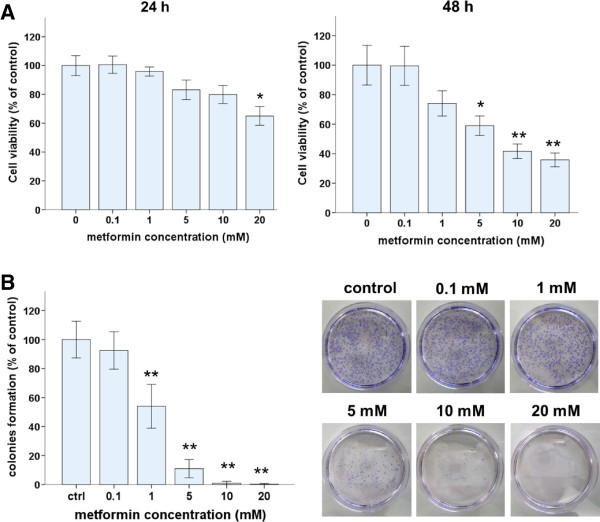
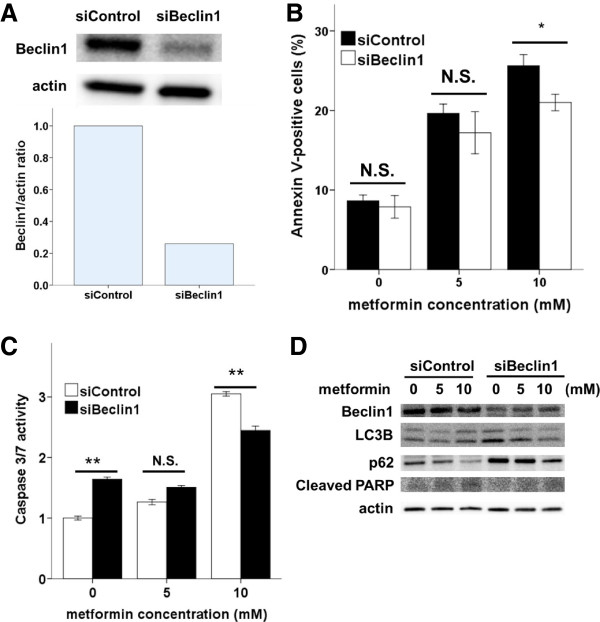
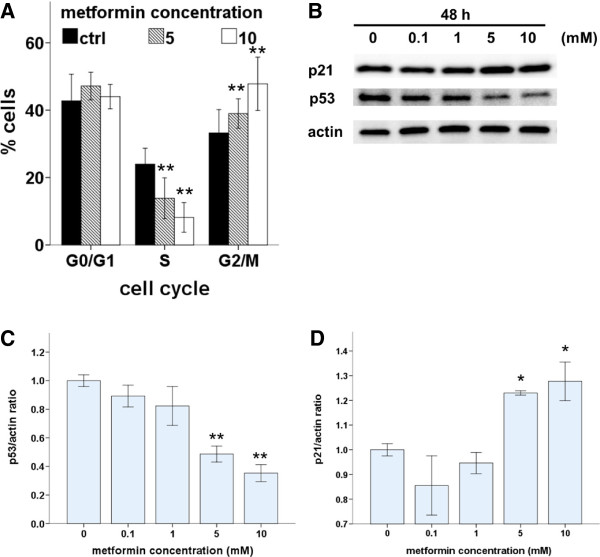
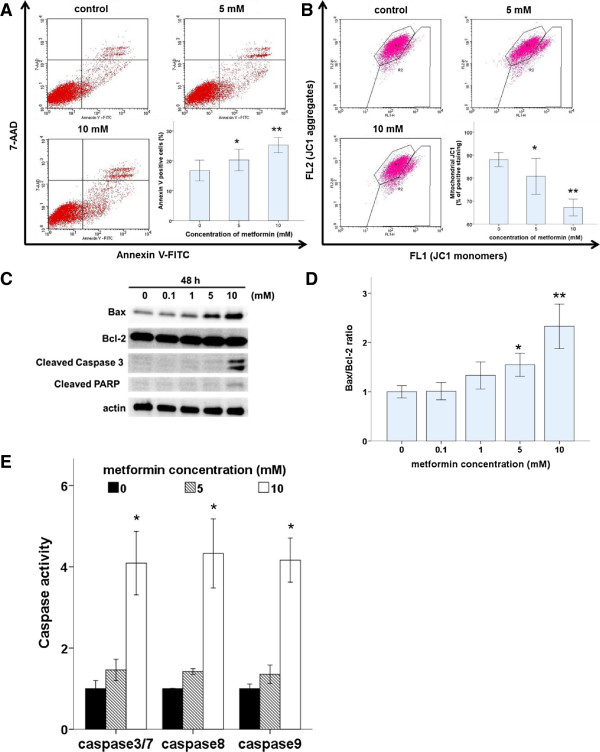
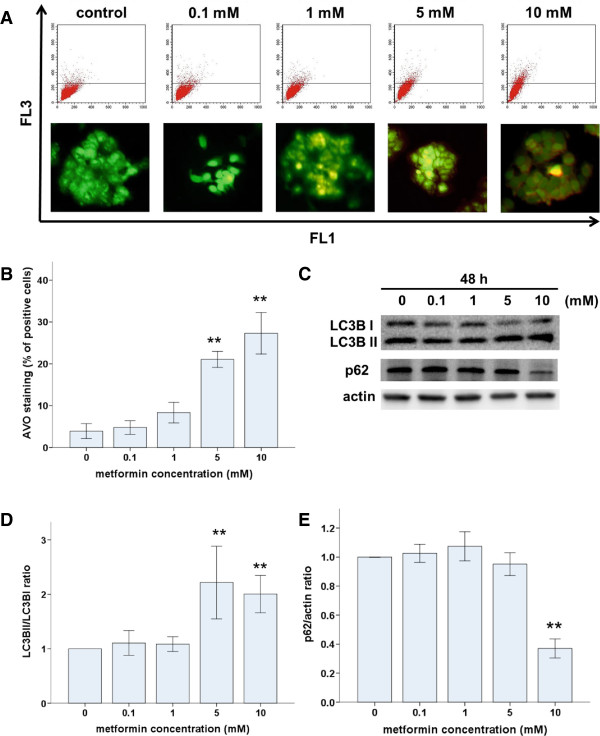
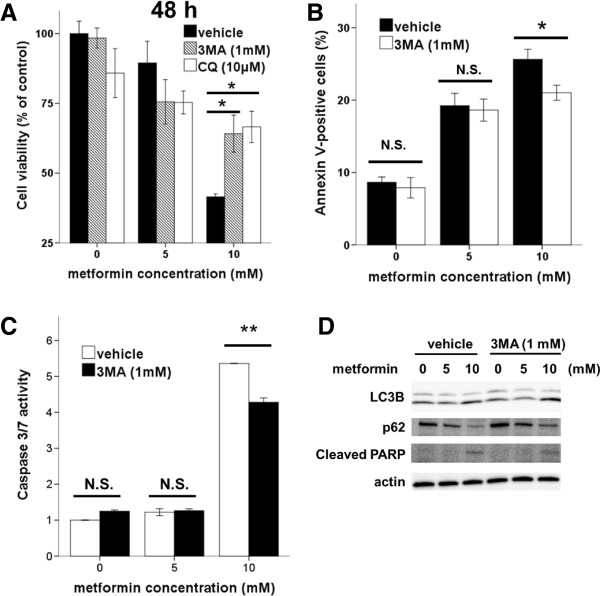
Metformin-treated cells exhibited significantly lower viability and proliferation and significantly more cell cycle arrest in G1 and G2/M than control cells. These cells also exhibited significantly more apoptosis via both intrinsic and extrinsic pathways. In addition, metformin treatment induced autophagy. Inhibition of autophagy, either by Beclin1 knockdown or by 3-methyladenine-mediated inhibition of caspase-3/7, suppressed the anti-proliferative effects of metformin on endometrial cancer cells. These findings indicate that the anti-proliferative effects and apoptosis caused by metformin are partially or completely dependent on autophagy.
We showed that metformin suppresses endometrial cancer cell growth via cell cycle arrest and concomitant autophagy and apoptosis.
早期子宫内膜癌的有效治疗方法通常涉及手术切除和随之而来的不孕。因此,应该开发新的保留生育能力的治疗方法。二甲双胍是一种耐受性良好的抗糖尿病药物,可抑制癌细胞生长。然而,二甲双胍作用的机制尚不清楚。在这里,我们研究自噬和细胞凋亡在二甲双胍对子宫内膜癌细胞抗癌作用中的作用。
用二甲双胍处理 Ishikawa 子宫内膜癌细胞。使用 WST-8 测定法、集落形成测定法、流式细胞术、半胱天冬酶发光测定法、免疫荧光和 Western blot 来评估二甲双胍对细胞活力、增殖、细胞周期进程、凋亡和自噬的影响。
与对照组相比,二甲双胍处理的细胞表现出明显更低的活力和增殖,并且在 G1 和 G2/M 中明显更多的细胞周期停滞。这些细胞还通过内在和外在途径表现出明显更多的凋亡。此外,二甲双胍处理诱导自噬。通过 Beclin1 敲低或通过 3-甲基腺嘌呤介导的 caspase-3/7 抑制抑制自噬,可抑制二甲双胍对子宫内膜癌细胞的抗增殖作用。这些发现表明,二甲双胍引起的增殖抑制作用和凋亡部分或完全依赖于自噬。
我们表明,二甲双胍通过细胞周期停滞和伴随的自噬和细胞凋亡抑制子宫内膜癌细胞生长。