Sun Wenmin, Xiao Xueshan, Li Shiqiang, Guo Xiangming, Zhang Qingjiong
State Key Laboratory of Ophthalmology, Zhongshan Ophthalmic Center, Sun Yat-sen University, Guangzhou, China.
PLoS One. 2014 Jun 26;9(6):e100455. doi: 10.1371/journal.pone.0100455. eCollection 2014.
The aim of this study was to investigate the mutation spectrum and frequency of 34 known genes in 18 Chinese families with congenital cataracts.
Genomic DNA and clinical data was collected from 18 families with congenital cataracts. Variations in 34 cataract-associated genes were screened by whole exome sequencing and then validated by Sanger sequencing.
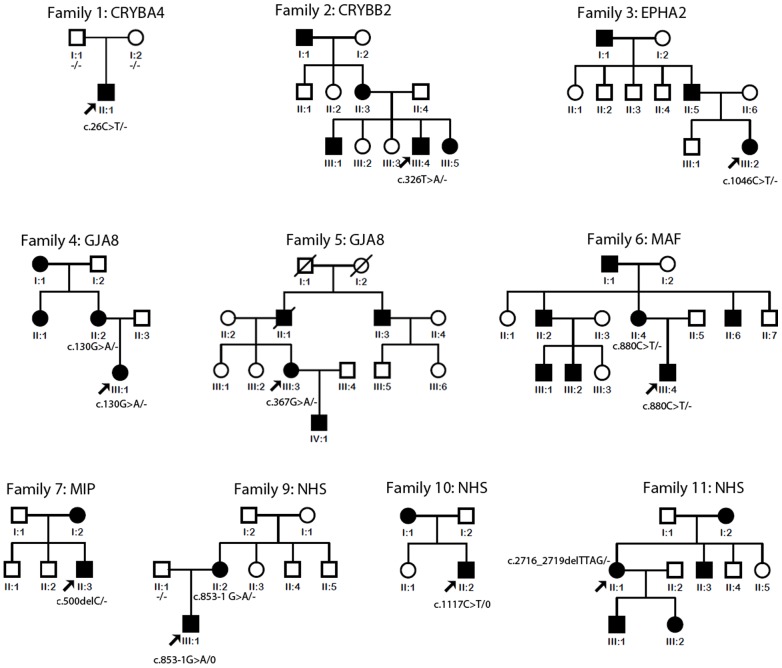
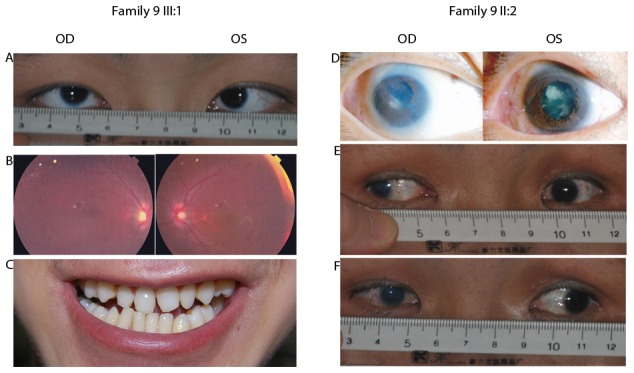
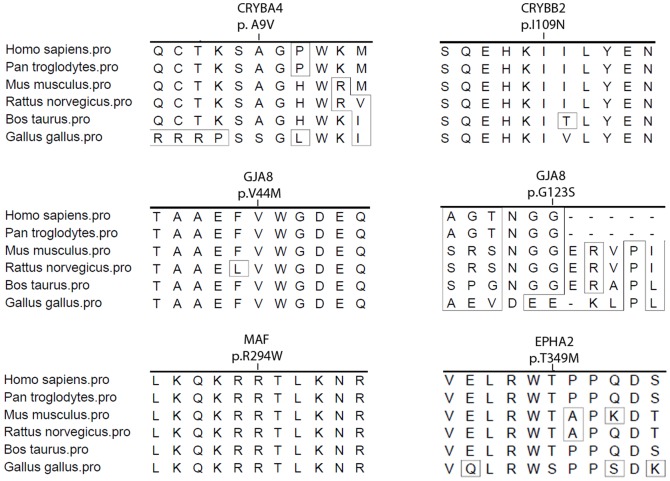
Eleven candidate variants in seven of the 34 genes were detected by exome sequencing and then confirmed by Sanger sequencing, including two variants predicted to be benign and the other pathogenic mutations. The nine mutations were present in 9 of the 18 (50%) families with congenital cataracts. Of the four families with mutations in the X-linked NHS gene, no other abnormalities were recorded except for cataract, in which a pseudo-dominant inheritance form was suggested, as female carriers also had different forms of cataracts.
This study expands the mutation spectrum and frequency of genes responsible for congenital cataract. Mutation in NHS is a common cause of nonsyndromic congenital cataract with pseudo-autosomal dominant inheritance. Combined with our previous studies, a genetic basis could be identified in 67.6% of families with congenital cataracts in our case series, in which mutations in genes encoding crystallins, genes encoding connexins, and NHS are responsible for 29.4%, 14.7%, and 11.8% of families, respectively. Our results suggest that mutations in NHS are the common cause of congenital cataract, both syndromic and nonsyndromic.
本研究旨在调查18个中国先天性白内障家庭中34个已知基因的突变谱和频率。
收集18个先天性白内障家庭的基因组DNA和临床数据。通过全外显子组测序筛选34个白内障相关基因的变异,然后用桑格测序法进行验证。
通过外显子组测序在34个基因中的7个基因中检测到11个候选变异,然后经桑格测序确认,其中包括2个预测为良性的变异和其他致病突变。这9个突变存在于18个(50%)先天性白内障家庭中的9个家庭。在X连锁NHS基因发生突变的4个家庭中,除白内障外未记录到其他异常,提示为拟显性遗传形式,因为女性携带者也有不同形式的白内障。
本研究扩展了先天性白内障相关基因的突变谱和频率。NHS基因突变是导致非综合征性先天性白内障伴拟常染色体显性遗传的常见原因。结合我们之前的研究,在我们的病例系列中,67.6%的先天性白内障家庭可确定遗传基础,其中编码晶状体蛋白的基因、编码连接蛋白的基因和NHS基因的突变分别占家庭的29.4%、14.7%和11.8%。我们的结果表明,NHS基因突变是先天性白内障(综合征性和非综合征性)的常见原因。