Liu Yong Dong, Selbes Meric, Zeng Chengchu, Zhong Rugang, Karanfil Tanju
College of Life Science & Bioengineering, Beijing University of Technology , Beijing 100124, China.
Environ Sci Technol. 2014;48(15):8653-63. doi: 10.1021/es500997e. Epub 2014 Jul 9.
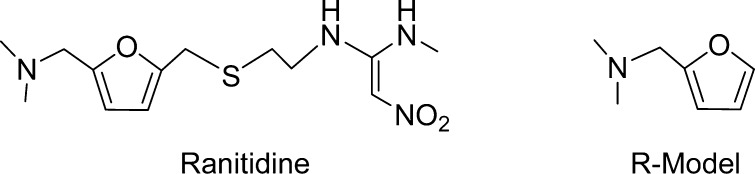
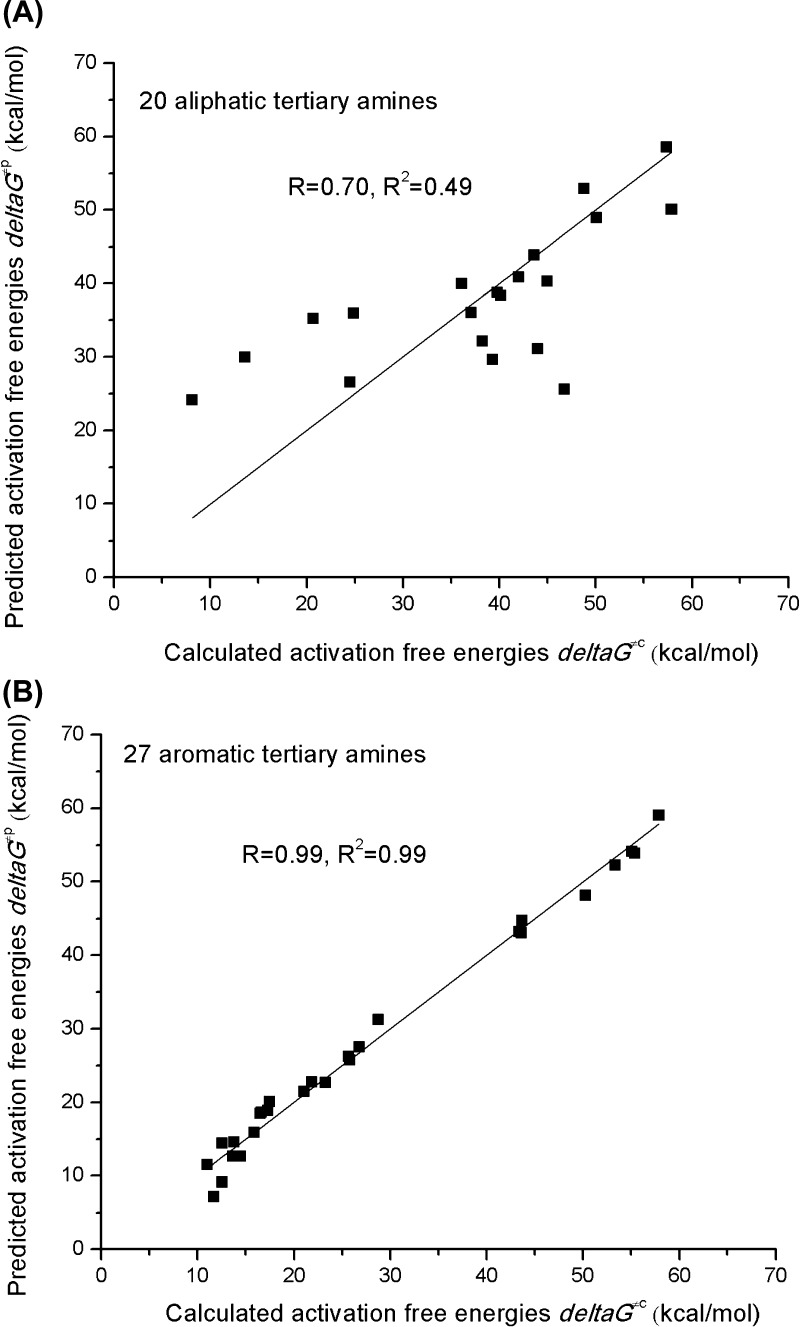
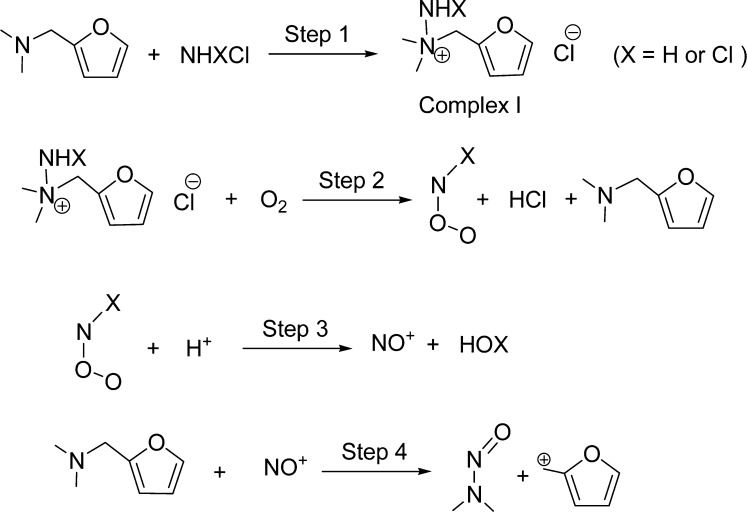
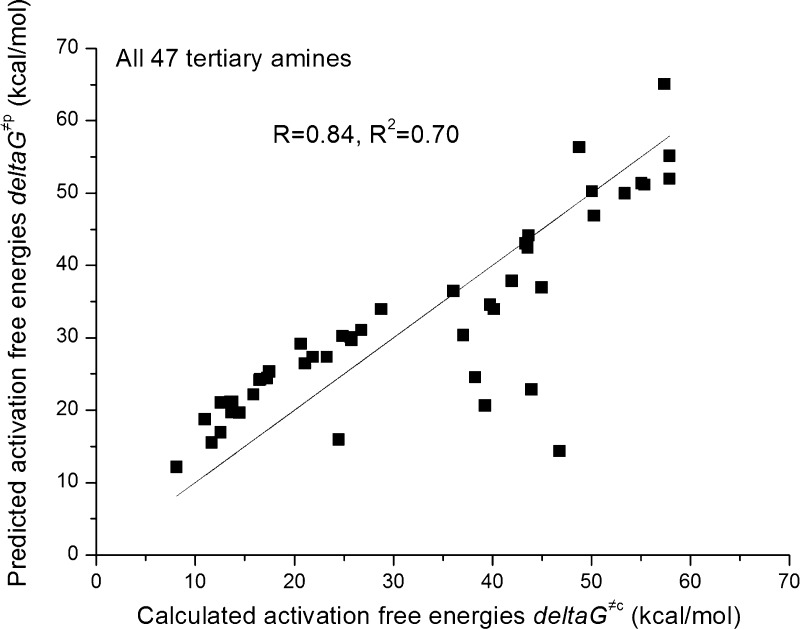
Chloramination of drinking waters has been associated with N-nitrosodimethylamine (NDMA) formation as a disinfection byproduct. NDMA is classified as a probable carcinogen and thus its formation during chloramination has recently become the focus of considerable research interest. In this study, the formation mechanisms of NDMA from ranitidine and trimethylamine (TMA), as models of tertiary amines, during chloramination were investigated by using density functional theory (DFT). A new four-step formation pathway of NDMA was proposed involving nucleophilic substitution by chloramine, oxidation, and dehydration followed by nitrosation. The results suggested that nitrosation reaction is the rate-limiting step and determines the NDMA yield for tertiary amines. When 45 other tertiary amines were examined, the proposed mechanism was found to be more applicable to aromatic tertiary amines, and there may be still some additional factors or pathways that need to be considered for aliphatic tertiary amines. The heterolytic ONN(Me)2-R(+) bond dissociation energy to release NDMA and carbocation R(+) was found to be a criterion for evaluating the reactivity of aromatic tertiary amines. A structure-activity study indicates that tertiary amines with benzyl, aromatic heterocyclic ring, and diene-substituted methenyl adjacent to the DMA moiety are potentially significant NDMA precursors. The findings of this study are helpful for understanding NDMA formation mechanism and predicting NDMA yield of a precursor.
饮用水的氯胺化处理与作为消毒副产物的N-亚硝基二甲胺(NDMA)的形成有关。NDMA被归类为可能的致癌物,因此其在氯胺化过程中的形成最近成为了大量研究关注的焦点。在本研究中,通过使用密度泛函理论(DFT)研究了雷尼替丁和三甲胺(TMA)作为叔胺模型在氯胺化过程中NDMA的形成机制。提出了一种新的NDMA四步形成途径,包括氯胺的亲核取代、氧化、脱水然后亚硝化。结果表明,亚硝化反应是限速步骤,决定了叔胺的NDMA产率。当对其他45种叔胺进行研究时,发现所提出的机制更适用于芳香族叔胺,对于脂肪族叔胺可能仍有一些其他因素或途径需要考虑。释放NDMA和碳正离子R(+)的异裂ONN(Me)2-R(+)键解离能被发现是评估芳香族叔胺反应活性的一个标准。一项构效关系研究表明,在DMA部分附近带有苄基、芳香杂环和二烯取代亚甲基的叔胺可能是重要的NDMA前体。本研究结果有助于理解NDMA的形成机制并预测前体的NDMA产率。