Mayfield Jeffrey A, Liang Zhong, Agrahari Garima, Lee Shaun W, Donahue Deborah L, Ploplis Victoria A, Castellino Francis J
W. M. Keck Center for Transgene Research, University of Notre Dame, Notre Dame, Indiana, United States of America.
W. M. Keck Center for Transgene Research, University of Notre Dame, Notre Dame, Indiana, United States of America; Department of Chemistry and Biochemistry, University of Notre Dame, Notre Dame, Indiana, United States of America.
PLoS One. 2014 Jun 26;9(6):e100698. doi: 10.1371/journal.pone.0100698. eCollection 2014.
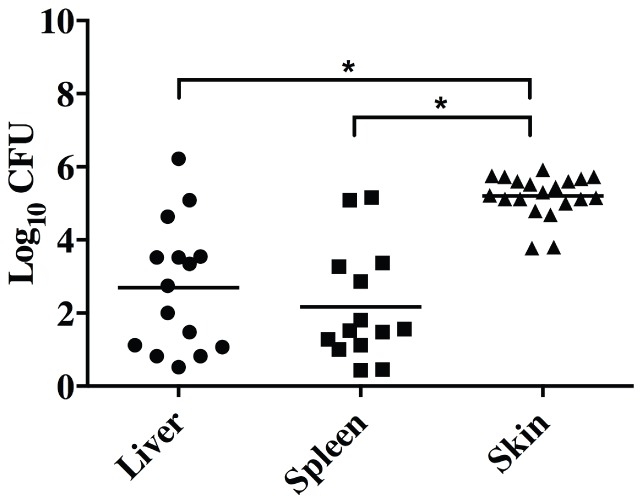
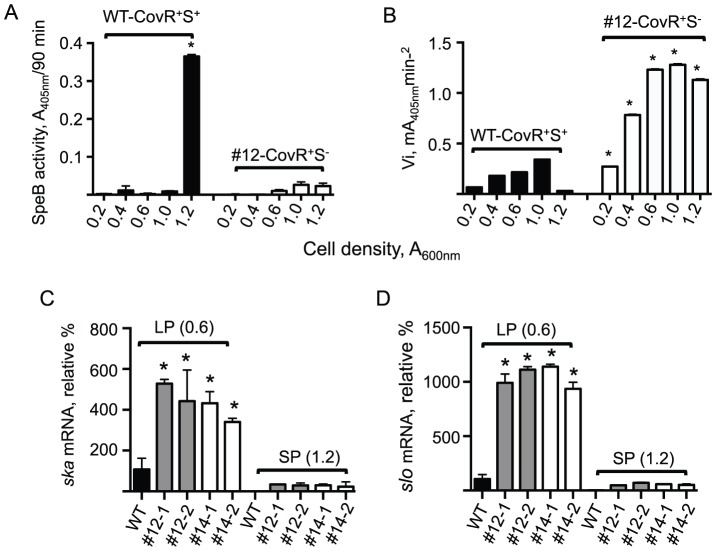
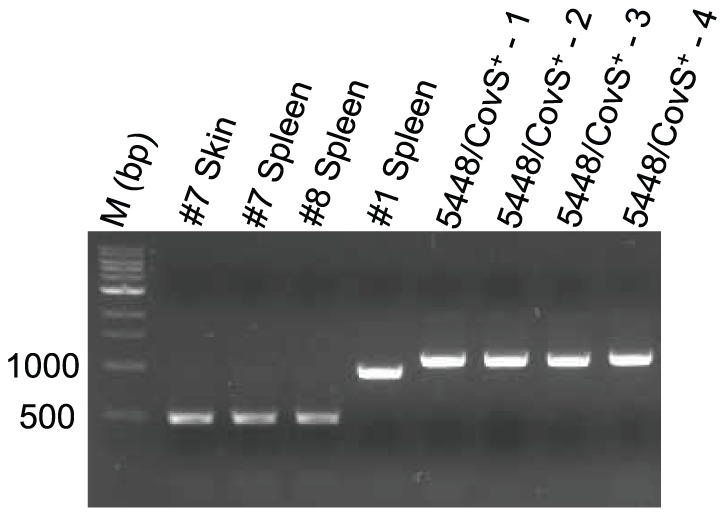
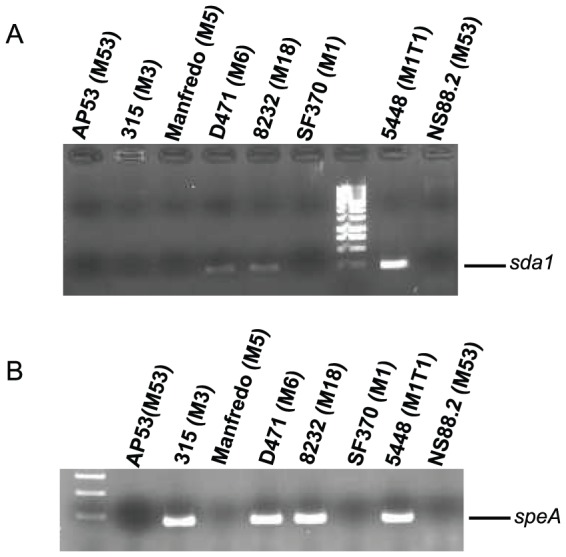
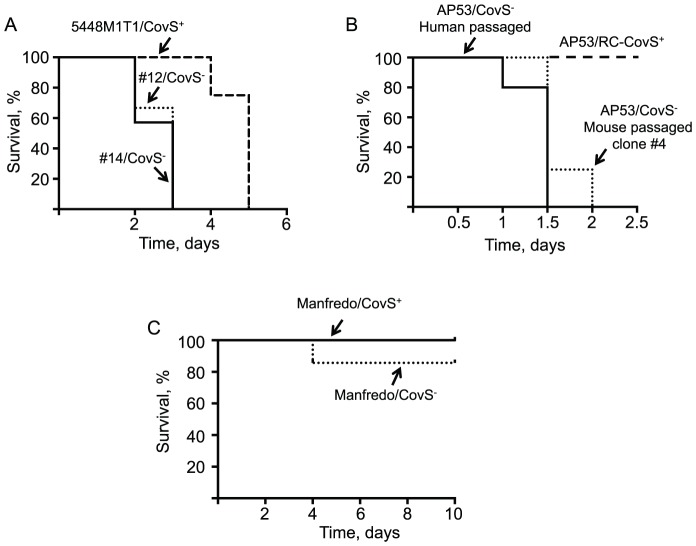
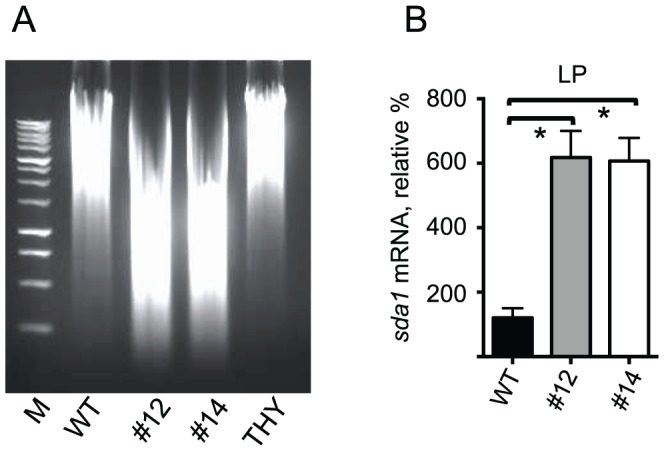
The cluster of virulence sensor (CovS)/responder (CovR) two-component operon (CovRS) regulates ∼15% of the genes of the Group A Streptococcal pyogenes (GAS) genome. Bacterial clones containing inactivating mutations in the covS gene have been isolated from patients with virulent invasive diseases. We report herein an assessment of the nature and types of covS mutations that can occur in both virulent and nonvirulent GAS strains, and assess whether a nonvirulent GAS can attain enhanced virulence through this mechanism. A group of mice were infected with a globally-disseminated clonal M1T1 GAS (isolate 5448), containing wild-type (WT) CovRS (5448/CovR+S+), or less virulent engineered GAS strains, AP53/CovR+S+ and Manfredo M5/CovR+S+. SpeB negative GAS clones from wound sites and/or from bacteria disseminated to the spleen were isolated and the covS gene was subjected to DNA sequence analysis. Numerous examples of inactivating mutations were found in CovS in all regions of the gene. The mutations found included frame-shift insertions and deletions, and in-frame small and large deletions in the gene. Many of the mutations found resulted in early translation termination of CovS. Thus, the covS gene is a genomic mutagenic target that gives GAS enhanced virulence. In cases wherein CovS- was discovered, these clonal variants exhibited high lethality, further suggesting that randomly mutated covS genes occur during the course of infection, and lead to the development of a more invasive infection.
毒力传感器(CovS)/应答器(CovR)双组分操纵子(CovRS)调控A组化脓性链球菌(GAS)基因组中约15%的基因。已从患有侵袭性毒力疾病的患者中分离出在covS基因中含有失活突变的细菌克隆。我们在此报告对毒力和无毒力GAS菌株中可能出现的covS突变的性质和类型的评估,并评估无毒力GAS是否可通过该机制获得增强的毒力。一组小鼠感染了全球传播的克隆M1T1 GAS(分离株5448),其含有野生型(WT)CovRS(5448/CovR+S+),或毒力较低的工程改造GAS菌株,AP53/CovR+S+和曼弗雷多M5/CovR+S+。从伤口部位和/或扩散到脾脏的细菌中分离出SpeB阴性GAS克隆,并对covS基因进行DNA序列分析。在该基因的所有区域中均发现了CovS失活突变的大量实例。发现的突变包括移码插入和缺失,以及该基因内的框内小缺失和大缺失。发现的许多突变导致CovS的早期翻译终止。因此,covS基因是一个基因组诱变靶点,可赋予GAS增强的毒力。在发现CovS-的情况下,这些克隆变体表现出高致死率,进一步表明在感染过程中会随机出现covS基因突变,并导致更具侵袭性的感染的发展。