Biotechnology Centre of Azores, Associated Laboratory Institute for Biotechnology and Bioengineering, University of Azores, Rua Capitão João D'Ávila, 9700-042 Angra do Heroísmo, Portugal.
Biotechnology Centre of Azores, Associated Laboratory Institute for Biotechnology and Bioengineering, University of Azores, Rua Capitão João D'Ávila, 9700-042 Angra do Heroísmo, Portugal
AoB Plants. 2014 Jun 26;6:plu034. doi: 10.1093/aobpla/plu034.
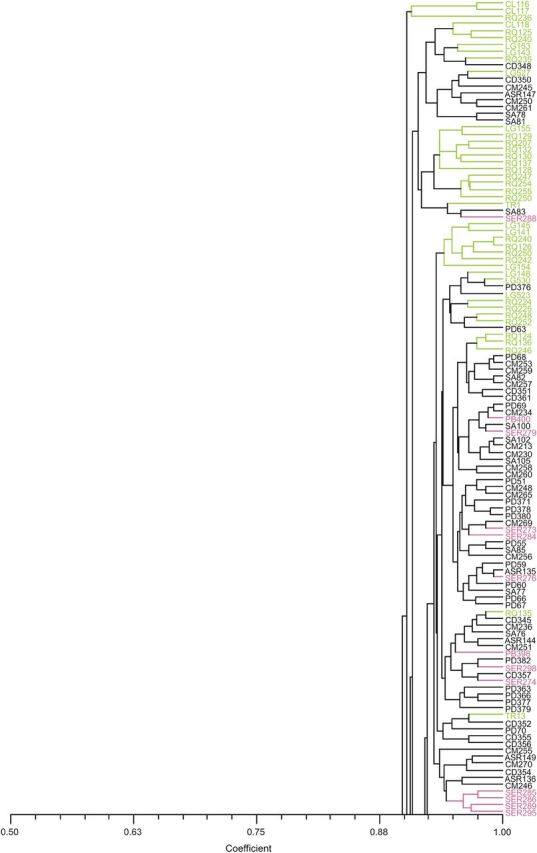
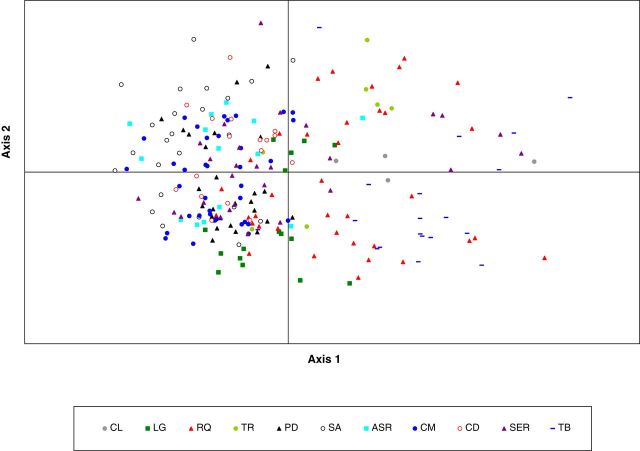
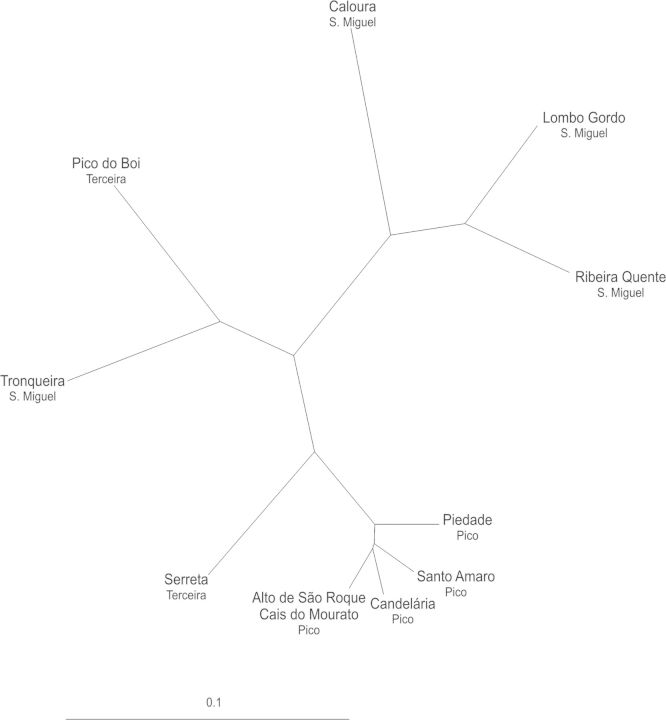
Knowledge of the levels and distribution of genetic diversity is important for designing conservation strategies for threatened and endangered species so as to guarantee sustainable survival of populations and to preserve their evolutionary potential. Picconia azorica is a valuable Azorean endemic species recently classified as endangered. To contribute with information useful for the establishment of conservation programmes, the genetic variability and differentiation among 230 samples from 11 populations collected in three Azorean islands was accessed with eight inter-simple sequence repeat markers. A total of 64 polymorphic loci were detected. The majority of genetic variability was found within populations and no genetic structure was detected between populations and between islands. Also the coefficient of genetic differentiation and the level of gene flow indicate that geographical distances do not act as barriers for gene flow. In order to ensure the survival of populations in situ and ex situ management practices should be considered, including artificial propagation through the use of plant tissue culture techniques, not only for the restoration of habitat but also for the sustainable use of its valuable wood.
了解遗传多样性的水平和分布对于制定受威胁和濒危物种的保护策略非常重要,以保证种群的可持续生存,并保护其进化潜力。Picconia azorica 是一种具有价值的亚速尔群岛特有种,最近被列为濒危物种。为了为保护计划的制定提供有用的信息,我们利用 8 个简单序列重复标记,对来自三个亚速尔群岛 11 个种群的 230 个样本进行了遗传变异性和分化的研究。共检测到 64 个多态性位点。大多数遗传变异性存在于种群内,没有在种群之间和岛屿之间检测到遗传结构。此外,遗传分化系数和基因流水平表明,地理距离不会成为基因流动的障碍。为了确保种群在原地的生存,应该考虑就地和迁地管理措施,包括通过使用植物组织培养技术进行人工繁殖,不仅用于恢复栖息地,还用于可持续利用其有价值的木材。