HIV and Malaria Vaccine Program, The Aaron Diamond AIDS Research Center, Affiliate of the Rockefeller University, New York, NY 10016, USA.
Michael Heidelberger Division, Department of Pathology, New York University School of Medicine, New York, NY 10016, USA.
Biomolecules. 2012 Jan 5;2(1):23-33. doi: 10.3390/biom2010023.
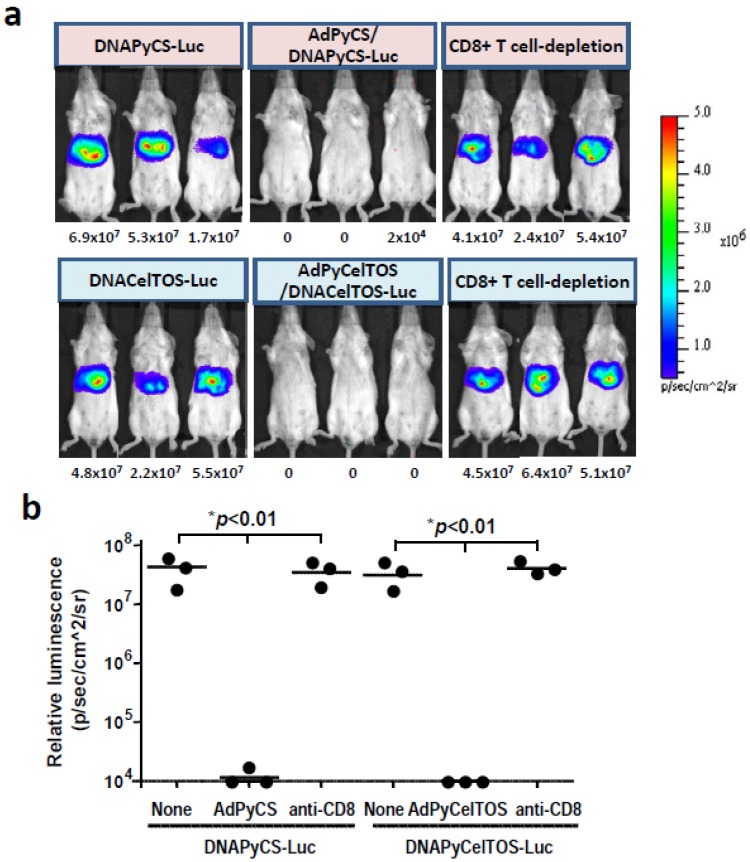
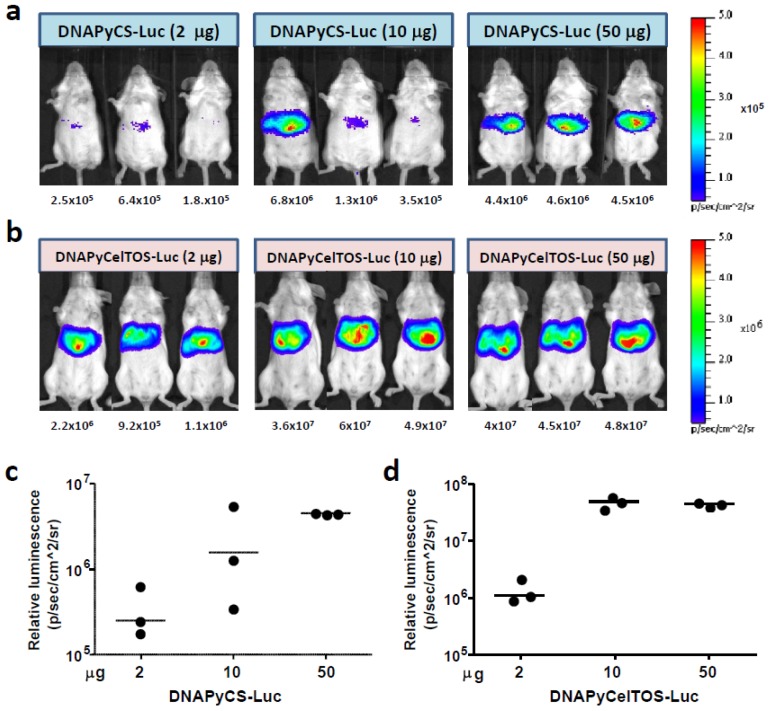
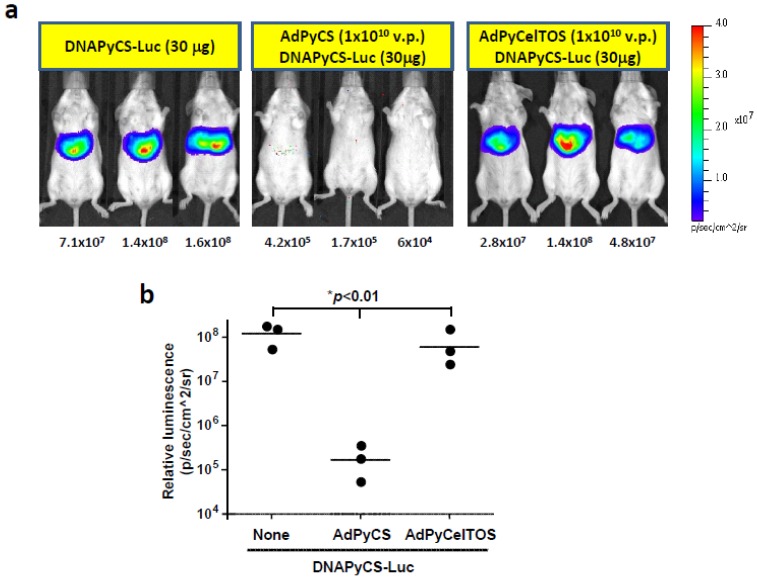
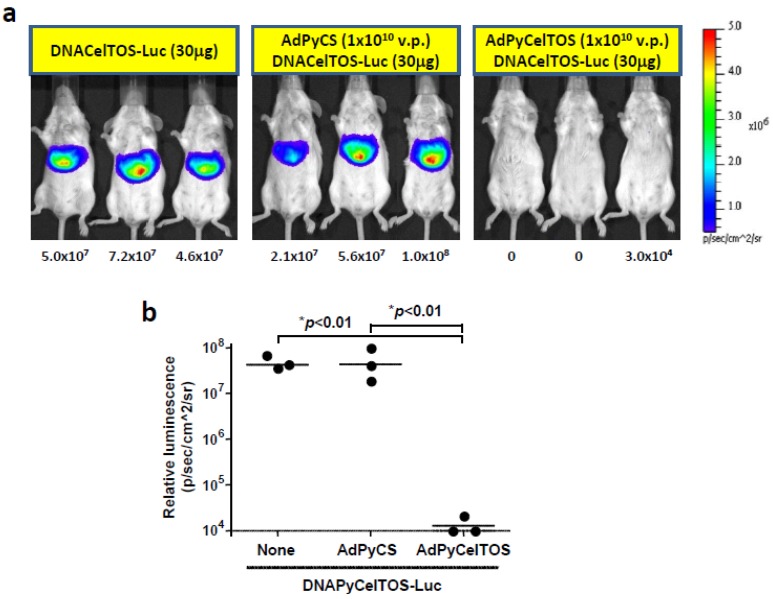
Hydrodynamic tail vein (HTV) delivery is a simple and rapid tail vein injection method of a high volume of naked plasmid DNA resulting in high levels of foreign gene expression in organs, especially the liver. Compared to other organs, HTV delivery results in more than a 1000-fold higher transgene expression in liver. After being bitten by malaria-infected mosquitoes, malaria parasites transiently infect the host liver and form the liver stages. The liver stages are known to be the key target for CD8+ T cells that mediate protective anti-malaria immunity in an animal model. Therefore, in this study, we utilized the HTV delivery technique as a tool to determine the in vivo cytotoxic effect of malaria antigen-specific CD8+ T cells. Two weeks after mice were immunized with recombinant adenoviruses expressing malarial antigens, the immunized mice as well as naïve mice were challenged by HTV delivery of naked plasmid DNA co-encoding respective antigen together with luciferase using dual promoters. Three days after the HTV challenge, non-invasive whole-body bioluminescent imaging was performed. The images demonstrate in vivo activity of CD8+ T cells against malaria antigen-expressing cells in liver.
hydrodynamic 尾静脉 (HTV) 给药是一种简单、快速的尾静脉注射大量裸质粒 DNA 的方法,可导致器官(尤其是肝脏)中外源基因的高水平表达。与其他器官相比,HTV 给药可使肝脏中转基因表达增加 1000 多倍。疟原虫感染的蚊子叮咬后,疟原虫寄生虫会短暂感染宿主肝脏并形成肝期。肝期是 CD8+ T 细胞介导动物模型中保护性抗疟免疫的关键靶标。因此,在这项研究中,我们利用 HTV 给药技术作为工具来确定疟疾抗原特异性 CD8+ T 细胞的体内细胞毒性作用。用表达疟原虫抗原的重组腺病毒免疫小鼠两周后,用双启动子将编码相应抗原和荧光素酶的裸质粒 DNA 经 HTV 共给药,对免疫和未免疫的小鼠进行挑战。HTV 挑战后 3 天,进行非侵入性全身生物发光成像。这些图像显示了 CD8+ T 细胞在肝脏中针对表达疟疾抗原的细胞的体内活性。