Buza Teresia, Arick Mark, Wang Hui, Peterson Daniel G
Department of Basic Sciences, College of Veterinary Medicine, Mississippi State University, P, O, Box 6100, Mississippi State 39762, USA.
BMC Res Notes. 2014 Jun 27;7:403. doi: 10.1186/1756-0500-7-403.
The most important means of identifying diseases before symptoms appear is through the discovery of disease-associated biomarkers. Recently, microRNAs (miRNAs) have become highly useful biomarkers of infectious, genetic and metabolic diseases in human but they have not been well studied in domestic animals. It is probable that many of the animal homologs of human disease-associated miRNAs may be involved in domestic animal diseases. Here we describe a computational biology study in which human disease miRNAs were utilized to predict orthologous miRNAs in cow, chicken, pig, horse, and dog.
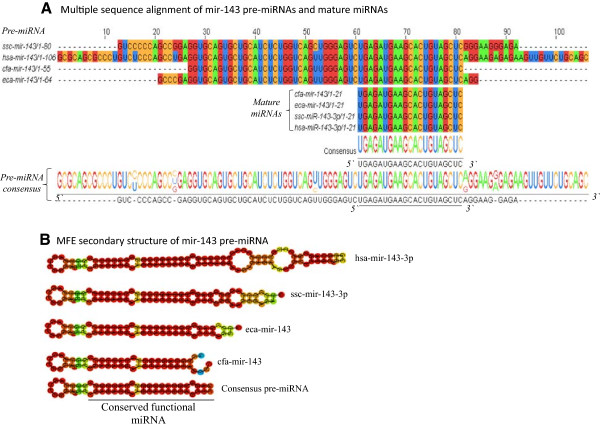
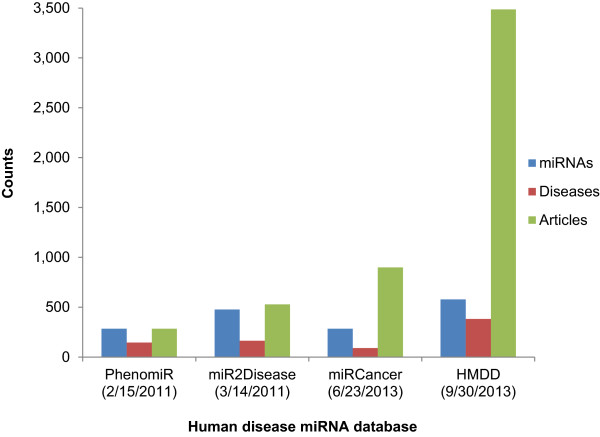
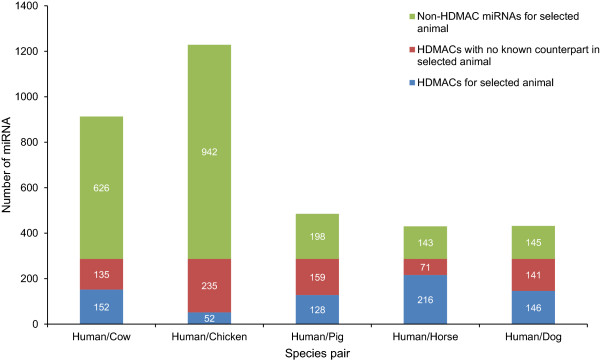
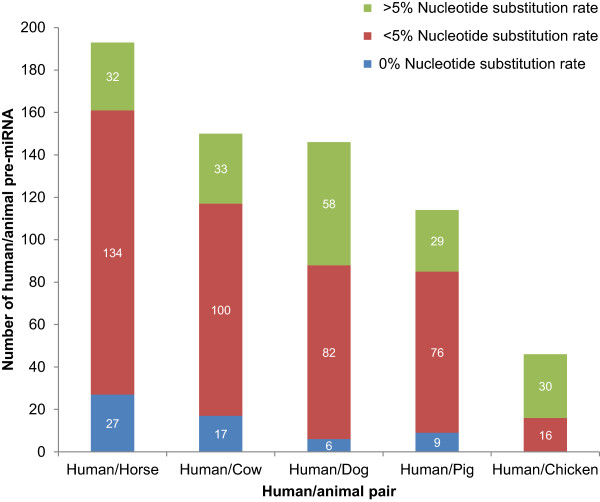
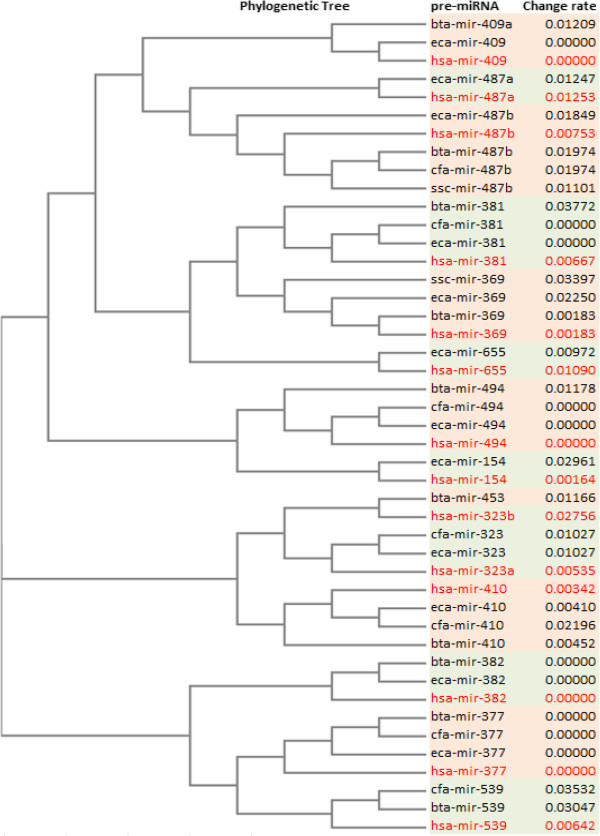
We identified 287 human disease-associated miRNAs which had at least one 100% identical animal homolog. The 287 miRNAs were associated with 359 human diseases referenced in 2,863 Pubmed articles. Multiple sequence analysis indicated that over 60% of known horse mature miRNAs found perfect matches in human disease-associated miRNAs, followed by dog (50%). As expected, chicken had the least number of perfect matches (5%). Phylogenetic analysis of miRNA precursors indicated that 85% of human disease pre-miRNAs were highly conserved in animals, showing less than 5% nucleotide substitution rates over evolutionary time. As an example we demonstrated conservation of human hsa-miR-143-3p which is associated with type 2 diabetes and targets AKT1 gene which is highly conserved in pig, horse and dog. Functional analysis of AKT1 gene using Gene Ontology (GO) showed that it is involved in glucose homeostasis, positive regulation of glucose import, positive regulation of glycogen biosynthetic process, glucose transport and response to food.
This data provides the animal and veterinary research community with a resource to assist in generating hypothesis-driven research for discovering animal disease-related miRNA from their datasets and expedite development of prophylactic and disease-treatment strategies and also influence research efforts to identify novel disease models in large animals. Integrated data is available for download at http://agbase.hpc.msstate.edu/cgi-bin/animal_mirna.cgi.
在症状出现之前识别疾病的最重要方法是发现与疾病相关的生物标志物。最近,微小RNA(miRNA)已成为人类感染性、遗传性和代谢性疾病非常有用的生物标志物,但在家畜中尚未得到充分研究。人类疾病相关miRNA的许多动物同源物可能参与家畜疾病。在此,我们描述了一项计算生物学研究,其中利用人类疾病miRNA来预测牛、鸡、猪、马和狗中的直系同源miRNA。
我们鉴定出287种与人类疾病相关的miRNA,它们至少有一个100%相同的动物同源物。这287种miRNA与2863篇PubMed文章中引用的359种人类疾病相关。多序列分析表明,超过60%的已知马成熟miRNA在人类疾病相关miRNA中找到完美匹配,其次是狗(50%)。不出所料,鸡的完美匹配数量最少(5%)。miRNA前体的系统发育分析表明,85%的人类疾病前体miRNA在动物中高度保守,在进化过程中核苷酸替代率低于5%。例如,我们证明了与2型糖尿病相关且靶向AKT1基因的人类hsa-miR-143-3p在猪、马和狗中高度保守。使用基因本体论(GO)对AKT1基因进行功能分析表明,它参与葡萄糖稳态、葡萄糖导入的正调控、糖原生物合成过程的正调控、葡萄糖转运和对食物的反应。
这些数据为动物和兽医研究界提供了一种资源,有助于从其数据集中生成假设驱动的研究,以发现与动物疾病相关的miRNA,并加快预防和疾病治疗策略的开发,还会影响在大型动物中识别新型疾病模型的研究工作。可在http://agbase.hpc.msstate.edu/cgi-bin/animal_mirna.cgi下载整合数据。